
Same-day & Next-day Delivery

Quality Guaranteed

Unlock Your Welcome Offers: FREE Delivery | Up to 80% OFF | Free 30-day JoyPlus trial
Download the APP
Frozen pork dumplings are ideal for a quick meal, but not every pack suits the same eating habits. Looking for Chinese dumplings for the family, pork gyoza for pan-frying or a large stock of frozen dumplings? The filling, allergens, preparation method and pack size are particularly important.
Three common purchasing pitfalls are:
For a meaningful comparison, do not just look at the product name; check the percentage of pork as well. For example, the selection includes products containing 19%, 20.1%, 23%, 25%, 27% or 30% pork, depending on the brand and recipe.
The vegetables also determine the flavour profile:
Bear in mind that brands’ descriptions of flavour or traditional preparation are marketing information. According to the brands’ own product information, some products use thin, springy or handmade wrappers, for example. Always check the current packaging before buying.
Many Asian dumplings contain wheat or gluten and soya. Sesame is often found in sesame oil or soya sauce. Some varieties also contain egg, celery, fish or crustaceans. If you have an allergy or intolerance, always follow the allergen information on the packaging.
Nutritional values vary. In the product specifications provided, for example, energy ranges from approximately 178 to 227 kcal per 100 grams. Salt levels also differ. Compare products per 100 grams rather than looking only at the pack as a whole.
A product containing lots of vegetables is not automatically light or lower in calories. Fat, pork fat, dough and sauce ingredients can make up a significant part of its nutritional value.
For one or two people, 360g dumplings or 400g dumplings are often a convenient choice. A 600g value pack is better suited to families, meal prepping or keeping several meals in the freezer. The Ajinomoto packs containing 30 pieces and the variant containing 2 x 30 pieces are particularly practical if you prefer to serve by portion rather than weigh out the dumplings.
The most common preparation methods are:
Do not thaw the dumplings beforehand if the instructions say they should be cooked straight from frozen. This reduces the risk of the wrappers splitting.
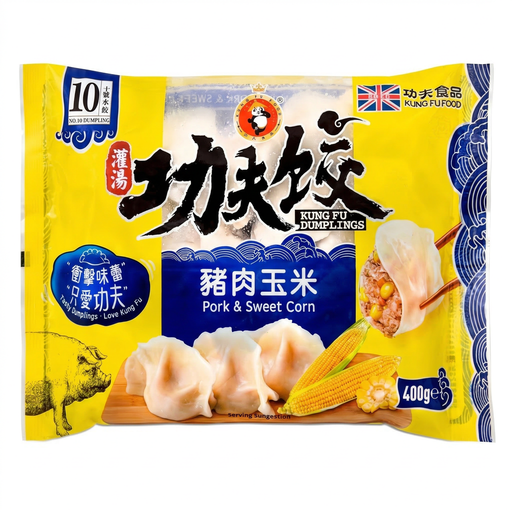
Why it suits this profile: The combination of pork and sweetcorn is approachable for anyone trying Asian dumplings for the first time. The 400-gram pack is practical for a smaller meal.
The product information provides clear cooking times for boiling, steaming, pan-frying and deep-frying. Wheat and soya are also listed as allergens.
23% pork, sweetcorn in the filling and preparation from frozen. Per 100 grams: 181 kcal and 1.2 grams of salt according to the product information.
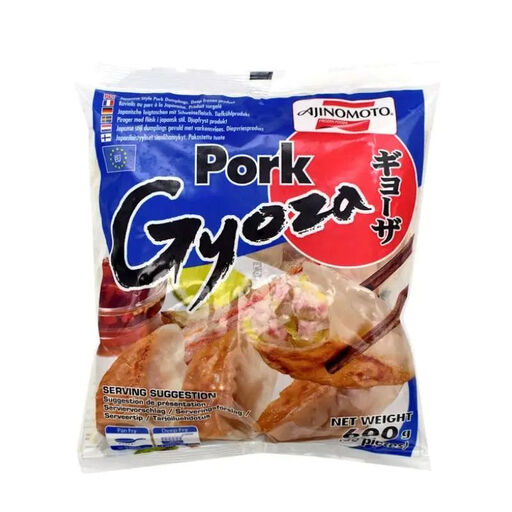
Why it suits this profile: These Japanese gyoza combine pork with cabbage and onion. The pack of 30 pieces gives you flexibility when serving a meal for several people.
The ingredients and allergens are specified, including 31% vegetables, 19% pork, wheat and soya. This allows you to compare the filling using clear, specific information.
30 pieces per pack and preparation instructions for cooking from frozen. According to the product information, the nutritional value is 196 kcal per 100 grams.
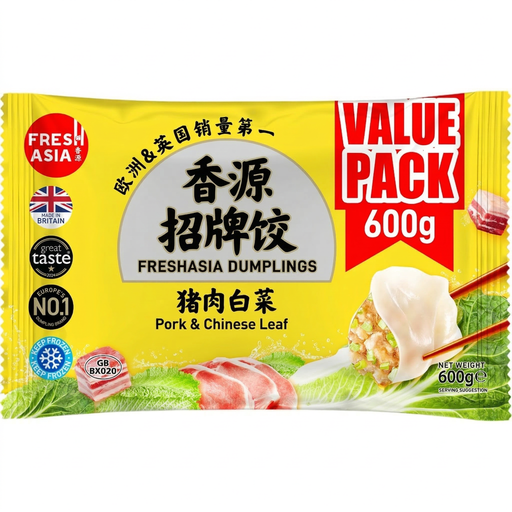
Why it suits this profile: The 600-gram family pack is suitable for families, larger portions and keeping a supply in the freezer. The pork and cabbage filling is ideal for a classic Chinese dumpling meal.
The packaging states that it contains 30% pork and 15% cabbage. The instructions specify cooking from frozen, so there is no need to thaw the dumplings beforehand.
600 grams, suitable for boiling, steaming and pan-frying. The product information lists wheat, soya and sesame as allergens.
We have put together a complete, up-to-date list of products that fully meet these strict selection criteria and the applicable European safety regulations.
For many varieties, this is the recommended method. Add them to boiling water while still frozen and follow the cooking time on the packaging. The stated times often range from 5 to 8 minutes. Check that the filling is fully cooked and piping hot before serving.
Fry the base in a little oil until golden brown. Then add a small amount of water and cover the pan. The dumplings will continue cooking in the steam. Only use this method in accordance with the product instructions, and make sure the filling is fully cooked.
Store them unopened at the temperature stated on the packaging, usually -18 °C or below. The use-by date is shown on the packaging. Once thawed, dumplings must not be refrozen; cook them straight away or store them chilled according to the instructions.
