
Vandaag of morgen in huis

Kwaliteit gegarandeerd

Welkomstaanbiedingen ontgrendelen: GRATIS bezorging | Tot 80% korting | Gratis 30 dagen JoyPlus-proefperiode
Download de app
A frozen pizza is a handy option for busy evenings, families and unexpected guests. Yet the choice can sometimes disappoint. A thin base can turn soggy, toppings aren’t always evenly distributed, and the cooking time on the packet doesn’t always match your oven. Terms like “Italian”, “generously topped” and “crispy” don’t tell you much on their own.
That’s why, as a Joybuy Product Recommendation Officer, I focus on verifiable information: weight, ingredients, allergens, cooking temperature and baking time. This way, you can compare a Dr. Oetker pizza, a Ristorante pizza or a Casa di Mama pizza based on the features that really matter in practice.
A thin, crispy pizza base can cook quickly, but that doesn’t mean every oven gives the same baking time. An electric oven, fan oven and gas oven all distribute heat differently. A pizza that needs 10 to 12 minutes according to the packet could be ready sooner or later in your oven.
Always check the temperature and place the pizza in a properly preheated oven. From the minimum baking time onwards, keep an eye on the colour of the crust and the melted cheese.
Marketing often highlights cheese, salami or vegetables. The ingredients list shows which topping is actually in the product and in what quantity. For example, the Ristorante Pizza Salame contains 12% salami and 12% mozzarella according to the product information. The Ristorante Pizza Tonno states 9.2% tuna.
Also pay attention to the difference between a standard pizza salami, a spicier version with pepperoni, and a combination with ham or mushrooms. The flavour and nutritional values can vary quite a bit as a result.
A vegetarian frozen pizza can be suitable for someone who doesn’t eat meat or fish, but you should still check the full ingredients list. Cheese varieties, for example, may list milk and soya as allergens.
With a gluten-free pizza, it’s important not just to look at the name. Check the allergen information and always follow the current packaging. According to the product information, the Ristorante Gluten Free Salame Pizza uses rice flour, but it does list milk as an allergen and may contain soya and mustard.
Broadly speaking, there are two popular styles:
So don’t choose based on flavour alone – also consider what your oven can handle. A higher temperature isn’t practical for every oven or baking tray.
The weight varies across the range from about 295 to 435 grams per pizza. A 295-gram pizza can be suitable for a light meal, while a 390-gram or larger variety is often more sensible for a hearty meal.
Also compare the topping:
The allergen information is on the label and should be your guide. Many standard pizzas contain wheat, gluten and milk. With fish pizzas, also check for the mention of fish and tuna.
The nutritional values in the product information are usually given per 100 grams. This means you need to factor in the weight for a whole pizza. A 400-gram pizza doesn’t contain the same total amount of energy, fat or salt as a 300-gram pizza, even if the values per 100 grams are similar.
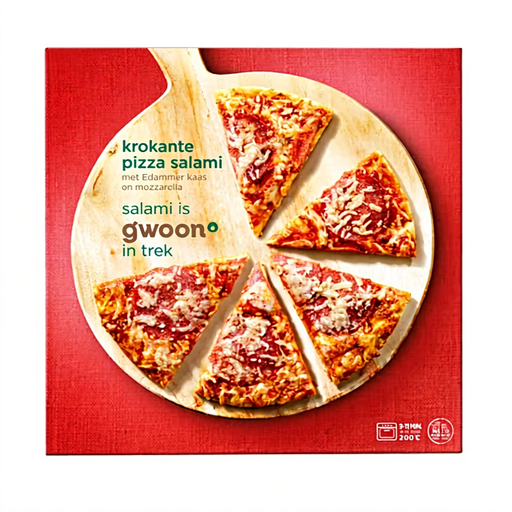
Why this suits the profile: A straightforward pizza salami for anyone who wants to start without complicated flavour combinations.
The product information clearly lists salami, Edam and mozzarella, so you don’t have to rely on a picture alone.
320 grams per pizza; familiar topping and a product that’s easy to store in the freezer.
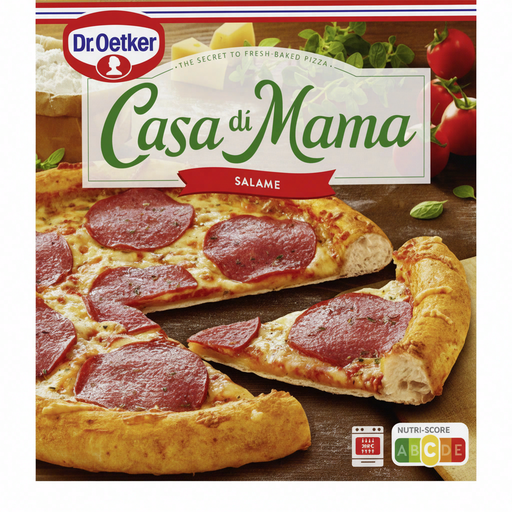
Why this suits the profile: For those who value a light crust and a crispy thin base more than the shortest baking time.
The product information explicitly states 250 °C, 230 °C for fan ovens and 12 to 15 minutes cooking time.
390 grams; salami and mozzarella; a combination of a thin base and a thicker, light crust.
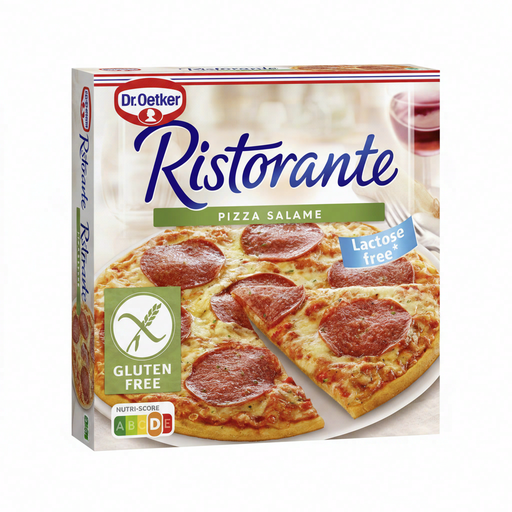
Why this suits the profile: For consumers specifically looking for a gluten-free pizza with salami and a thin base.
The product information states gluten-free and mentions rice flour; always check the current label and allergens before purchase.
315 grams; 13 to 15 minutes cooking time; according to the product information, a crispy thin base. Contains milk.
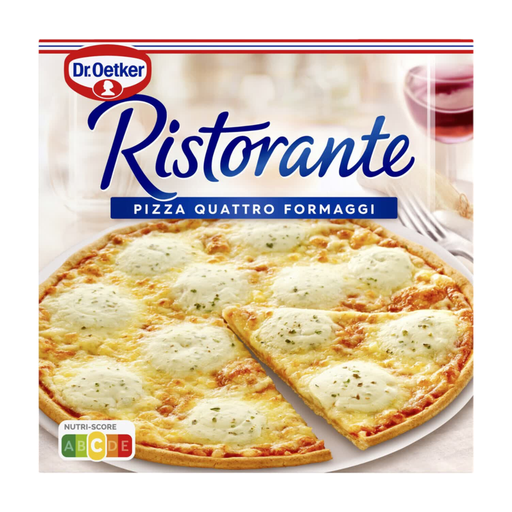
Why this suits the profile: A vegetarian option for those who want several types of cheese and a crispy base.
The four cheeses listed are mozzarella, Edam, Emmental and blue cheese. The composition is therefore more specific than just the label “cheese pizza”.
340 grams; vegetarian composition; 11 to 13 minutes cooking time according to the product information.
We’ve put together a full, up-to-date list of products that fully meet these strict selection criteria and current European safety regulations.
Store the pizza at the temperature stated on the packaging, usually around -18 °C. Keep the pizza frozen until you’re ready to cook it. According to the product information, a thawed pizza should not be refrozen. On receipt, check that frozen products are still frozen and put them in the freezer as soon as possible.
Remove film and cardboard according to the instructions. With some Casa di Mama varieties, the baking paper stays under the pizza during baking; with other products, this may be different. The packaging of your specific variety is therefore your guide.
That depends on the base, oven and variety. Ristorante pizzas often need 10 to 13 minutes at 220 °C electric or about 200 °C fan. Casa di Mama typically states 12 to 15 minutes at a higher temperature. Check the crust and cheese from the minimum baking time onwards.
Look for the vegetarian symbol and the ingredients list. Ristorante Quattro Formaggi, Spinaci and Funghi are vegetarian varieties according to the product information. Always check the label again with each purchase, as recipes can change.
No. A gluten-free pizza can contain milk or cheese. According to the product information, the Ristorante Gluten Free Salame Pizza lists milk as an allergen. Anyone with multiple allergies or intolerances should therefore always check the current packaging and allergen information.
