
Same-day & Next-day Delivery

Quality Guaranteed

Unlock Your Welcome Offers: FREE Delivery | Up to 80% OFF | Free 30-day JoyPlus trial
Download the APP
A frozen pizza is handy for a quick meal, a film night or drinks with friends. But pizzas can vary widely in their base, size, toppings, cooking time and nutritional information. If you choose based only on the picture on the box or a special offer, you could end up with a pizza that’s too small, comes out of the oven soggy or doesn’t suit your dietary requirements.
As a Joybuy Product Recommendation Officer, I filter product information for practical details. That way, you can see which features really matter before you buy.
A pizza shown piled high with toppings doesn’t necessarily come with plenty of topping. Check the product description and weight. A thin pizza base usually cooks more quickly and turns out crispier, while a thick base can give you more filling and a softer centre. The latter usually needs a longer cooking time, too.
Terms such as Italian-style frozen pizza, stone-baked or authentically prepared don’t always describe a legally defined product category. So look for specific details: the ingredients, weight, type of base and cooking instructions. A product claim made by a brand doesn’t guarantee a particular taste experience.
When comparing frozen pizza offers, don’t just look at the price per box. Check how many pizzas are included, the weight of each pizza and the toppings. A multipack with three smaller pizzas can be handy for a family or a snack, but a single 400-gram pizza may work out cheaper per portion.
First, think about when you plan to eat:
Always follow the temperature and cooking time on the packaging. For example, a Ristorante pizza may need around 220 °C in a conventional oven or 200 °C in a fan oven, while some Casa di Mama products specify a higher temperature. So you can’t assume the oven settings are the same for every product.
Read the ingredients list if you’re looking for a specific type, such as salami, chicken, tuna, mushroom or vegetarian frozen pizza. Also check the mandatory allergen information. Many pizzas contain wheat and milk; some varieties also list soya, mustard or fish as an ingredient or a possible source of cross-contamination.
A pizza margherita usually contains tomato sauce, cheese and herbs. A quattro formaggi pizza contains several types of cheese, giving it a rich, creamy flavour. If a pizza contains tuna or chicken, it’s also worth checking the fish or meat ingredients listed.
Frozen products should remain frozen during storage and transport. After buying a pizza, put it in a freezer as soon as possible, at a temperature that meets the instructions on the packaging, usually around -18 °C. If the product has defrosted, follow the instructions on the label. Many packs advise keeping a defrosted product chilled, using it within the stated period and not refreezing it.
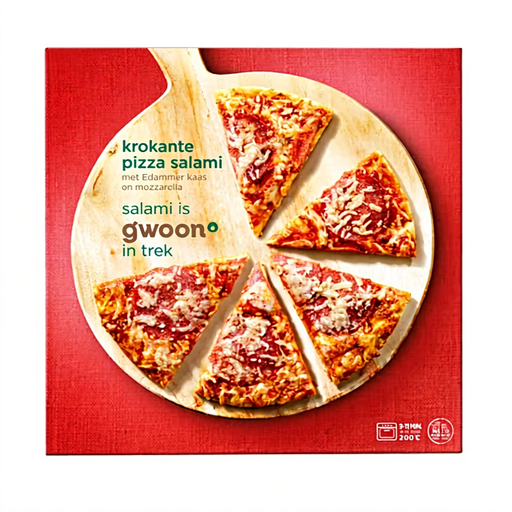
Why it suits this profile: A familiar salami pizza for anyone who wants a savoury meal without having to overthink their choice. The pizza weighs 320 grams and contains salami, Edam and mozzarella.
The toppings and weight are clearly stated in the product information. This makes it easier to compare the pizza with other options, rather than relying on the packaging alone.
Salami as the main topping; a blend of Edam and mozzarella; ideal for a simple oven-baked pizza.
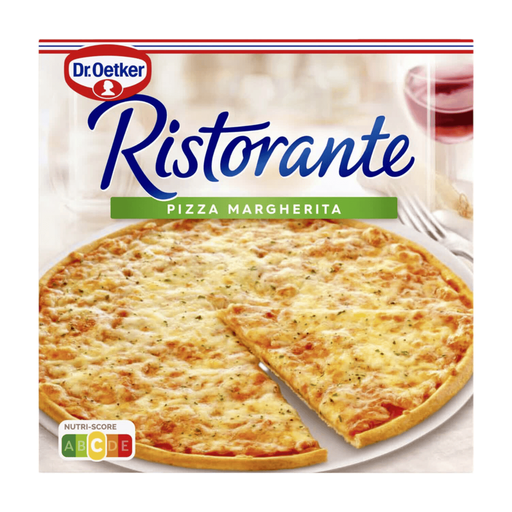
Why it suits this profile: If you like a thin, crispy base and simple toppings, this margherita pizza keeps things straightforward, with tomato, mozzarella, Gouda and basil.
The product information specifies a crispy-thin base and a cooking time of 10-12 minutes. This makes it easy to check whether it’s right for anyone who likes a quick, thin pizza.
295 grams per pizza; simple toppings; clear instructions for conventional and fan ovens.
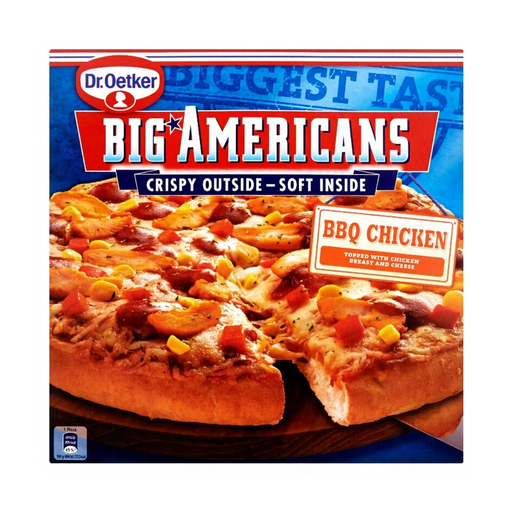
Why it suits this profile: The thick American-style base, chicken, pepper, sweetcorn and barbecue sauce make this a satisfying choice for a film, sports or gaming night.
At 460 grams, with a stated cooking time of 14-16 minutes, it’s clear this isn’t a small snack pizza. That helps you avoid expecting the wrong portion size or cooking time.
460 grams; thick base; chicken, pepper and sweetcorn toppings; ideal for a longer meal.
We’ve put together a full, up-to-date list of products that meet these strict selection criteria and comply with current European safety regulations.
It depends on the product. Thin varieties are often ready in around 10-13 minutes. Pizzas with a thick base may need 12-16 minutes. Always follow the instructions on the packaging, as oven power and cooking methods vary.
Look for a clear vegetarian label and check the ingredients list. Examples include margherita, quattro formaggi, mozzarella, spinach and mushroom pizzas. If you have allergies, always check the latest label, as recipes can change.
Keep the pizza frozen at the temperature stated on the packaging and check the use-by date. Once defrosted, follow the instructions for chilled storage. Don’t refreeze a defrosted pizza.
