
Same-day & Next-day Delivery

Quality Guaranteed

Unlock Your Welcome Offers: FREE Delivery | Up to 80% OFF | Free 30-day JoyPlus trial
Download the APP
Gyoza are the ideal solution for a quick, flavourful meal or appetiser. These Japanese dumplings, pan-fried until crispy yet juicy on the inside, are a freezer-aisle favourite. But not every bag of frozen gyoza delivers on its promise of quality. Often, the dough-to-filling ratio is off, or unclear instructions lead to a disappointing result.
Before you toss another random bag into your cart, it helps to know what to look for. We'll discuss the most common pitfalls and give you practical tips to make the right choice.
The packaging often promises the world, but the reality can be different. Here are two common problems you might encounter as a buyer:
To avoid these disappointments, you can check for a few specific details. These details on the packaging tell you a lot about the quality of the gyoza.
The filling is the heart of the gyoza. The ingredients list is your most important tool here. Look at the order and the percentages. Is the main filling, such as chicken, shrimp, or vegetables, listed first, and is its percentage mentioned? That's a good sign. A high percentage of filling (for example, more than 30-40%) usually indicates better quality. For vegetarian gyoza, a mix of different vegetables like cabbage, peas, and carrots is an indication of a more complex flavour.
The perfect wrapper for Japanese dumplings is thin enough to be translucent but sturdy enough not to tear during cooking. Although the thickness of the dough isn't listed on the package, the cooking instructions can give you a hint. If a specific method for pan-frying gyoza is described (fry first, then add water and steam), the dough is likely designed to achieve that crispy bottom and soft top.
A reliable brand offers clear and versatile cooking instructions. Does the packaging include methods for pan-frying, steaming, and deep-frying? This shows that the product has been developed to perform well in various preparations. Clear steps, including the amount of oil and water and the exact cooking times, help you achieve a result at home that rivals what you'd get in a restaurant.
Based on these criteria, we have selected a few popular choices for frozen gyoza that suit different preferences.
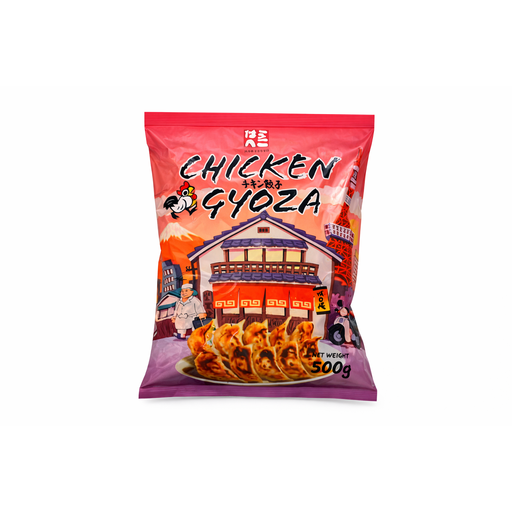
Why This Fits Their Persona: Ideal for anyone seeking a reliable and flavourful meal without the fuss. These chicken gyoza are a classic that's quick to prepare and works well as a main component of a meal or as a snack.
The packaging provides clear instructions for pan-frying, deep-frying, and steaming, minimising the risk of failure. The ingredient list is transparent, with chicken and cabbage as the main components.
Versatile cooking options and a classic, accessible flavour. The 500g package offers excellent value for money.
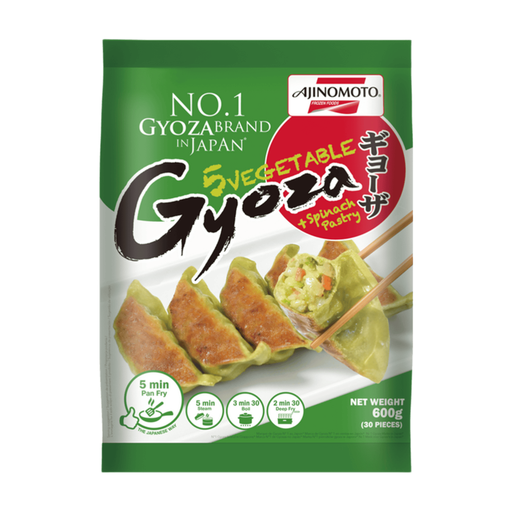
Why This Fits Their Persona: For those looking for a high-quality vegetarian gyoza. The Ajinomoto brand is known for its quality, and this spinach-dough variety is both flavourful and visually appealing.
The filling consists of 55% vegetables, including cabbage, peas, edamame, and carrots. This high percentage avoids the 'empty' dumpling trap and guarantees a rich flavour.
High vegetable content and a unique spinach dough. Suitable for vegans and vegetarians. The 600g package is ideal for meal prepping or serving a group.
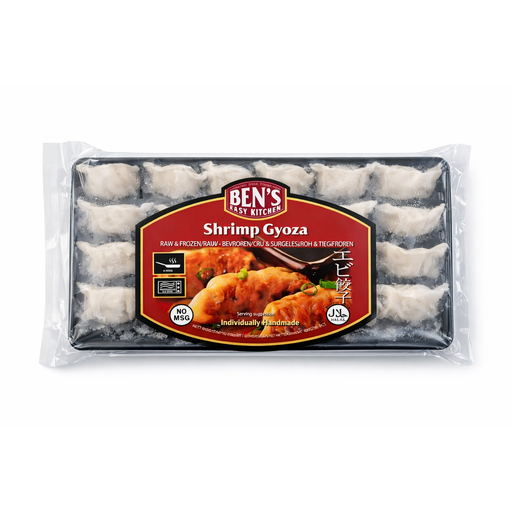
Why This Fits Their Persona: Perfect for those who want something different from the standard fillings. These shrimp gyoza offer a more refined taste, ideal for a special meal or a sophisticated appetiser.
The ingredient list is very transparent, stating a shrimp content of 34.90%. This high percentage guarantees an authentic and rich seafood flavour, avoiding the 'mystery meat' trap.
High and clearly stated shrimp content. The addition of shiitake and chives provides a complex and deep flavour.
We have compiled a complete, real-time list of products that fully satisfy these strict selection criteria and EU regulations.
For the classic method with a crispy bottom, heat a tablespoon of oil in a non-stick frying pan. Place the frozen gyoza in the pan and fry for 2-3 minutes until the bottoms are golden brown. Then, add about 100 ml of water (enough for a thin layer), cover the pan with a lid, and let it steam for 3-4 minutes. Remove the lid and continue to fry for another 1-2 minutes until all the water has evaporated and the bottoms are crispy again.
No, it's actually better to cook gyoza straight from the freezer. If you thaw them first, the dough becomes sticky and soft, which can cause the dumplings to stick together or fall apart during cooking.
Gyoza are specifically Japanese dumplings. They are characterised by a thinner dough wrapper and a filling that is often more finely textured than that of their Chinese counterparts (jiaozi). Another key feature is the typical cooking method: pan-frying and then steaming in the same pan, which results in a combination of a crispy bottom and a soft, steamed top.
