
Vandaag of morgen in huis

Kwaliteit gegarandeerd

Welkomstaanbiedingen ontgrendelen: GRATIS bezorging | Tot 80% korting | Gratis 30 dagen JoyPlus-proefperiode
Download de app
Frozen dim sum is a handy option for a quick meal, a gathering with drinks, or an evening of small plates. However, the wrong choice can be disappointing. A pack may look generous but contain very few pieces. What’s more, a product might only be suitable for steaming when you actually want to use an air fryer or frying pan. Allergens and storage instructions are also not always checked carefully.
With these points to consider, you can compare frozen dim sum, Chinese dumplings and other Asian frozen products in a practical way.
A 1 kg bag may seem good value, but the number of pieces and the weight per dumpling determine how many portions you actually get. So, alongside the net weight, also check the portion size or the number of pieces. For example, Ben’s Crystal Shrimp Dumplings contain 800 g according to the product information, divided into 32 pieces of 25 g each.
Many ready-made dim sum needs to be cooked straight from the freezer. Defrosting can affect the texture of a thin wrapper and sometimes makes dumplings harder to handle. So check whether the packaging says: cook from frozen. Always follow the current instructions on the pack, as timings can vary by batch or appliance.
Prawn dumplings, ha kau and siu mai often contain shellfish. Wheat, gluten, soya, sesame, fish and sometimes egg are also common. With a mixed pack, such as an assortment containing shrimp dumplings, beef siu mai, pork siu mai and xiao long bao, the ingredients differ per variety. So read the full allergen list before you order.
A bamboo steamer or steaming pan is suitable for most dim sum. Line the basket with perforated baking paper or a lightly greased surface to prevent sticking. For some products, the microwave, pan or deep fryer are also options.
A microwave is quick, but can give an uneven texture. If the dough or filling is raw, thorough cooking is essential.
Look at the percentage of the main ingredient. For example, the delico Dim Sum Assortment states 36% prawn in the shrimp dumplings, 48% beef in the beef siu mai and 55% pork in the pork siu mai. This gives you more insight than just the product name.
Also pay attention to:
For one person, a small assortment is often more practical than a large catering pack. For a family, party or regular dim sum eater, packs of 800 g or 1 kg can work out better value. Individually frozen pieces are handy if you don’t want to cook the whole bag at once.
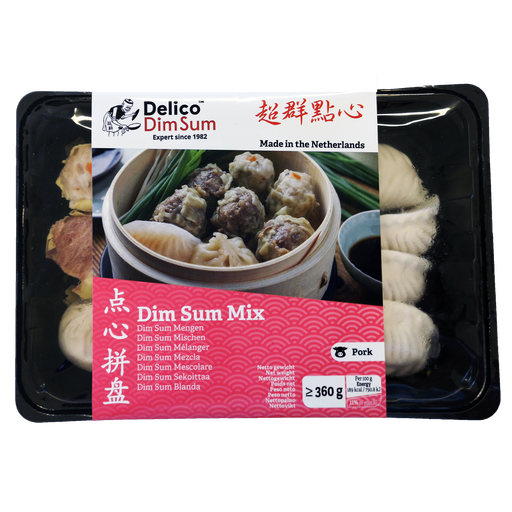
Why this fits the profile: Four varieties in one pack make it easy to get to know Chinese dumplings without having to buy several large bags straight away.
The packaging names the four varieties and their main ingredients. This means you can see which allergens and fillings to expect in advance.
Assortment of shrimp dumplings, beef siu mai, pork siu mai and xiao long bao; cooking advice for steaming from frozen.
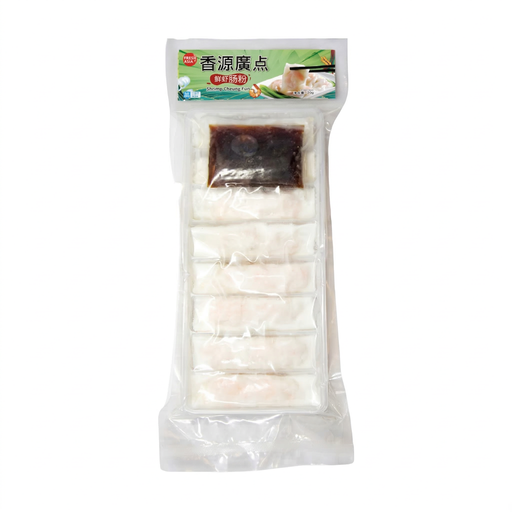
Why this fits the profile: For those who want to serve another Cantonese dish alongside dumplings. According to the product description, the rice noodle roll contains whole prawns and comes with a separate sachet of soy sauce.
The product information states the contents, the sauce sachet, allergens and the instruction to cook from frozen. That removes any guesswork about seasoning and preparation.
444 g; rice noodle roll with prawns; soy sauce included; suitable for a dim sum meal with variety.
Why this fits the profile: The large pack is practical for households that regularly serve ha kau or put together a dim sum table for several people.
The product information states an IQF pack of 1 kg and steaming as the method. This means you can cook portions at a time without defrosting the whole pack.
Individually quick-frozen according to the product description; 1 kg content; suitable for steaming; product type ha kau.
We’ve put together a full, up-to-date list of products that fully meet these strict selection criteria and comply with current European safety regulations.
For a mixed meal, you could combine ha kau with siu mai, baozi or cheung fun. This gives you a varied selection of Asian frozen products without needing several different cooking techniques at once.
Often, yes. Many Chinese dumplings are designed for this. The exact time varies by size and filling. Ha kau, for example, may need around 7 to 10 minutes, while larger baozi take longer. Always check the label.
Store the products at -18 °C or lower and use the date on the packaging as a guide. After defrosting, you must follow the specific storage instructions. Refreezing is not recommended for these products.
That depends on the pack size, number of pieces, delivery costs and portion size. Large packs can be good value for regular users, while a 360 g assortment is handier for trying out different types without lots of leftovers.
