
Same-day & Next-day Delivery

Quality Guaranteed

Unlock Your Welcome Offers: FREE Delivery | Up to 80% OFF | Free 30-day JoyPlus trial
Download the APP
Craving authentic Asian bites but have no time to go to a restaurant? Frozen dim sum seems like the perfect solution. A quick steam or pan-fry and you have a restaurant-quality meal. Unfortunately, the reality is often different. The packaging promises the world, but after cooking, you're left with a disappointing result. As a Joybuy Product Recommendation Officer, I'll help you make the right choices, so your freezer is filled with flavour, not regret.
Before you fill your shopping basket, it's good to know what often goes wrong. Many products in the freezer aisle are not what they seem. Pay attention to the following points to avoid a bad purchase.
To bypass disappointment, it's important to know what to look for. Focus on the facts, not the marketing.
The most important indicator of quality is the ingredient list. Ignore the pretty pictures and look directly at the percentages. A good product clearly states the percentage of the main ingredient. Look for specifics like pork (25%) or prawns (36%). This objective number tells you much more about the filling-to-dough ratio than any marketing claim. Products without this specification are often hiding something. This applies to all types, from siu mai and ha kao to xiao long bao.
Not all Asian frozen products are the same. Some are specifically made for steaming, while others, like frozen gyoza, are best when pan-fried. Good brands provide clear and versatile instructions. Does it just say "heat"? Be wary. Look for products that recommend specific methods, such as boiling (5-7 minutes), steaming (8-10 minutes), or pan-frying. This shows that the manufacturer has designed the product for a specific and optimal preparation.
To get you started, we've highlighted a few popular choices and matched them to different preferences.
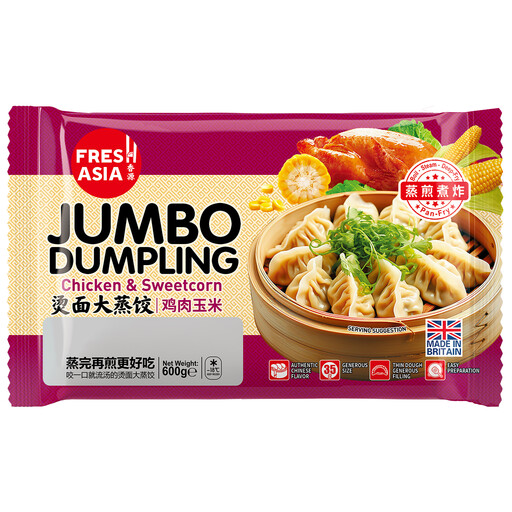
Why This Fits Their Persona: Ideal for busy households that want a quick, nutritious, and kid-friendly meal. The combination of chicken and corn is approachable, and the jumbo pack is practical for multiple people.
This product bypasses the "more dough than filling" trap by specifying a high percentage of chicken: Chicken (33%). No vague claims, just a clear specification.
The large 600g pack offers great value for money. The filling is juicy, and preparation is simple: boil, steam, or pan-fry.
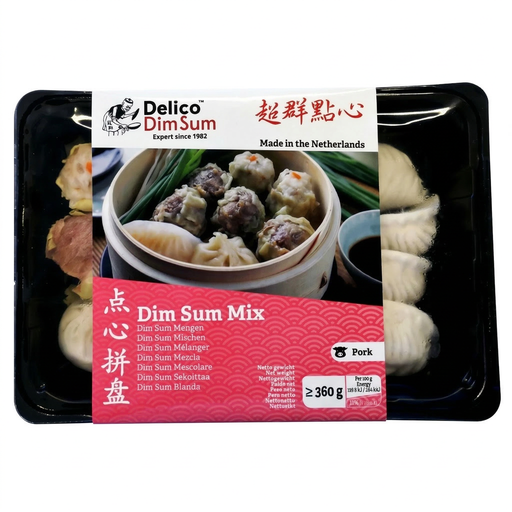
Why This Fits Their Persona: For those who want to recreate the full Cantonese Yum Cha experience at home. This assortment offers four classics in one, perfect for a weekend brunch or an elaborate appetiser.
This pack avoids the vague "authentic flavour" claim by offering four distinct, recognisable types of dim sum. The ingredient list is transparent with high percentages: Prawns (36%) in the Ha Kao and Pork (55%) in the Siu Mai.
Offers variety with Ha Kao, Siu Mai (beef and pork), and Xiao Long Bao. The recipe is traditional, including the use of wheat starch for the translucent Ha Kao skin.
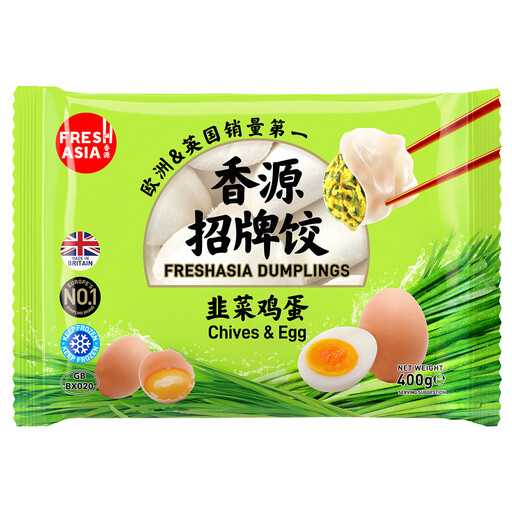
Why This Fits Their Persona: Perfect for those looking for a classic, flavourful vegetarian dumpling. The combination of chives and egg is a beloved filling in Chinese cuisine and an excellent alternative to meat.
This product avoids the trap of a bland, uninspired vegetarian filling. The ingredient list is clear and shows a good balance: Chives (21%) and Egg (15%), supplemented with vermicelli and dried shrimp for extra umami (note: not strictly vegetarian, but pescetarian).
An authentic, savoury filling that has plenty of flavour even without meat. Versatile in preparation: delicious when boiled, but also excellent for pan-frying to achieve a crispy result.
We have compiled a complete, up-to-date list of products that fully meet these strict selection criteria and local regulations.
Not necessarily. While a bamboo steamer is ideal for steaming dumplings, you can also improvise. A metal colander placed in a pot with a shallow layer of boiling water and a lid on top works just fine. For some products, like gyoza, pan-frying is the recommended method. Always check the preparation instructions on the packaging.
A common problem. The solution is simple: place a sheet of parchment paper (you can poke some holes in it) or a clean cabbage leaf (like Napa cabbage) on the bottom of your steamer. This creates a natural non-stick surface. Also, make sure the dumplings don't touch each other in the steamer.
"Dumpling" is an umbrella term for a parcel of dough with a filling. The differences are often in the shape, the thickness of the dough, and the cooking method.
