
Same-day & Next-day Delivery

Quality Guaranteed

Unlock Your Welcome Offers: FREE Delivery | Up to 80% OFF | Free 30-day JoyPlus trial
Download the APP
Frozen bao buns are handy for a quick breakfast, a light meal or a dim sum moment at home. Store them in the freezer and, in many cases, all you need to do is bring some water to the boil. However, these Chinese steamed buns vary considerably in their fillings, cooking times, portion sizes and allergens.
If you choose based only on an appealing photo or claims of “authentic flavour”, you could end up with a product that doesn’t suit your kitchen. So keep an eye out for these three common pitfalls:
Filled bao buns are a convenient choice for a quick snack. Options include pork, chicken, prawn and sweet fillings. You won’t need to prepare any extra ingredients.
A plain product, such as a white steamed bun, works better as a base for your own meal. You can pair it with roast meat, crunchy vegetables or tofu, for example. Check whether the pack says “filled”, “stuffed” or “plain steamed bun”.
Most frozen bao buns are steamed. There are three things to bear in mind:
Cooking times vary. Many products need 8 to 10 minutes of steaming, while larger buns or products made with raw dough may take longer. Use a microwave only if the packaging says it’s suitable. Follow the cooking instructions for the product you buy.
A 240 to 300 gram pack may contain six to ten buns. That can make a difference if you’re serving bao buns as a snack or having them as a light meal.
Check the quantities listed for key ingredients too. For example, KUNGFU Juicy Bao contains at least 23% pork. FRESH ASIA Meat Buns contain 21% pork. Percentages like these give you a clearer idea than general terms such as “generously filled”.
Nutritional information per 100 grams also makes it easier to compare products. Don’t just look at calories: check salt, fat, sugar and protein too. Sweet bao buns, such as those filled with purple sweet potato or custard, suit different occasions from savoury options.
Frozen Asian food should generally be stored at -18 °C or below. According to product information, defrosted products should usually not be refrozen. Take your shopping home as soon as possible after buying it and put it straight in the freezer.
Always check the allergen list before serving. Common ingredients include:
The selection below is based on verifiable product details, including weight, ingredients, cooking method and storage instructions.
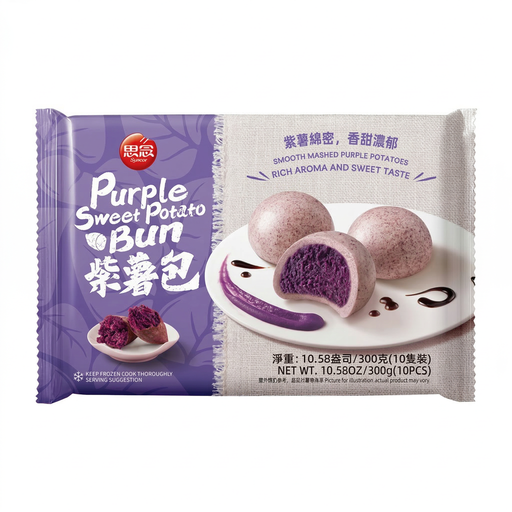
Why it suits this profile: This 300 gram pack, with its sweet purple sweet potato filling, is a good choice for breakfast, with tea or as a simple snack.
The product information clearly states that it needs to be heated and takes 8–10 minutes to steam from frozen. There’s no need to prepare a separate filling.
300 grams per pack, purple sweet potato filling and a steaming time of 8–10 minutes. Contains wheat.
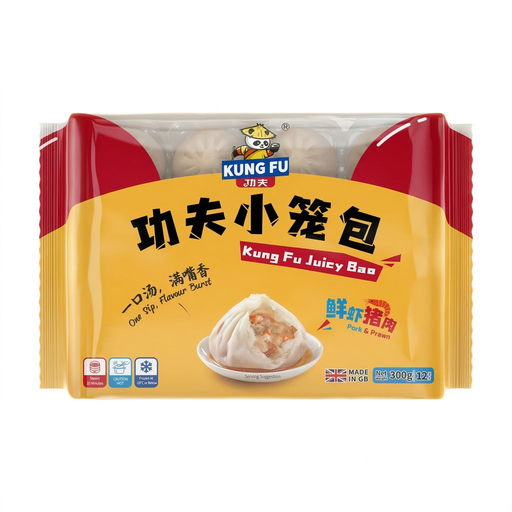
Why it suits this profile: A savoury dim sum option for anyone who enjoys pork, prawn and a broth-filled centre.
The ingredients list specifies 23% pork and prawns. Soya, wheat, sesame, milk and crustaceans are also listed as allergens.
300 grams, visible pieces of prawn according to the product description, and 8–10 minutes of steaming once the water has boiled.
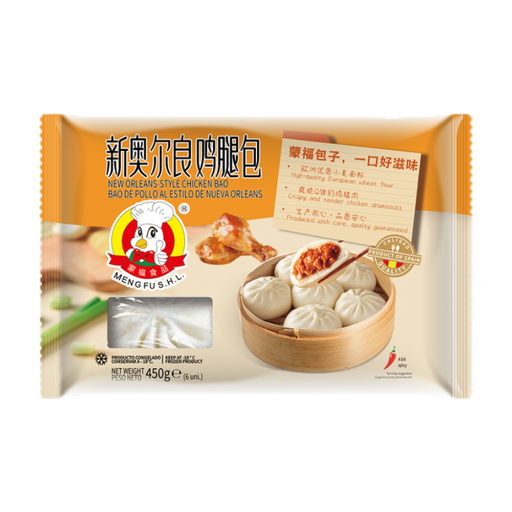
Why it suits this profile: The larger pack is practical for households preparing several portions at once.
The instructions give you two cooking options: steam from frozen for 8–9 minutes, or defrost and deep-fry for 3–4 minutes. This lets you choose the method that suits your kitchen.
450 grams, chicken filling and a choice of steaming or deep-frying. Contains wheat, soya, sesame and molluscs.
We’ve put together a complete, up-to-date list of products that meet these strict selection criteria and current European safety regulations.
You can with many products, but not all varieties. Check the instructions. Some buns can be steamed straight from frozen, while pan-fried bao buns may need to be defrosted first. Make sure the filling is heated all the way through, and don’t eat raw dough.
Store them at -18 °C or below and follow the use-by date on the packaging. Most products should not be refrozen after defrosting. Seal an opened pack securely to help prevent the buns from drying out or getting freezer burn.
It depends on the portion size and filling. A few filled buns can make a good snack or light meal. For a more substantial plate, serve them with vegetables, soup or a salad. If you’re having several portions, keep an eye on the total amount of salt and fat too.
