
Vandaag of morgen in huis

Kwaliteit gegarandeerd

Welkomstaanbiedingen ontgrendelen: GRATIS bezorging | Tot 80% korting | Gratis 30 dagen JoyPlus-proefperiode
Download de app
Frozen bao buns are a convenient option for a quick breakfast, snack or light meal. You can keep them in the freezer and usually just need to steam them. However, not all Chinese steamed buns are the same. The differences lie in the amount of filling, the size, the allergens and the cooking method.
If you only look at an attractive packet or the word “authentic”, you could end up buying a product that doesn’t suit your household. Below, you’ll find out what to look for when choosing baozi, dim sum buns and other frozen dim sum.
A 450g or 510g packet might seem generous, but the number of buns and their individual size can vary. A large bao bun works well as part of a breakfast or light meal. Mini buns are better suited to a snack or a table with several dim sum dishes.
So, don’t just check the net weight – also look at the number of pieces, the weight per piece and the recommended cooking time.
With filled bao buns, the ingredients list tells you how much meat, vegetable or other filling is inside. For example, the Fresh ASIA Mushroom Chicken Thigh Bun states 15.8% chicken and 2.1% mushrooms. According to the product information, the MENGFU Yangzhou Meat Bao has a filling that makes up 40% of the product, including pork and bacon.
Also pay attention to the order of ingredients. Ingredients are usually listed from largest to smallest quantity. A product with flour and water at the top may have a softer, doughier profile than a bun with a higher proportion of filling.
Steaming bao buns usually gives the most even texture, but some packets also mention a microwave method. However, the time and wattage can vary between microwaves. A product with a liquid filling, such as xiao long bao or soup dumplings, requires extra care: the contents can be extremely hot.
Always follow the cooking instructions on the packet. Do not eat products labelled as raw or “cooking required” without cooking them first.
Choose the size based on when you want to eat the bao buns:
A family can combine different flavours, while a single-person household should pay more attention to resealability and the number of portions after opening.
Always check the ingredients and allergens. Many bao buns contain wheat/gluten, soya and sometimes sesame. Meat varieties may also contain shellfish, fish, egg or milk. For example, the FRESHASIA Siu Long Soup Bun with prawn and pork lists shellfish, gluten, soya and sesame.
Vegetarian bao buns are not automatically free from animal ingredients or allergens. The Fresh ASIA Radish Handmade Vegetable Bun contains radish, carrot, vermicelli and shiitake, but also soya and sesame. The Mushroom & Vegetable Bun also lists wheat and soya. If you have allergies, always check the most recent packaging.
Most products must be stored at -18 °C or below and should not be refrozen once thawed. Many varieties are steamed straight from frozen, usually for 8 to 12 minutes. Larger buns may need longer.
Use a steamer basket with baking paper or perforated steaming sheets so the buns don’t stick. Leave space between the buns – they expand during steaming. For meat products, the product information sometimes specifies a core temperature of over 70 °C. This is a useful check in addition to making sure they are “piping hot throughout”.
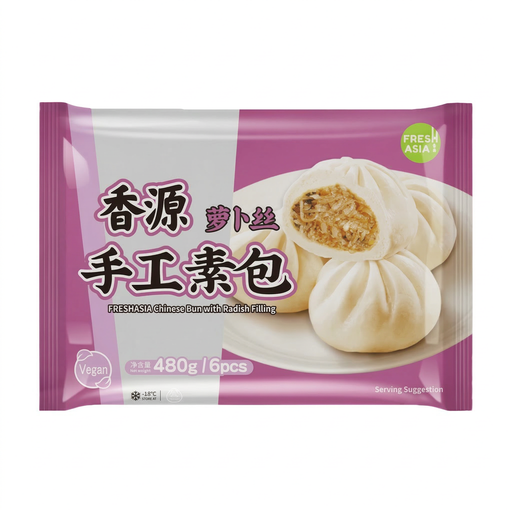
Why this fits the profile: A vegetable filling with radish, carrot, vermicelli and shiitake offers a clear introduction to vegetarian bao buns. The 480g packet is suitable for sharing.
The product information lists the main vegetable ingredients and a fixed steaming time of 10-12 minutes. This makes the size and preparation clearer to judge in advance.
480g; radish, carrot, vermicelli and shiitake; suitable for steaming from frozen.
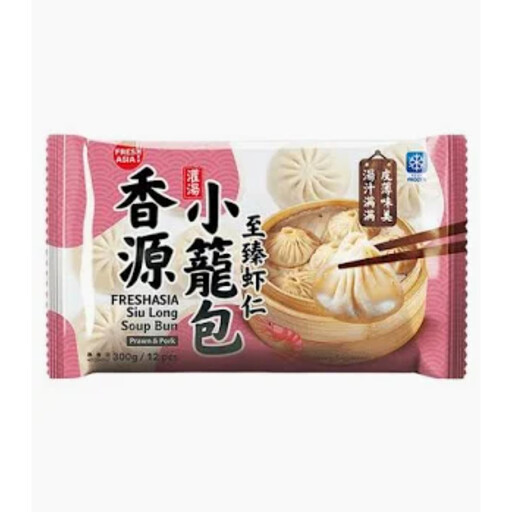
Why this fits the profile: For fans of xiao long bao and a liquid broth filling. Serve with ginger and black vinegar, as suggested in the product information.
The cooking instructions clearly state that thawing is not necessary and warn about hot liquid inside the bun. This prevents careless eating after steaming.
Prawn and pork filling; 300g; steam in 10-12 minutes; clear warning for hot soup.
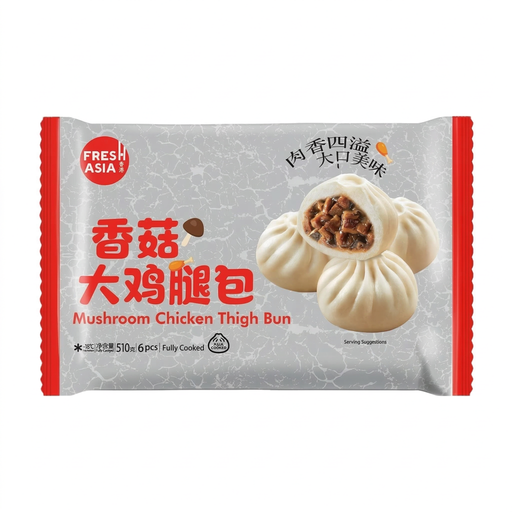
Why this fits the profile: The larger size and combination of chicken thigh and mushrooms suit a hearty breakfast or a quick meal for several housemates.
The product description states the chicken and mushroom content and gives separate instructions for steaming and the microwave. This lets you tailor the cooking to your kitchen.
510g; 15.8% chicken and 2.1% mushrooms according to the product information; steam in 10-12 minutes.
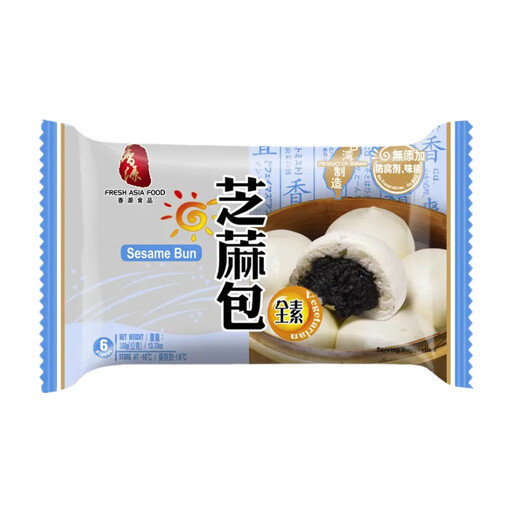
Why this fits the profile: These sweet bao buns are intended for breakfast, a snack or dessert. The black sesame paste offers a different flavour profile from savoury pork bao or chicken bao.
The product information explicitly lists black sesame, milk and wheat as allergens. The steaming time of 8-10 minutes is also clearly stated.
390g; sweet sesame filling; steam straight from frozen in 8-10 minutes.
We’ve put together a full, up-to-date list of products that fully meet these strict selection criteria and comply with current European safety regulations.
A microwave is handy for a small portion, but add a few drops of water and cover the bun as per the product instructions. This helps stop the dough from drying out.
Store them at -18 °C or below and stick to the best-before date on the packet. Most products should not be refrozen once thawed. After opening, it’s best to use the remaining buns as soon as possible.
Some frozen bao buns can be cooked in the microwave. For example, the Fresh ASIA Mushroom Chicken Thigh Bun recommends 60-90 seconds on high power, with a short resting time. Always check the packet, as power, size and filling all affect the cooking.
Bao buns or baozi are usually soft, larger steamed buns with a savoury or sweet filling. Xiao long bao are typically smaller soup dumplings with liquid broth inside. This makes them more delicate, so you need to handle them carefully when removing them from the steamer and eating them.
