
Same-day & Next-day Delivery

Quality Guaranteed

Unlock Your Welcome Offers: FREE Delivery | Up to 80% OFF | Free 30-day JoyPlus trial
Download the APP
Frozen bao buns are handy for a quick lunch, a dim sum evening or a warm snack. Yet Chinese buns, pork buns and chicken buns differ greatly in size, filling and cooking method. A pack with an attractive photo doesn't always tell you enough about allergens, portion size or how to prepare the product.
If you want to buy baozi without comparing, you'll mainly come up against these pitfalls:
Most soft, filled bao buns are intended for steaming. A product like delico Cha Sieuw Bao 270g can be steamed straight from frozen for around 8 to 10 minutes according to the product information. That's practical when you want to serve a warm snack quickly.
Other products are shengjian bao: buns with a crispy bottom that you cook in a pan. With Sijia Kitchen Pork Fried Buns, this works as follows:
Always check the packaging. The wrong cooking method can result in a cold filling, an exterior that's too hard or a bun that bursts.
For a snack, small portions are often more convenient than large buns. So pay attention to both the net weight and the number of pieces:
A large weight doesn't automatically mean more pieces. So look at the combination of gram weight, number of pieces and weight per bun.
Many steamed buns contain wheat, soya and sometimes sesame. In chicken buns, oyster sauce may also be present. That's relevant if you have a shellfish allergy. Also check whether the product contains pork fat, chicken skin or lard if you want to avoid certain ingredients.
Nutritional values can vary between variants. In the product information provided, the energy value of different buns ranges from around 207 to 275 kcal per 100g. That's not a recommendation about suitability for a diet, but it is a practical point of comparison. For allergens, nutritional values and shelf life, always use the label on the packaging as the most up-to-date source.
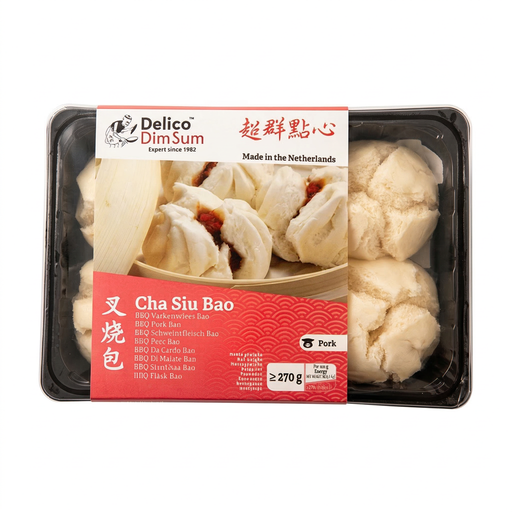
Why this fits the profile: A small pack with a familiar charsiu filling and a short steaming time is straightforward for anyone buying baozi for the first time.
The cooking instructions state 8–10 minutes steaming from frozen. Allergens such as wheat, soya and sesame are listed in the product information.
270g, pork filling and a cooking time of around 8–10 minutes.
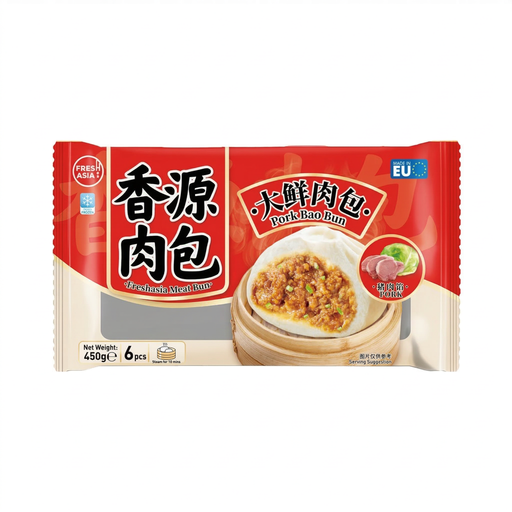
Why this fits the profile: This larger pack is practical for households that serve Chinese buns more often as breakfast, snack or light meal.
The product information states 21% pork, a net weight of 450g and steaming until the core reaches above 70°C.
450g, ready to steam and provided with clear instructions for thorough heating.
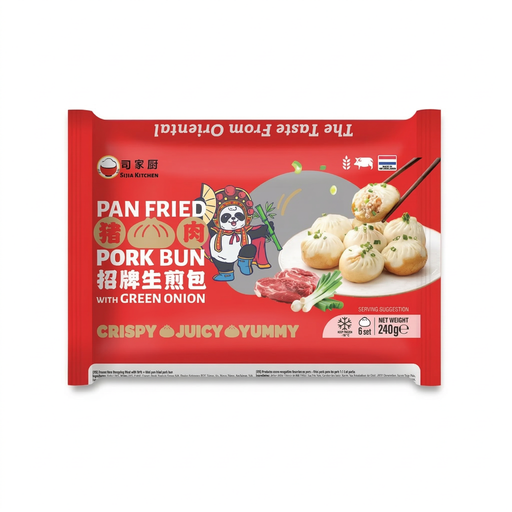
Why this fits the profile: Ideal for those who want not only soft steamed buns but also a crispy base and pan cooking.
The cooking method is specific: fry straight from the freezer, add water and cook covered. No thawing required.
Six pieces per pack, pork filling and a crispy pan-cooked finish.
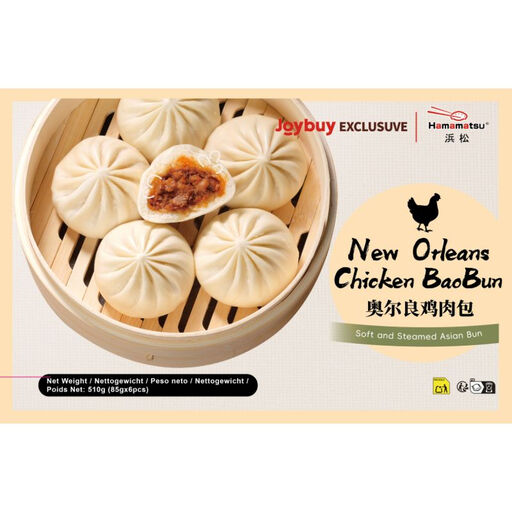
Why this fits the profile: Six buns of around 85g each are easy to share at breakfast, snack time or an informal meal.
The weight per piece and total weight are stated. The product must be stored frozen at -18°C or below and must not be refrozen after thawing.
510g, six chicken buns and a steaming time of around 8–10 minutes according to the product information.
Store frozen bao buns continuously at -18°C or below. Don't leave the pack out of the freezer for longer than necessary, and never refreeze a product once it has been thawed. Use a steamer basket with baking paper or a perforated insert so the buns don't stick to the bottom.
Don't overcrowd the basket: the buns expand during steaming and need room. For meat fillings, the core must be piping hot all the way through. Follow the temperature and time instructions on the packaging; timings may vary between appliances.
We've put together a full, up-to-date list of products that fully meet these strict selection criteria and comply with current European safety regulations.
Most soft buns are steamed straight from the freezer. Depending on the size, this usually takes around 8 to 15 minutes. Shengjian bao are typically cooked in a pan with oil, water and a lid. Always check the instructions on the packaging.
Only if the packaging allows it. Some products mention a microwave option, where you add a few drops of water and cover the bun. Then check that the core is completely hot. For an even, soft texture, steaming often remains the practical choice.
Follow the date on the packaging and store the product at -18°C or below. Once thawed, you must not refreeze the buns. Keep any leftovers refrigerated after cooking and follow the instructions on the label for safe use.
