
Same-day & Next-day Delivery

Quality Guaranteed

Unlock Your Welcome Offers: FREE Delivery | Up to 80% OFF | Free 30-day JoyPlus trial
Download the APP
Frozen bao buns are handy for breakfast, a light meal or a dim sum evening at home. Keep them in the freezer and, in most cases, cook them straight from frozen. However, filled bao buns, mantou and other Chinese buns can vary considerably in their ingredients, size and cooking time.
If you judge them by the picture or flavour name alone, you could be in for a surprise. The filling might be much smaller than you expected, you could overlook an allergen, or the buns might still be dry after heating. Use the checks below to compare frozen bao based on practical details, not marketing claims.
“New Orleans chicken”, “juicy pork” or “custard” mainly describes the flavour. Check the ingredients list to find out the actual balance of dough and filling. For example, MENGFU New Orleans Style Chicken Bao is 40% filling; according to the product information, chicken makes up 71.5% of that filling.
So check:
Most bao buns need to be heated all the way through. Some products are made with raw dough and shouldn’t be eaten cold or undercooked. A short microwave setting can also leave the centre cold, especially in larger buns.
Always follow the cooking instructions on the packaging. When steaming, make sure there’s enough space around the buns and that the water is already boiling. Products containing meat or prawns, and those made with raw dough, need to be piping hot all the way through.
A 480- or 550-gram pack might look like a good choice for a family, but the number and size of the buns determine how practical it is. Check how long the product keeps once opened, too. Frozen bao buns generally shouldn’t be refrozen once they’ve thawed. Only divide a pack in advance if the product instructions say that’s safe and practical.
For anyone with an allergy, the allergen information matters more than the product name. Many Chinese buns contain wheat and gluten. Other common allergens include soya, sesame, milk, egg, crustaceans, molluscs and celery.
For example:
Check the current packaging before buying, as recipes and labels can change. If you have a serious allergy, “may contain traces of” information is relevant too.
Steaming usually gives the buns a soft exterior and is ideal for classic Chinese steamed buns. Recommended cooking times across the range vary:
A microwave is quick, but the texture may be different. Pan-fried buns, such as shengjian bao, are designed to be cooked in a pan with a little water, so the base turns crisp while the filling cooks through.
Most products need to be kept at -18 °C or below. Before ordering, check that you have enough space in your freezer and can put the delivery away straight away. Also check the:
If you’re buying bao buns for a family, consider a pack weighing 390 to 550 grams. Packs of 210 to 300 grams are easier to manage for a snack or if you want to try several flavours.
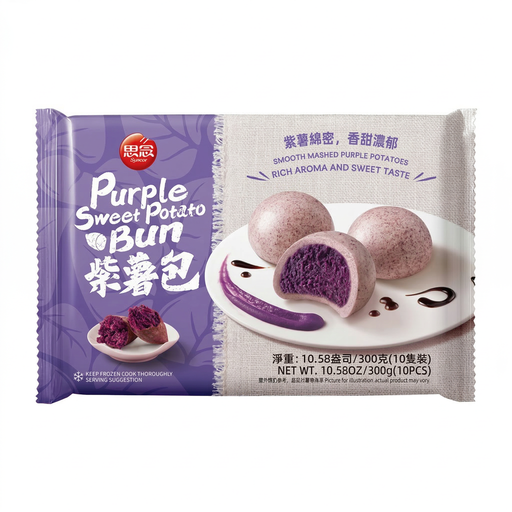
Why it suits this profile: A manageable 300-gram pack with a sweet purple sweet potato filling. Ideal for breakfast or a snack, and easy to steam straight from frozen.
The product information lists the net weight, wheat as an allergen and a specific steaming time of 8 to 10 minutes. That way, you know what you’re buying and how to prepare it.
300 grams per pack, purple sweet potato filling and cooking straight from frozen.
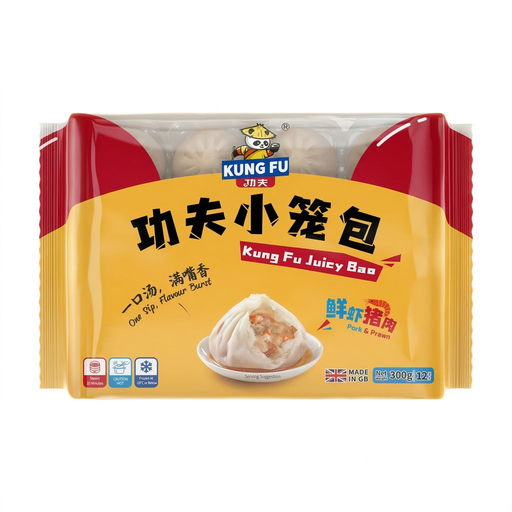
Why it suits this profile: A savoury dim sum option with pork, pieces of prawn and broth in the filling. The combination offers more variety in texture than a simple filled bun.
The product description specifies at least 23% pork and lists the allergens it contains. This makes it easier to assess the flavour, ingredients and suitability than relying on the name alone.
300 grams, steaming takes around 8 to 10 minutes, and wheat, soya, crustaceans, sesame and milk are clearly listed.
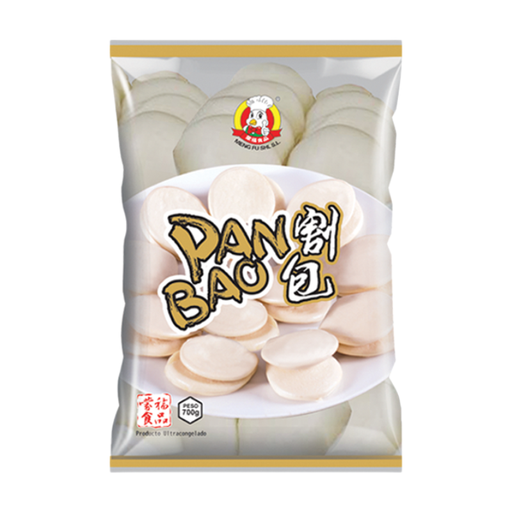
Why it suits this profile: This is a plain bao bun with no filling. Serve it with braised meat, crispy chicken, tofu or vegetables to put together a range of meals.
The product information clearly states that the bun has no filling. So you won’t pay for a flavour promise you don’t need, and you stay in control of what you pair it with.
700 grams, wheat is the only allergen listed, and steaming from frozen takes around 3 to 4 minutes.
We’ve put together a complete, up-to-date list of products that meet these strict selection criteria and current European safety regulations.
Use a frying pan for crispy varieties. Cook frozen shengjian bao on the bottom first, then add water and cover the pan. Bao buns with meat need to be cooked all the way through. Vegetarian bao buns with tofu, mushrooms or vegetables may need less time, but follow the instructions on the label.
Usually not. Many products are designed to be steamed straight from the freezer. Some pan-fried buns, however, need to be defrosted before cooking. Always check the specific instructions.
Keep them at -18 °C or below until the use-by date on the packaging. Additional instructions apply once the pack has been opened or the buns have thawed. Don’t refreeze bao buns once they’ve thawed.
Sweet bao buns may contain purple sweet potato, brown sugar, custard or red bean paste. Savoury dim sum buns are filled with ingredients such as chicken, pork, prawns or vegetables. The ingredients list and allergen information make the difference clear.
