If you want to capture tiny frost details outdoors without changing lenses, a compact camera with a documented close-up mode is a practical option. OM SYSTEM says the TG-7 can focus from 1 cm and is frostproof down to −10 °C. A mirrorless camera with a suitable macro lens gives you the flexibility to change lenses, but check the operating temperature of the camera body separately: Canon lists 0–40 °C for the EOS R50. These specifications are not an independent comparison of image quality.
Which option is right for you?
Photographer of fine frost details
If you want to capture crystals and patterns in large, sharp detail, compare the close-up capabilities and magnification of the camera or lens. Canon UK and Nikon UK describe the macro capabilities of specific lenses.
Early-morning outdoor photographer
If you’re heading into the garden when temperatures are around or below freezing, check the stated operating temperature for the exact model. OM SYSTEM says the TG-7 is frostproof down to −10 °C; Canon lists an operating environment of 0–40 °C for the EOS R50.
Quick garden explorer
If you want to photograph small finds without attaching a separate lens, look for a camera with a built-in close-up mode. OM SYSTEM describes a microscope mode on the TG-7.
What should you look for when choosing?
Rugged compact camera with close-up mode
Choose this option if: you want to photograph small patterns outdoors quickly, without changing lenses. OM SYSTEM says the TG-7 has a microscope mode that can focus from 1 cm and is frostproof down to −10 °C.
Bear in mind: the fixed lens limits your choice of lenses later on; the minimum focusing distance alone doesn’t tell you how large the subject will appear in the photo.
Mirrorless camera with a suitable macro lens
Choose this option if: you want to be able to change lenses or need a specific magnification ratio. Canon lists a maximum of 1:2 for the RF 35mm F1.8 MACRO IS STM; Nikon lists 1:1 for the NIKKOR Z MC 50mm f/2.8.
Bear in mind: the lens specification doesn’t automatically apply to the camera body or another lens. Canon lists 0–40 °C for the EOS R50; photographing below 0 °C is outside its stated operating environment.
Compact camera with built-in ring light
Choose this option if: lighting very small subjects is your main practical concern. Ricoh Imaging Europe describes the PENTAX WG-8 as having a built-in ring light.
Bear in mind: don’t assume that a camera can be used below freezing just because it’s described as ‘rugged’; check the model’s temperature limits.
| Consideration |
What to look for |
Who is this important for? |
| Capturing fine patterns |
Compare the magnification ratio of the exact lens or close-up mode; focusing on small details takes precision. |
If I want to photograph crystals in large, sharp detail, I look at both the close-up capability and focusing; around 33% of consumers make fine frost details their top priority. |
| Using the camera in freezing conditions |
Check the camera’s stated operating temperature and keep all your equipment within the applicable specifications. |
If I head outdoors early when it’s freezing, I want to know the temperature range in which my camera can be used; around 27% of consumers prioritise documented use in cold conditions. |
| Getting started quickly |
Check whether the camera itself has the close-up mode you want and which accessories are included in the chosen kit. |
If I don’t want to change lenses during a quick trip around the garden, I look for a camera that lets me take close-ups straight away; around 20% of consumers prioritise quick use without changing lenses. |
| An expandable macro setup |
Check the mount, exact lens variant, magnification ratio and what’s included in the box. |
If I want to use different lenses later on, I check that the lens fits the camera body and what magnification it offers; around 20% of consumers make an expandable setup their top priority. |
Common buying mistakes
-
Assuming ‘macro’ means every crystal will appear large in the frame
Minimum focusing distance and magnification ratio describe different features. Depth of field can also be shallow in close-up photography, making precise focusing important.
Check the specifications for the exact model or lens and, if possible, look at a sample photo of details of a similar size.
-
Assuming a mirrorless camera body is a complete macro setup
The maximum magnification of 1:2 applies to Canon’s RF 35mm F1.8 MACRO IS STM, not every lens used with an EOS R50. You may need to buy a suitable macro lens separately.
Check what’s in the box, the mount and the exact lens variant before choosing a kit.
-
Assuming ‘rugged’ means suitable for any freezing temperature
The stated temperature limit varies by model. OM SYSTEM says the TG-7 is frostproof down to −10 °C; Canon lists an operating environment of 0–40 °C for the EOS R50.
Check the specifications for the camera you’re considering and don’t infer frost resistance from a general description.
Camera brands to consider
OM SYSTEM
The TG-7 is a fixed-lens option for close-ups on cold trips around the garden.
- According to OM SYSTEM, the TG-7 has a microscope mode that can focus from 1 cm and is frostproof down to −10 °C.
- The lens isn’t interchangeable; these manufacturer specifications aren’t an independent performance test.
PENTAX
Ricoh Imaging Europe describes the WG-8 as a rugged compact camera with a built-in ring light.
- The ring light could be useful when photographing a small subject at close range.
- Don’t infer a specific operating temperature below freezing from its rugged design.
Canon
The EOS R50 can be paired with a suitable RF macro lens, such as the RF 35mm F1.8 MACRO IS STM.
- Canon lists a maximum of 1:2 for this lens and an operating environment of 0–40 °C for the EOS R50 body.
- The magnification ratio applies to the lens, not the camera body; Canon doesn’t specify this combination for use below 0 °C.
Nikon
The NIKKOR Z MC 50mm f/2.8 offers a macro lens option for a compatible Nikon Z camera.
- Nikon lists a magnification ratio of 1:1 for this lens and says it’s compatible with FX- and DX-format Z cameras.
- The lens specification doesn’t set a temperature limit for the camera body you pair it with.
Cameras at Joybuy
These camera options at Joybuy are intended for photography; for frost patterns, check the macro or close-up capabilities and the operating temperature of the exact model separately.
 No image available
NAXSIR digital camera, 4K UHD, 64 MP
The product title mentions photography; check whether the close-up capabilities and operating temperature are suitable for frost photography.
The title lists 18x digital zoom, autofocus and a 32 GB memory card.
View at Joybuy
 No image available
DJI Osmo Pocket 3 Creator Combo
The product title mentions photography; check whether the close-up capabilities and operating temperature are suitable for frost photography.
The title lists a 1-inch CMOS sensor, 4K/120fps video, 3-axis stabilisation and a microphone.
View at Joybuy
 No image available
DJI Osmo Pocket 3
The product title mentions photography; check whether the close-up capabilities and operating temperature are suitable for frost photography.
The title lists a 1-inch CMOS sensor, 4K/120fps video, 3-axis stabilisation and a 2-inch rotatable touchscreen.
View at Joybuy
 No image available
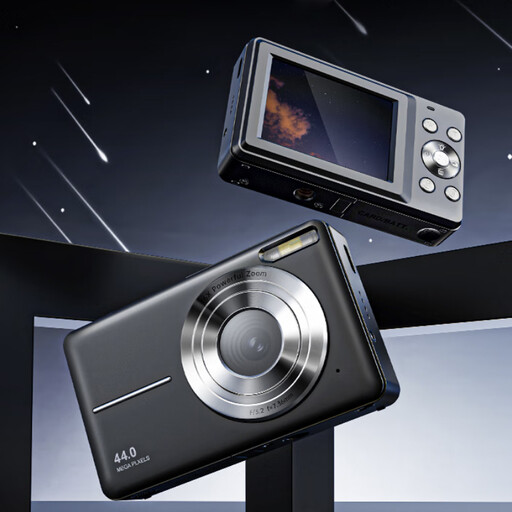
Songdian pocket camera, 4K, 44 MP, black
The product title mentions photography and video; check whether the close-up capabilities and operating temperature are suitable for frost photography.
The title lists 16x zoom.
View at Joybuy
 No image available
Sony ZV-E10 with 16–50mm zoom lens, black
The product description mentions close-ups as a use; also check whether the lens is suitable for the magnification you want for frost details.
According to the product title, the kit includes a 16–50mm zoom lens. The product description warns against exposure to moisture, so bear this in mind when using it outdoors in frosty conditions.
View at Joybuy
Frequently asked questions
Is a focusing distance of 1 cm the same as 1:1 magnification?
No. The 1 cm figure OM SYSTEM gives for the TG-7’s microscope mode describes its focusing capability; Nikon uses 1:1 for the magnification ratio of the NIKKOR Z MC 50mm f/2.8. For your subject, also check how it’s actually framed.
How can I avoid blurry areas in a close-up of frost?
Focus carefully and take test shots using different aperture settings. Canon UK points out that depth of field can be shallow in close-up photography; check where the focus falls and see which focusing options your model offers.
Can I use a Canon EOS R50 to take photos outdoors when it’s freezing?
Canon lists an operating environment of 0–40 °C for the EOS R50, with a maximum humidity of 85%. Use below 0 °C is outside that stated environment; don’t infer a wider specification for the R50 from a winter photo or the features of another model.
What rights do I have if a camera I bought online is faulty?
According to the Dutch government, the seller must provide a solution if a product is faulty. The Netherlands doesn’t have a fixed statutory warranty period of two years; what you can reasonably expect depends on the product and the purchase information. In many cases, purchases made remotely from a business also come with a 14-day cooling-off period, subject to applicable exceptions.


