
Vandaag of morgen in huis

Kwaliteit gegarandeerd

Welkomstaanbiedingen ontgrendelen: GRATIS bezorging | Tot 80% korting | Gratis 30 dagen JoyPlus-proefperiode
Download de app
A front and rear dash cam is no longer a gadget for tech enthusiasts; it's an essential tool for every modern driver. It provides objective evidence in accidents, protects against parking damage, and offers peace of mind on the road. But the market is flooded with models making lofty promises. Many drivers fall into the same traps, ending up with an unreliable car camera that fails at the most critical moment.
Before you buy a dash cam, it's important to recognise three common marketing traps:
dash cam with parking mode sounds ideal, but it often only works with a hardwire kit dashcam that must be purchased separately and professionally installed. This is not always clearly stated.To avoid buyer's remorse, focus on a few objective specifications that determine reliability and image quality.
A 4K dashcam seems like the logical choice, but resolution isn't the whole story. Image quality depends on the synergy between three elements:
A dash cam continuously writes data. A standard microSD card is not built for this and will wear out quickly. There are two reliable solutions:
Modern features increase convenience and safety, provided you know what they entail:
We have selected a few models that offer a good balance between reliable specifications and practical usability, tailored to different types of drivers.
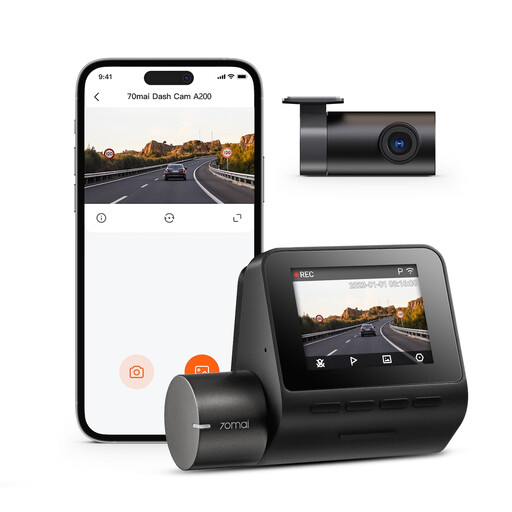
Why This Fits Their Persona: Ideal for those seeking a reliable `dual dashcam` for daily commutes. This set offers complete front and rear coverage without an overwhelming number of complex features. Just install and drive.
The combination of 70mai's Night Owl Vision and HDR technology ensures clear footage in the dark, avoiding the pitfall of useless "night vision."
The front camera records at 60 FPS for smoother footage. The set is complete with front and rear cameras at an affordable price.
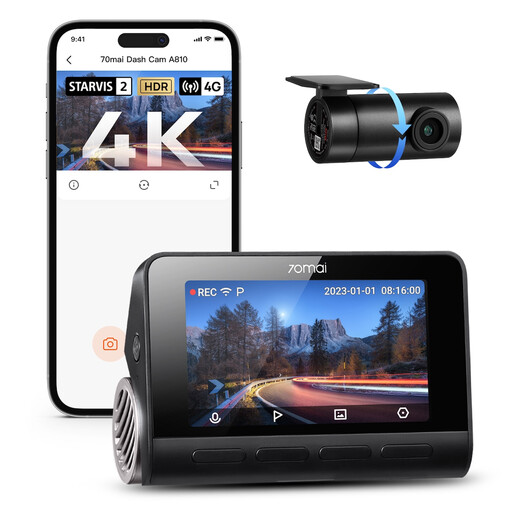
Why This Fits Their Persona: For the driver who wants the highest image quality and the latest technology. This `4K dashcam` with dual Sony STARVIS 2 sensors and optional 4G connectivity is one of the most advanced systems on the market.
The optional 4G `hardwire kit dashcam` (UP04) makes smart features like AI motion detection parking surveillance and remote live viewing fully functional and transparent to use.
True 4K resolution with a leading Sony STARVIS 2 sensor for superior image quality. The built-in `dashcam with GPS` and ADAS warnings provide additional safety.
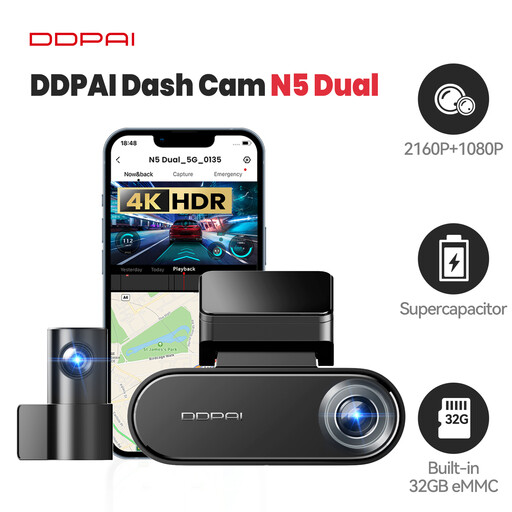
Why This Fits Their Persona: Perfect for those who demand maximum reliability and data security. This `dual dashcam` is ideal for people who frequently park their car in public areas and need 24/7 surveillance.
This model directly tackles the unreliable storage pitfall with its dual storage system: 32GB of built-in eMMC as a backup for the external microSD card. If the card fails, your footage is still safe.
The combination of 4K (front) + 1080p (rear) recording, 5GHz Wi-Fi for fast downloads, and the unique dual storage system offers a complete and extremely reliable package.
A good dashcam is the first step. Ensure reliable operation with the right memory cards, hardwire kits, and other essential extras.
Yes, in most cases, a hardwire kit dashcam is essential for using a dashcam with parking mode. This kit connects the camera directly to the car's battery, allowing it to receive power when the engine is off. It also prevents battery drain by automatically cutting power if the battery voltage drops too low. Without this kit, parking surveillance will not work.
This depends heavily on the type of card. Standard microSD cards are not designed for continuous data overwriting and can fail after just a few months. For a dash cam, it is strongly recommended to use a "High Endurance" card. These are specifically built for video surveillance and can last for several years, depending on capacity and usage.
Not necessarily. While a 4K dashcam has a higher resolution, a top-quality 1080p camera with a superior image sensor (like a Sony STARVIS) and good HDR technology can produce clearer, more usable footage at night or at high speeds than a budget 4K camera. The quality of the sensor, lens, and image processing is often more important than the pixel count alone.
