
Vandaag of morgen in huis

Kwaliteit gegarandeerd

Welkomstaanbiedingen ontgrendelen: GRATIS bezorging | Tot 80% korting | Gratis 30 dagen JoyPlus-proefperiode
Download de app
A fridge-freezer may seem straightforward to choose at first glance: determine the size, compare prices and install the appliance in the kitchen. Yet many disappointing purchases are caused by specifications that receive less attention in advertisements. A refrigerator with a freezer compartment may be compact, for example, but offer too little usable space. Terms such as No Frost, quiet and energy-efficient only become meaningful once you check the technical specifications.
This buying guide helps households, single occupants, couples and small families compare models objectively.
A capacity of, say, 300 litres may sound generous, but the split between the refrigerator and freezer compartments determines whether the appliance suits your household. If you mainly store fresh groceries, a larger refrigerator compartment is more useful. For food stocks, frozen meals or bulk purchases, a larger freezer compartment is the practical choice.
Always check:
No refrigerator is completely silent. The compressor switches on and off, while fans and refrigerant may also be audible at times. Check the stated noise level in dB(A) rather than relying solely on descriptions such as “library-quiet” or “extra quiet”.
As a general guideline, you can compare models rated at around 35 to 40 dB. The CHiQ JR205LSE, for example, lists 39 dB, while the CHiQ JR318WSD lists 37 dB. These are verifiable figures from the product information, although the perceived noise may vary depending on the floor, wall and installation.
A No Frost refrigerator uses a system designed to prevent ice build-up in the specified compartments. With Low Frost, ice formation is reduced, but manual defrosting may still be necessary. Low Frost can be a suitable choice if you want to reduce maintenance without paying for the higher cost or additional technology of Total No Frost.
Pay particular attention to whether the technology applies to both the refrigerator and freezer compartments. Product descriptions sometimes use broad marketing terms, while the official product information sheet provides a more specific picture.
Do not measure only the available width. Also check the depth, height, door clearance and ventilation space. A freestanding refrigerator needs sufficient air circulation around it, as specified in the manual. Consider the route into the kitchen as well: doorways, staircases and lifts may present practical limitations.
A refrigerator with a reversible door is useful in a small kitchen or rental property. The door swing can be changed on some models, but check in advance whether this is possible according to the manual and whether the necessary parts are included. Adjustable feet help you position the appliance securely and level it correctly.
Since the European energy label for refrigeration appliances was redesigned, the scale runs from A to G. The letter alone does not tell the whole story. Also compare the annual energy consumption in kWh and the capacity of the appliances.
Examples from the available product specifications:
Actual consumption depends on room temperature, settings, how fully the appliance is loaded and how often the door is opened. Use the energy label as a basis for comparison, not as a guaranteed monthly cost estimate.
A four-star freezer compartment is designed for long-term storage at low temperatures. Also check the freezing capacity in kilograms per 24 hours if you regularly freeze fresh food. Electronic controls may allow more precise adjustment than a simple dial, but they do not automatically make a model suitable for every kitchen.
When choosing an energy-efficient fridge-freezer, also consider:
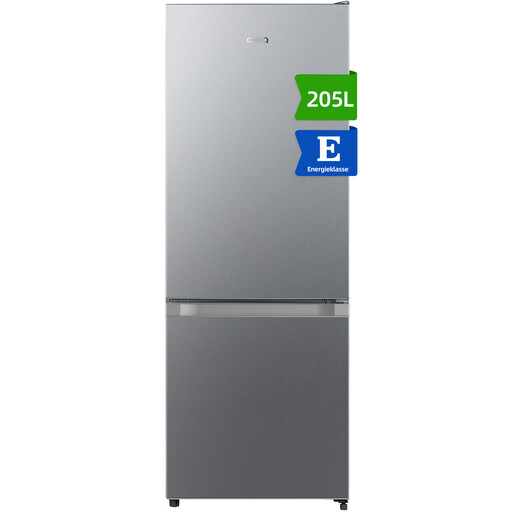
Why it fits: With 153 litres of refrigerator space and 52 litres of freezer space, this model is designed for single occupants, couples and smaller kitchens.
The product information lists Low Frost, a reversible door and adjustable feet. Make sure that occasional manual defrosting is acceptable for you.
205 litres total capacity, 39 dB and a stated annual consumption of 191 kWh; dimensions: 540 x 550 x 1440 mm.

Why it fits: With a stated split of 312 litres of refrigerator space and 130 litres of freezer space, this model is aimed at families and households that buy in larger quantities.
The product information lists Total No Frost for both the refrigerator and freezer. Before purchasing, check the required ventilation space and doorway width.
442 litres of capacity, 35 dB according to the product specifications and energy rating C according to the supplied product information.
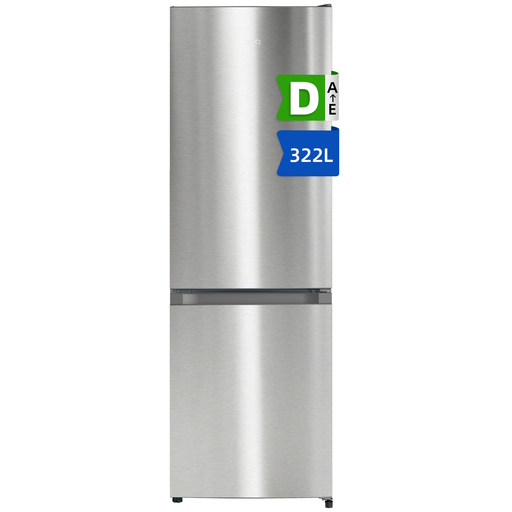
Why it fits: With 226 litres of refrigerator space and 96 litres of freezer space, this model is suitable for families and users who regularly freeze fresh food.
The specifications list Total No Frost, Multi-Airflow and a door-open alarm. This makes important maintenance and usability considerations clear in advance.
322 litres, 37 dB, energy rating D and a reversible door; dimensions: 595 x 635 x 1855 mm.
Browse our current selection and compare products by dimensions, materials, features and available specifications.
Place the freestanding refrigerator on a level, stable surface and keep ventilation openings clear. Do not position the appliance directly next to an oven or radiator, or in strong sunlight. After transport, you may need to leave the refrigerator upright for a while before switching it on; follow the manufacturer’s instructions.
Clean the door seals regularly and avoid overloading the refrigerator. With a Low Frost refrigerator, occasional manual defrosting is part of routine maintenance. Do not use sharp objects to remove ice. Unplug the appliance before cleaning it.
No. No Frost is particularly useful if you want to avoid manual defrosting. A Low Frost refrigerator may be sufficient if you are comfortable with limited maintenance and are looking for a compact model. Always compare the technology with your usage habits and budget.
That depends on how often you shop, your cooking habits and how much you use the freezer. A model offering around 200 to 230 litres may suit a single occupant, couple or small family. For larger households or weekly bulk shopping, 300 litres or more may be more practical. In addition to total capacity, look at the split between refrigerator and freezer space.
Multiply the stated annual consumption in kWh by your current electricity tariff. This remains an estimate: ambient temperature, temperature settings and usage all affect actual consumption. An energy label indicating lower consumption may be worthwhile over time, but always compare the purchase price, capacity and features as well.
