
Vandaag of morgen in huis

Kwaliteit gegarandeerd

Welkomstaanbiedingen ontgrendelen: GRATIS bezorging | Tot 80% korting | Gratis 30 dagen JoyPlus-proefperiode
Download de app
Buying a new fridge seems simple until you discover that the appliance will not fit through the doorway, makes too much noise or offers barely enough space for your everyday shopping. A student room, studio flat, office, holiday home or family kitchen will also have different requirements.
Marketing copy often emphasises low energy consumption, quiet operation or useful features. Always check the official product specifications and the information on the energy label. The following pitfalls are common:
A small fridge, compact fridge or mini fridge is suitable if you mainly want to store drinks, breakfast items and a limited amount of fresh food. Models of around 43 to 92 litres will often fit under a worktop or in a convenient place in an office.
Pay attention to the layout. A metal shelf, adjustable glass shelves, door compartments and a salad drawer determine how much usable space you actually have. A small fridge for a student room does not need to offer the same features as an extra fridge for a family.
A table-top fridge is generally around 80 to 90 cm high. This size fits beneath or beside a worktop and offers more capacity than a mini fridge. Check whether the model has a chilled compartment only or is also a fridge with freezer compartment.
A small freezer compartment can be useful for ice, bread or a few frozen meals. Check the stated capacity, star rating and freezing capacity before assuming that you can store larger quantities inside.
For a household that stores both fresh and frozen food, a fridge freezer or fridge-freezer combination is the more logical choice. Look at the separate capacity of the fridge and freezer compartments. For example, a total capacity of 205 litres may consist of 153 litres of fridge space and 52 litres of freezer space.
A model with Low Frost may, according to the product description, limit the amount of ice build-up. This does not automatically mean that maintenance is no longer required. Always check whether manual defrosting is still necessary.
A freestanding fridge can be placed flexibly and taken with you when you move home. Measure the total height, width and depth, including the space required for ventilation and opening the door. A fridge with reversible door offers extra flexibility if the layout of your kitchen or room changes.
Before ordering a fridge, note down:
Adjustable feet can help with minor unevenness. They are not a substitute for a stable surface. Do not place the appliance directly next to an oven, radiator or other heat source.
The stated litre capacity is important, but the layout determines how easy the fridge is to use every day. Adjustable shelves are useful for tall bottles and packaging. A salad drawer keeps produce separate from bottles and sauces.
A chill drawer or chilled compartment is intended for products that, according to the product specifications, are kept extra cool temporarily. The CHiQ JR92DSE is a 92-litre cooling appliance without freezer capacity. If you want to store frozen food for longer periods, you need a model with a separate freezer compartment and the appropriate star rating.
Since the European relabelling system was introduced, energy labels have ranged from A to G. Above all, compare the annual consumption in kWh per year, as the letter alone does not show the full running costs.
The stated noise level can also be checked. Product information may list 35 dB, 37 dB, 39 dB or 41 dB, for example. For a fridge in an office or bedroom, this can make a decisive difference. Also check whether the noise level, according to the product specifications, corresponds to a particular emission class.
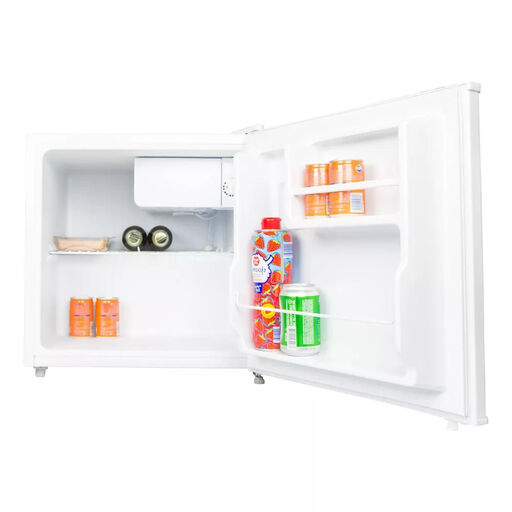
Why this suits the profile: This mini fridge is designed for basic use in a student room, bedroom, office or minibar. Its 43-litre capacity takes up very little space.
The product specifications clearly state 43 litres, 41 dB and energy label F. According to the description, the small freezer compartment is not intended for freezing food for long periods.
Compact dimensions of 49.2 × 47.2 × 45 cm, a reversible door and simple mechanical temperature control.
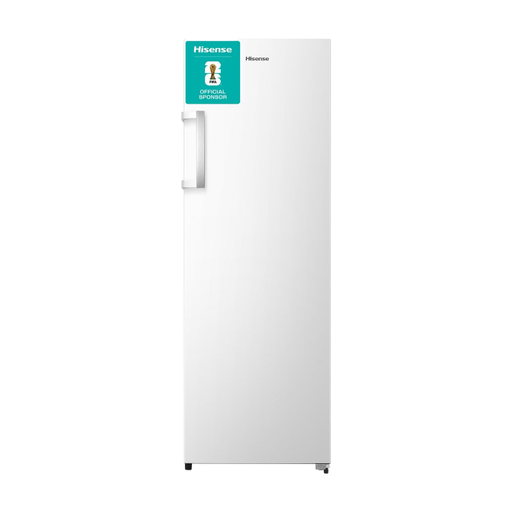
Why this suits the profile: This spacious model is designed for households that mainly store large amounts of fresh shopping and want a well-organised layout.
The capacity, dimensions and noise level are listed separately. This is a fridge without a stated freezer compartment, so do not buy this model if you need a fridge freezer.
322 litres of fridge space, 5 shelves, 2 salad drawers, 35 dB and stated energy consumption of 87 kWh per year.

Why this suits the profile: The combination of fridge and freezer space suits couples, small families and users who regularly keep fresh and frozen shopping at home.
The product information separates the capacity into 153 litres of fridge space and 52 litres of freezer space. According to the description, Low Frost reduces ice formation, but manual maintenance may still be required.
205 litres in total, a 52-litre four-star freezer, reversible door, adjustable feet, 39 dB and 191 kWh per year according to the product information sheet.
We have compiled a complete, up-to-date list of products that fully meet these strict selection criteria and the applicable European safety regulations.
According to information provided by brands themselves, features such as Low Frost, a salad drawer or a particular storage period may offer benefits. Do not treat such performance claims as a guarantee for every household; temperature, load and positioning also have an effect.
For one person, around 90 to 150 litres may be sufficient, depending on how often you shop. A 43-litre mini fridge is mainly suitable for drinks and a limited supply of food. If you cook every day, a table-top fridge of approximately 90 to 126 litres will usually be more suitable.
This depends on the capacity, star rating and information on the product information sheet. A chill compartment or small ice compartment is not automatically a full-size freezer. Therefore, check the freezer capacity and freezing capacity before buying a fridge with a freezer compartment.
Multiply the stated annual consumption in kWh by your current electricity tariff. Use the energy label and product information sheet for this, rather than relying on a general estimate. The actual cost may vary depending on the ambient temperature, positioning, how often the door is opened and how full the fridge is.
