
Workshop host with lots of yoghurt
You serve yoghurt to several participants or use it in dishes. Work out how much chilled stock you need and check the temperature while the fridge is in use.


First, check whether all your yoghurt and other chilled ingredients will fit in the fridge, then check the temperature with a thermometer. The Netherlands Nutrition Centre recommends storing yoghurt at 4 °C. A model without a freezer compartment offers all its stated capacity as fridge space, while a freezer compartment is only worthwhile if you also want to store frozen food.
You serve yoghurt to several participants or use it in dishes. Work out how much chilled stock you need and check the temperature while the fridge is in use.
You’re looking for extra cooling that will fit in the space available without obstructing the door or ventilation.
You may also store frozen food and want to weigh up whether a freezer compartment is worth the reduction in fridge space.
The Netherlands Nutrition Centre recommends storing yoghurt at 4 °C. However, the fridge’s setting won’t tell you the temperature the yoghurt is actually at. So first compare the usable fridge capacity, the layout and the space available for the appliance.
| What to consider | What should you look for? | Who is this most important for? |
|---|---|---|
| Temperature when serving | Measure the temperature after putting the yoghurt in the fridge; return it promptly after use and close the door quickly. | I want to know that the yoghurt is cold while I’m serving it, rather than relying on the thermostat setting alone. Around 36% of consumers prioritise refrigeration they can check. |
| Usable fridge space | Count your containers and other chilled ingredients; compare the fridge capacity separately from the freezer capacity. | I want to fit all the chilled supplies for my workshop and avoid finding out that freezer capacity can’t be used for yoghurt. Around 29% of consumers prioritise usable fridge capacity. |
| Fitting it into your workspace | Measure the height, width and depth, and check that the door can open fully and ventilation won’t be blocked. | I have limited space and need to be able to open the fridge without blocking other workstations. Around 21% of consumers start by checking the space available. |
| Energy use and running costs | Compare the stated annual energy use of models with enough fridge space; don’t convert it into a cost per workshop without information about how you’ll use the fridge. | I want to understand how energy use relates to how often and for how long I use the extra fridge. Around 14% of consumers focus mainly on the purchase price and energy use. |
A temperature setting or fridge display doesn’t confirm the temperature of the food itself. For food sales at markets and events, the Netherlands Food and Consumer Product Safety Authority says you should check perishable food with a digital probe thermometer; simply reading the fridge display isn’t enough.
Measure the temperature after putting the yoghurt in the fridge. If you’re running a commercial workshop at a market or event, check which guidance from the Netherlands Food and Consumer Product Safety Authority applies to your situation.
The Inventum KV550 has a stated capacity divided between 97 litres of fridge space and 16 litres of freezer space. The Inventum KK550 has 131 litres of fridge space. Those litres aren’t interchangeable when it comes to storing your yoghurt.
Compare the stated fridge capacity and check that the height and width of your containers suit the layout.
The energy label shows energy use in kWh per year. That figure doesn’t give you the cost per workshop on its own, as usage and energy prices also affect the cost.
Compare the annual energy use of models that meet your fridge-space needs. Only work out a cost per workshop if you know the relevant usage period and energy price.
The KK550 and KV550 are table-top models that let you compare fridge space without a freezer compartment with a version that includes one.
The freestanding KTR15NWEB is a table-top model without a freezer compartment, worth comparing if fridge space and a door alarm matter to you.
The KKV956WIT is a table-top model without a freezer compartment, worth comparing for its layout, external dimensions and stated noise level.
The Rd 1201 Pure is a narrower table-top model to consider if width is an important factor.
These are table-top fridges for chilled workshop supplies; one model also has a freezer compartment. Compare the fridge capacity, dimensions and layout with the products you want to store.
 No image available
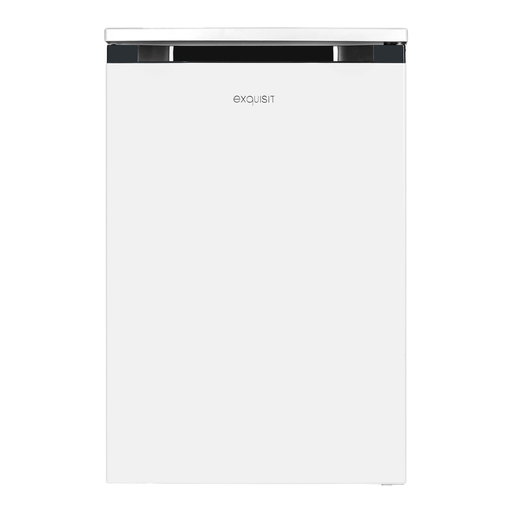
A table-top model without a freezer compartment for chilled workshop supplies, if 88 litres of fridge space is enough for what you need.
88-litre capacity; three adjustable glass shelves; mechanical temperature control; dimensions 85 × 48 × 45 cm.
 No image available
A table-top model for anyone who wants to store frozen food as well as yoghurt and is happy with 107 litres of fridge space.
107 litres of fridge space and 13 litres of freezer space; SuperCool function; energy rating C; dimensions 84.50 × 54.90 × 55.70 cm.
 No image available
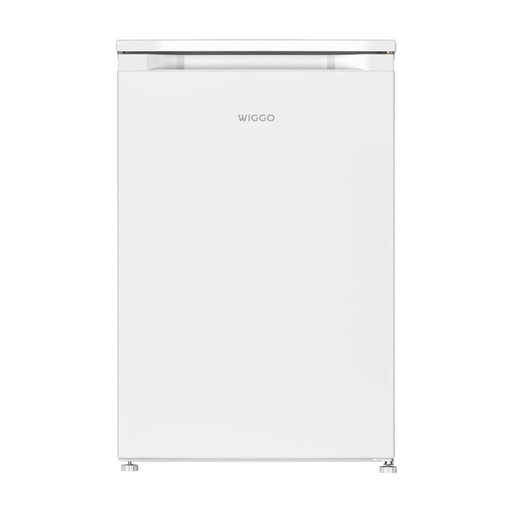
A freestanding table-top model with no stated freezer compartment, for chilled workshop supplies. Check that its stated capacity suits the amount you need to store.
129-litre capacity; two glass shelves, a salad drawer and two door balconies; dial temperature control; dimensions 54 × 54 × 88 cm.
 No image available
A freestanding table-top model for chilled supplies, if a 107-litre capacity is enough and a reversible door would suit your workspace.
107-litre capacity; one glass shelf, a salad drawer and door balconies; mechanical temperature control; dimensions 54.90 × 54.90 × 84.50 cm; reversible door.
 No image available
A compact fridge with a separate chiller compartment for anyone who wants to organise different containers and assess the stated temperature ranges for each compartment separately.
90 litres total; three adjustable glass shelves; stated range of 0–10 °C for the main fridge compartment and −5–5 °C for the separate chiller compartment; dimensions 449 × 485 × 842 mm. These ranges don’t confirm the temperature your food will reach during use.
The Netherlands Nutrition Centre recommends a fridge temperature of 4 °C. Place a fridge thermometer in the middle of the bottom shelf and leave it there for half a day or overnight; adjust the fridge if necessary. Return the yoghurt to the fridge promptly after use and use a clean spoon.
Return the yoghurt to the fridge promptly after serving it. The Netherlands Nutrition Centre recommends not leaving perishable food out of the fridge for more than 2 hours, and says to throw it away after that. This is storage advice, not a reason to routinely leave yoghurt unrefrigerated for 2 hours while serving it.
According to the Netherlands Food and Consumer Product Safety Authority, businesses that prepare, process or sell food must work with an HACCP food safety plan or hygiene code. For food sales at markets and events, the Authority also recommends checking the food’s temperature with a digital probe thermometer; simply reading the fridge display isn’t enough. Whether this specific guidance applies to your workshop depends on how it is organised and where it takes place.
For models with enough fridge space, compare the stated energy use in kWh per year; actual costs also depend on usage and energy prices. According to the Dutch government, consumer purchases in the Netherlands are covered by a legal guarantee, with no fixed statutory guarantee period; any manufacturer’s warranty is in addition. For a business purchase, check the applicable terms of sale separately.