
Student with limited kitchen space
Primarily needs room for yoghurt and everyday groceries, perhaps with a modest freezer compartment for a few frozen items.


For fresh yoghurt, a fridge with a well-controlled cooling compartment matters more than the size of the freezer compartment. The Netherlands Nutrition Centre advises setting your fridge to 4 °C and checking the temperature. A table-top model with a freezer compartment is more suitable if space is limited and you only need to store a small amount of frozen food. A larger fridge-freezer offers more room for shared groceries, provided you have enough space for it and its annual energy consumption suits you.
Primarily needs room for yoghurt and everyday groceries, perhaps with a modest freezer compartment for a few frozen items.
May need more fridge space for groceries bought by several people, and could benefit from a larger, separate freezer compartment.
Alongside enough fridge space, wants to take annual energy consumption and the stated noise level into account, especially if the appliance is close to the living or sleeping area.
Start with the temperature and usable fridge space for yoghurt. Then work out how much freezer space you need and whether a table-top model or a larger fridge-freezer will fit in your kitchen.
Choose this if: you have limited floor space, mainly need to chill yoghurt and everyday groceries, and only need a small amount of freezer space.
Bear in mind: the freezer compartment takes up space alongside the fridge compartment. Remember to measure the clearance needed for the door and ventilation too.
Choose this if: you share the appliance or regularly store more frozen food, and have room for a larger model.
Bear in mind: more capacity requires more space. Compare annual energy consumption across models that fit the available space.
Choose this if: you already have reliable access to a separate freezer and want to use the space in your own appliance for chilled food.
Bear in mind: you’ll be relying on the shared freezer for frozen food.
| What to consider | What to look for | Who is this important for? |
|---|---|---|
| Fridge temperature | Choose a fridge compartment with temperature controls and check the temperature with a fridge thermometer once the appliance is in place. | If I want to keep yoghurt and everyday groceries properly chilled, I look at the controls and check the temperature inside the appliance. Around 29% of consumers prioritise reliable yoghurt storage at the right temperature. |
| Dimensions and fridge space | Measure the available space, doorway and ventilation clearance needed. Also check the layout and the separate fridge capacity. | In a small kitchen, I want to know whether the appliance will fit and whether the space inside works for my groceries. Around 24% of consumers put suitable dimensions and fridge space first. |
| Freezer space | Compare the separate freezer capacity and check the star rating if you want to freeze fresh food yourself. | If I store frozen food or want to freeze food myself, I need to know how much space there is and what the compartment is suitable for. Around 18% of consumers prioritise the freezer space they need. |
| Energy consumption | Compare the EU energy label and annual kWh consumption for appliances of a suitable size. | Because a fridge runs all the time, I want to compare annual energy consumption across appliances with the right capacity. Around 18% of consumers put stated energy consumption first. |
| Noise | Compare the stated noise level of the exact models and think about where the appliance will be placed. | If the appliance is close to my living or sleeping area, I want to take its stated noise level into account. Around 11% of consumers prioritise noise, alongside the essential cooling performance. |
Fridge and freezer space serve different purposes, and the stated capacity doesn’t tell you exactly how much space is practical to use.
Check the separate capacities and see whether the shelves and door compartments suit the packaging you need to store.
Not every freezer compartment is suitable for freezing fresh food. Its size alone doesn’t tell you what it is designed for.
Decide separately what you want to chill and freeze, and check the compartment’s star rating if necessary.
The door needs room to open, and model-specific ventilation requirements may mean you need extra space.
Measure the available area and check the installation instructions for the exact model before you buy.
An energy rating alone doesn’t tell you how much the appliance uses each year. Its size and stated energy consumption matter too.
Compare annual consumption in kWh for appliances with enough fridge and freezer space, without choosing more capacity than you need.
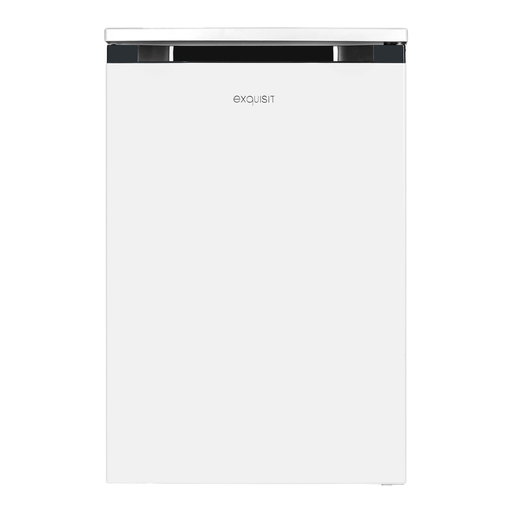
The TRT4702B is a table-top model with a freezer compartment, for anyone looking for an appliance with limited capacity.
The KV550 is a table-top model worth considering if you want both fridge space and your own freezer compartment.
The KVV856WIT has a different balance of fridge and integrated freezer space from some other table-top models.
The KGN36VICT is a larger freestanding fridge-freezer for situations where the available space and shared groceries justify a bigger appliance.
These products range from table-top models with a small freezer compartment to larger fridge-freezers. Compare their fridge and freezer space with the room in your kitchen and the groceries you want to store.
 No image available
A table-top model for anyone looking for a fridge compartment and a small amount of freezer space of their own.
Fridge space: 95 litres. Freezer compartment: 14 litres. Energy rating: C. Stated consumption: 89 kWh per year.
 No image available
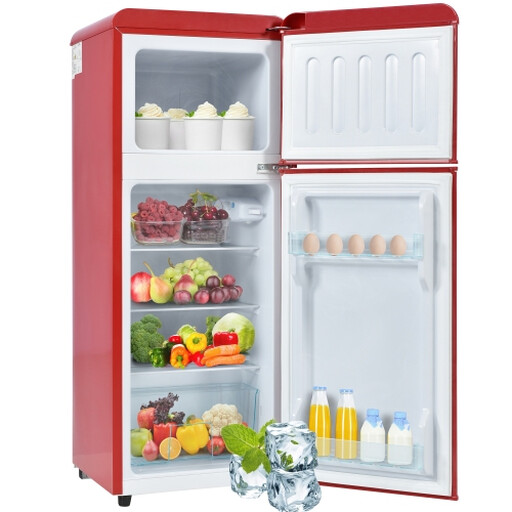
A table-top model with separate fridge and freezer capacities listed, for anyone looking for both functions in a compact appliance.
Fridge space: 107 litres. Freezer compartment: 13 litres. Energy rating: C. Stated consumption: 87 kWh per year. Dimensions: 84,50 × 54,90 × 55,70 cm.
 No image available
A compact model for anyone looking for a separate freezer compartment as well as fridge space in the same appliance.
Stated total capacity: 92 litres. Freezer compartment: 28 litres. Energy rating: D. Stated consumption: 116 kWh per year.
 No image available
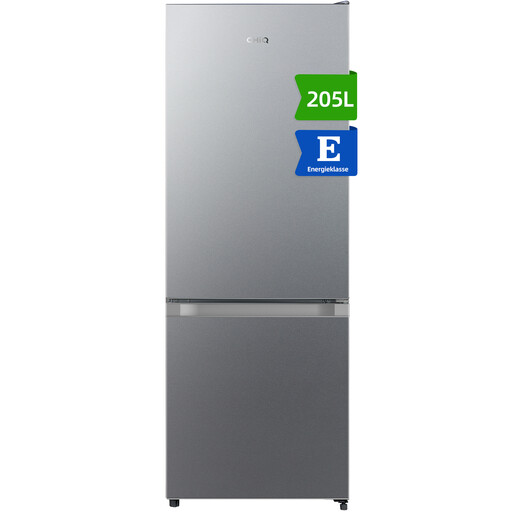
A larger fridge-freezer to consider if you need more separate freezer space and have room for a bigger appliance.
Fridge space: 153 litres. Freezer space: 52 litres. Low Frost. Energy rating: E. Stated consumption: 191 kWh per year. Stated noise level: 39 dB.
 No image available
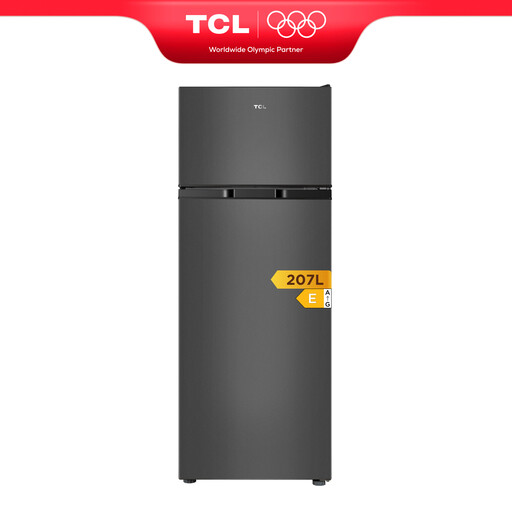
A fridge-freezer with separate fridge and freezer compartments for anyone who wants to store more groceries in their own appliance.
Fridge space: 167 litres. Freezer space: 40 litres. Energy rating: E.
The Netherlands Nutrition Centre advises setting your fridge to 4 °C. Place a fridge thermometer in the middle of the bottom shelf, leave it there for half a day or overnight, and adjust the fridge if the temperature reading is too high.
The Netherlands Nutrition Centre recommends keeping opened full-fat yoghurt in the fridge for 5–7 days. Follow the label for an unopened pack; this advice does not automatically apply to every type of yoghurt.
Check the manual for the model you choose. For example, the Inventum KV550 manual specifies 10 cm of clearance all around for ventilation. Don’t treat this model-specific guidance as a general rule for other fridges.
No. According to the Consumers’ Association, freezer compartments with one to three stars are mainly intended for food that is already frozen. You need a four-star freezer to freeze fresh food. The star rating alone doesn’t tell you how quickly a particular model freezes food.