Start by finding a spot away from your worktop, then decide whether a freestanding tabletop fridge will fit or whether you have a suitable space for an under-counter fridge. Next, choose enough usable fridge space for your yoghurt pots. A freezer compartment is only useful if you’ll use it, and it takes up space that could otherwise be used for chilled food. The Netherlands Nutrition Centre recommends storing fresh yoghurt at 4 °C, so check the temperature once the fridge is in place.
Who should consider this type of fridge?
Cook with limited worktop space
Wants to keep fresh yoghurt chilled without putting a fridge on the worktop, and is comparing a freestanding tabletop model with an under-counter model if there’s a suitable space. The Dutch Consumers’ Association outlines both installation options.
Yoghurt buyer with a small stock
Is looking for a compact fridge and wants to know whether their usual pots will fit and whether it can be kept at 4 °C. The Netherlands Nutrition Centre recommends 4 °C for fridge storage.
Buyer who also wants freezer space
Genuinely needs a freezer compartment as well as fridge space, and wants to weigh up how much room will be left for chilled food. The Dutch Consumers’ Association describes tabletop models with and without a built-in freezer compartment.
What should you consider when choosing?
Freestanding tabletop fridge without a freezer compartment
Choose this if: you have a suitable spot away from the worktop and mainly want space for yoghurt and other chilled food.
Bear in mind: the external dimensions, door clearance and installation requirements; this option doesn’t provide any freezer space.
Built-in under-counter fridge without a freezer compartment
Choose this if: you have a suitable space under the worktop and don’t want a freestanding appliance on the floor.
Bear in mind: the dimensions of the space, the cabinet door fitting and the installation requirements. A freestanding model isn’t automatically a suitable built-in alternative.
Tabletop fridge with a freezer compartment
Choose this if: you want to freeze food as well as chill fresh yoghurt, and have room for a tabletop model.
Bear in mind: compare the fridge and freezer capacity separately; the freezer compartment doesn’t replace fridge space for yoghurt.
| What to consider |
What to check before buying |
Who is this important for? |
| A spot that doesn’t take up worktop space |
Measure the height, width and depth; also check the door clearance and the installation requirements for the exact model. |
I don’t want a fridge on the worktop, so I’ll first check whether there’s a spot away from it or a suitable under-counter space. Around 33% of consumers prioritise keeping their worktop space free. |
| Chilling fresh yoghurt |
Check whether the temperature is adjustable and use a fridge thermometer to measure it once the fridge is in place. |
I want to store yoghurt at the recommended temperature rather than relying on the thermostat setting alone. Around 27% of consumers prioritise reliable yoghurt storage at the right temperature. |
| Usable fridge space |
Compare the capacity of the fridge compartment alone and check that the layout suits the packaging you usually buy. |
If I want to store yoghurt and other chilled food at the same time, the layout needs to be practical. Around 20% of consumers say having the right fridge capacity is their main concern. |
| Energy use |
For models that fit your available space, compare the annual energy consumption in kWh on the energy label. |
I want to factor in running costs after choosing models with suitable dimensions. Around 13% of consumers prioritise low stated energy consumption. |
| With or without a freezer compartment |
First decide whether you really need to freeze food, then compare the stated fridge and freezer capacities separately. |
I need freezer space as well as room for yoghurt, and want to know how much fridge space will be left. Around 7% of consumers prioritise having a freezer compartment. |
Which buying mistakes can you avoid?
-
Choosing a tabletop model without checking the space
A freestanding tabletop fridge isn’t automatically suitable for a built-in installation. With an under-counter fridge, the space and door construction also need to be right.
First measure the available space and compare it with the installation requirements for the exact model.
An appliance that doesn’t fit may mean you need to find another spot or choose a different model.
-
Confusing total capacity with fridge capacity
A freezer compartment has a different purpose from the fridge compartment. Bosch lists 106 litres of fridge space for the Bosch KTL15NWEB, and 134 litres of fridge space for the KTR15NWEB, which has no freezer compartment. This difference applies to these two models and isn’t a general rule for all fridges.
Compare the fridge and freezer capacities separately, and check that the layout has room for your food packaging.
-
Assuming the thermostat setting means the fridge is at 4 °C
The Netherlands Nutrition Centre says that the temperature isn’t the same throughout the fridge.
After installation, check it with a fridge thermometer and adjust the settings if needed.
If the fridge is too warm, it may not meet the recommended storage conditions for fresh yoghurt.
-
Looking only at the energy label or external dimensions
The EU energy label shows annual energy consumption in kWh. The external dimensions and usable fridge space also matter.
First shortlist models that fit, then compare their annual energy consumption. The Dutch environmental information centre recommends checking the annual kWh figure on the energy label.
Higher annual energy consumption means ongoing running costs.
Which brands are worth comparing?
Inventum
Inventum offers models for both freestanding tabletop and built-in under-counter installations.
- Inventum says the KK550 has a capacity of 131 litres and is 55 cm wide. The manufacturer lists a capacity of 135 litres for the IKK0822D.
- Inventum says the IKK0822D requires a space 82 cm high and a door-on-door fitting. Check which installation option suits your kitchen.
Beko
The TSE1285N is a freestanding tabletop model to consider if you have limited width.
- Beko lists a width of 54 cm and a fridge capacity of 101 litres for the TSE1285N.
- Check that the fridge capacity and stated depth of 59 cm suit your available space and the amount of food you store.
Bosch
Bosch has tabletop models with and without a built-in freezer compartment, making it possible to compare their stated fridge capacities.
- Bosch lists 134 litres of fridge space without a freezer compartment for the KTR15NWEB, and 106 litres of fridge space with a freezer compartment for the KTL15NWEB.
- These figures describe two specific models and don’t prove a general performance difference between product ranges.
Liebherr
The Rc 1400 Pure is a tabletop model without a freezer compartment that you can compare with other compact fridges.
- Liebherr lists a total volume of 125 litres, a width of 55 cm and a noise level of 34 dB for this model.
- Check the full dimensions and installation requirements. These manufacturer figures aren’t based on a measured comparison with other models.
ETNA
The KVO682 is an under-counter option with a freezer compartment for a kitchen with a suitable space.
- ETNA lists an electronic thermostat, temperature display and door-on-door system for the KVO682.
- Whether it’s suitable depends on the exact dimensions of the space and how much fridge room you need.
Fridges for use away from the worktop
These Joybuy picks focus on freestanding tabletop models and compact fridges to consider if you have a suitable spot away from the worktop. Before buying, check the dimensions, usable fridge space and whether the appliance can maintain the recommended temperature for yoghurt.
 No image available
Bella BKK090.1BE, tabletop fridge, 88 litres, black, energy rating E
A freestanding tabletop model to consider if you want to store chilled food away from the worktop; the stated capacity is 88 litres.
Manual defrosting is required. Check that the capacity and layout suit your yoghurt pots.
View at Joybuy
 No image available
Wiggo WL-BTT88E(W), tabletop fridge, 54 cm, white, energy rating E
A freestanding tabletop model to compare if you’re looking for fridge space away from the worktop and a width of 54 cm suits your available space.
Check the layout and make sure there’s enough usable fridge space for your yoghurt and other food.
View at Joybuy
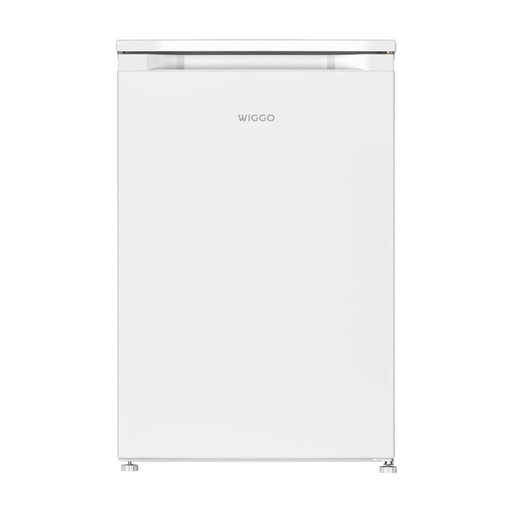 No image available
Wiggo WL-TT82D(W), freestanding tabletop fridge, 55 cm, white, energy rating D
A freestanding tabletop model for anyone who wants to place their fridge away from the worktop. Check that the width of 55 cm and the other dimensions will fit.
Compare the layout with your food packaging and, once the fridge is in place, use a thermometer to check whether it can maintain 4 °C.
View at Joybuy
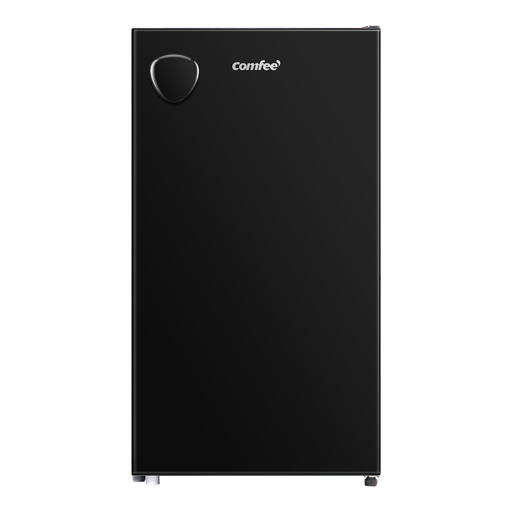 No image available
COMFEE' RCD92BL2EUY(E), under-counter fridge, 88 litres, black
A compact option to consider if you have a suitable spot under a worktop; the stated capacity is 88 litres.
The product description says it has a freestanding design for placing under a worktop. Check the installation instructions and note that the separate cooling zone is only for short-term storage: don’t keep anything in it for longer than two hours.
View at Joybuy
 No image available
TCL RF120DWE0, compact fridge with chiller compartment, 90 litres, energy rating E
A compact fridge with a separate chiller compartment to consider if you want a layout that suits different types of food.
The chiller compartment is a separate zone. Keep yoghurt in the main fridge compartment and use a thermometer to check that it stays at 4 °C.
View at Joybuy
Frequently asked questions
How can I check whether a new fridge is cold enough for fresh yoghurt?
The Netherlands Nutrition Centre recommends 4 °C. Place a fridge thermometer in the middle of the bottom shelf, leave it there for half a day or overnight, and adjust the fridge if the reading is higher.
Can I simply slide a freestanding tabletop fridge into a cupboard under the worktop?
Don’t assume so: a freestanding tabletop fridge and a built-in under-counter fridge are designed for different types of installation. Check the instructions for the exact appliance and, for a built-in model, make sure the space and cabinet door fitting are suitable.
How long does opened full-fat yoghurt keep?
For opened full-fat yoghurt, the Netherlands Nutrition Centre recommends keeping it in the fridge for 5–7 days. Return it to the fridge at 4 °C soon after use and use a clean spoon. For an unopened pot, follow the storage advice and date on the packaging.
How should I compare fridge energy use?
For models that fit your available space, compare the annual energy consumption in kWh on the EU energy label. Also check the fridge capacity; your actual energy costs depend on your electricity tariff and how you use the appliance.


