What should you look for when choosing?
For yoghurt, first look for a storage temperature you can check and enough usable fridge space. Then compare energy consumption and noise levels with the location where the fridge will go.
| What to consider |
What should you check? |
Who is this most important for? |
| Storage temperature |
Check whether you can set the temperature and measure it with a fridge thermometer once the appliance is in place. |
If I want to store fresh yoghurt safely, I need to know whether the fridge in our kitchen is actually cold enough. For around 36% of consumers, storage temperature is their top concern when buying. |
| Well-organised fridge space |
Compare the net fridge capacity, shelves and external dimensions. Don’t count freezer space as room for yoghurt. |
When we need to store yoghurt and shopping for several housemates, what matters most is whether everything fits neatly and is easy to reach. For around 29% of consumers, shared shelf space is the top priority. |
| Annual electricity consumption |
Compare consumption in kWh per year and, for a model with a freezer compartment, check the fridge and freezer capacities separately. |
If we’re buying an appliance together that will run for long periods, I want to factor in its annual consumption and consider whether one fridge will be enough. Electricity consumption is the top concern for around 21% of consumers. |
| Noise in the kitchen |
Check the dB(A) rating for the exact model and consider where the kitchen is located and the installation instructions. |
If our kitchen is next to a room where we often spend time, I want to take the stated noise level into account without losing sight of fridge space or temperature control. Around 14% of consumers say kitchen noise is their top concern when buying. |
Fridges at Joybuy
This selection includes fridges for shared chilled storage, from compact table-top models to a larger built-in fridge, with and without a freezer compartment.
 No image available
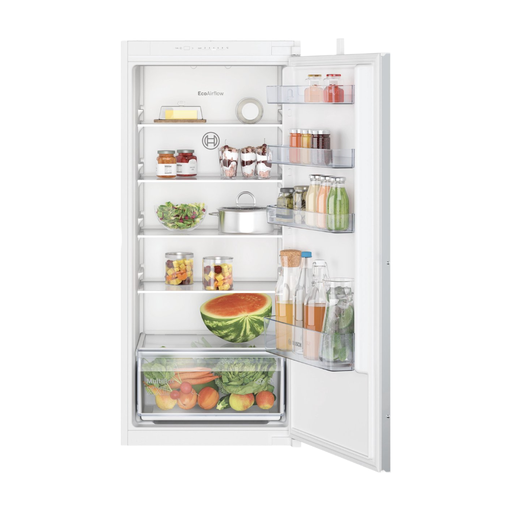
Bosch KIR41NSE0 Series 2
A larger built-in fridge for shared chilled groceries, if you have a suitable housing space.
204 litres net capacity; no freezer compartment; stated noise level 35 dB. Requires a suitable housing space and enough ventilation room.
Joybuy
 No image available
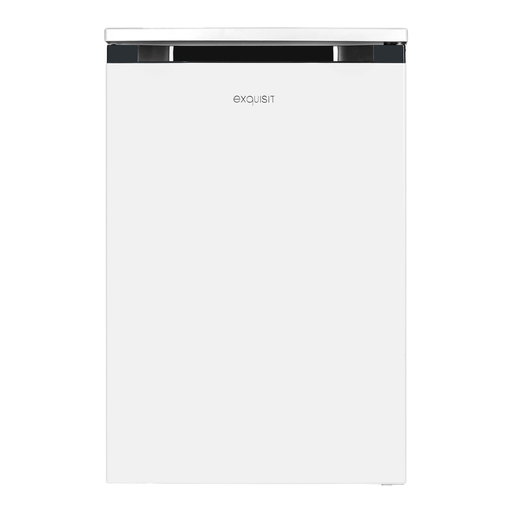
Exquisit KS16-4-051CW
A table-top fridge for shared chilled storage if your housemates also use a small freezer compartment.
107 litres of fridge space and a separate 13-litre freezer compartment; energy rating C; stated consumption 87 kWh per year and noise level 37 dB.
Joybuy
 No image available
Wiggo WL-BTT88E(W)
A freestanding table-top fridge without a freezer compartment for chilled groceries in a shared kitchen.
129 litres capacity; stated dimensions 54 × 54 × 88 cm and consumption 92 kWh per year.
Joybuy
 No image available
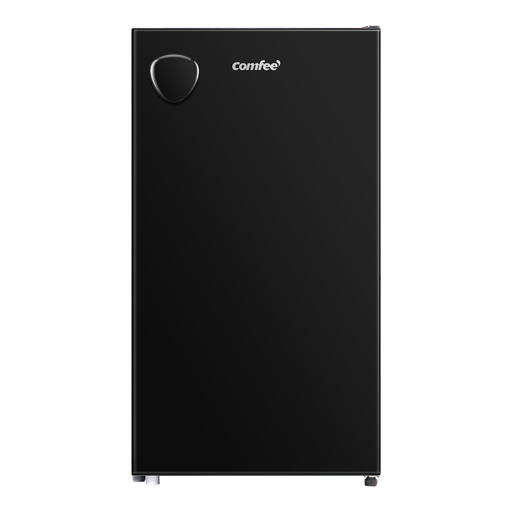
COMFEE RCD92BL2EUY(E)
A compact freestanding fridge for chilled groceries under a worktop, if the available space is suitable.
88 litres capacity; stated dimensions 44,5 × 47 × 82,7 cm; with glass shelves, a crisper drawer and door shelves. According to the product description, the separate cooling zone is intended for short-term chilling; don’t store products in it for longer than two hours.
Joybuy
 No image available
CHiQ JR92DSE
A compact fridge without a freezer compartment for shared chilled storage when 92 litres of fridge space is enough.
92 litres of fridge space; adjustable glass shelves; stated consumption 85 kWh per year, energy rating E and noise level 39 dB.
Joybuy
Frequently asked questions
At what temperature should I store yoghurt in the fridge?
The Voedingscentrum recommends setting the fridge to 4 °C. Check the temperature with a fridge thermometer in the middle of the bottom shelf, leave the door closed for half a day or overnight, and adjust the setting if needed. This advice doesn’t mean that a specific model will automatically reach that temperature.
How long can opened yoghurt be kept in the fridge?
For opened full-fat yoghurt, the Voedingscentrum recommends keeping it in the fridge for 5–7 days. Put the packaging back promptly after use, keep the fridge at 4 °C and use a clean spoon. For an unopened pack, check the label and best-before date; a label for housemates doesn’t extend its shelf life.
What can I do if the fridge breaks down?
For consumer purchases in the Netherlands, a product must meet the standard you’re entitled to expect. According to the Dutch government, there’s no fixed statutory guarantee period; if there’s a problem, the retailer must provide a solution. An additional manufacturer’s guarantee doesn’t replace this right.
What information is on the energy label, and what should I do with an old fridge?
For household fridges within its scope, the European energy label shows information including the energy class from A–G, annual consumption in kWh, capacity and noise level. According to the Dutch government, you can return an old fridge to the shop or online retailer where you buy a new similar appliance, or take it to your local council recycling centre.


