
Cooking and chilling together
You share the evening meal and want to store yoghurt alongside other perishable groceries. The amount of fridge space you need depends on what you’ll be storing at the same time.


For yoghurt and the other groceries for a shared meal, the key is choosing a fridge with enough separate fridge space that also fits in your kitchen. A model without a freezer compartment uses all its interior space for chilling; choose a fridge-freezer if you need freezer space too. The Netherlands Nutrition Centre recommends storing yoghurt at 4 °C. Once your fridge is in place, check the temperature with a fridge thermometer and, for suitable models, compare the stated annual energy consumption in kWh.
You share the evening meal and want to store yoghurt alongside other perishable groceries. The amount of fridge space you need depends on what you’ll be storing at the same time.
You mainly need fridge space and want to make sure a table-top model fits within the available width and height. A freezer compartment takes up some of the total capacity.
You want a suitable size, so you’re also comparing the stated annual energy consumption in kWh, not just the energy rating. Milieu Centraal recommends considering both size and energy use.
Start by working out how much fridge space you need and how much room you have. Then decide whether you need freezer space and compare the annual energy consumption of models that meet your needs.
| What to consider | What to look for | Who is this important for? |
|---|---|---|
| Checking the temperature | Check whether the temperature is adjustable and, once the fridge is in place, check it with a fridge thermometer. The Netherlands Nutrition Centre recommends 4 °C. | If I put yoghurt back after serving, I want to know whether the fridge really reaches 4 °C; around 33% of consumers prioritise being able to check the temperature. |
| Usable fridge space | Compare the fridge compartment’s capacity separately with what you’ll be storing at the same time. The total capacity of a fridge-freezer also includes the freezer. | If I’m chilling yoghurt and other meal ingredients for several people at once, I want enough fridge space; around 27% of consumers put this at the top of their list. |
| Dimensions and available space | Measure the available height, width and depth, and check that the appliance will fit along the delivery route too. | If space is limited in my kitchen, I want to know in advance whether the model will fit; around 20% of consumers make fit their top priority. |
| Annual energy consumption | For models of a suitable size, compare the stated energy consumption in kWh per year and the energy rating. | If I want to avoid unnecessary energy use, I compare the annual consumption of suitable models; around 20% of consumers prioritise size and energy use. |
With a fridge-freezer, the freezer compartment counts towards the total capacity, but that space isn’t available for yoghurt and other fresh meal ingredients.
Compare the stated fridge capacity separately from the freezer capacity. According to Inventum, the Inventum KV550 has 97 litres of fridge space and 16 litres of freezer space.
The energy rating alone doesn’t tell you how many kWh a specific model uses each year. Milieu Centraal also recommends considering the size and energy consumption.
First compare models that offer the space you need, then look at both the energy rating and the stated annual energy consumption.
The setting you choose doesn’t automatically tell you what temperature the fridge reaches where you keep your yoghurt.
Once the fridge is in place, check the temperature with a fridge thermometer. The Netherlands Nutrition Centre recommends a fridge temperature of 4 °C.
Examples of freestanding table-top models, with or without a freezer compartment.
The TSE1284N is a freestanding table-top model for anyone who needs to make the most of their available kitchen space.
The Ke 2350 Comfort is a taller freestanding model with no freezer compartment.
The RB34C600CSA/EF is an example of a larger fridge-freezer.
The products below are fridge-freezers for anyone who wants freezer space as well as room for yoghurt and other chilled meal ingredients. For each model, check the separate fridge capacity and whether its external dimensions will fit your kitchen and delivery route.
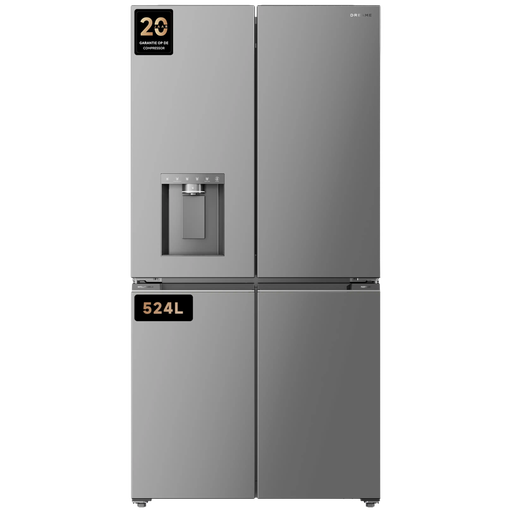 No image available
A four-door fridge-freezer for storing chilled meal ingredients alongside frozen food.
Total capacity 524 L; energy rating E.
Check that there’s enough space for installation and ventilation.
 No image available
This fridge-freezer has separate fridge and freezer compartments. Compare the fridge space with what you need for yoghurt and your meal ingredients.
Fridge space 187 L; freezer space 73 L; width 55 cm; energy rating E.
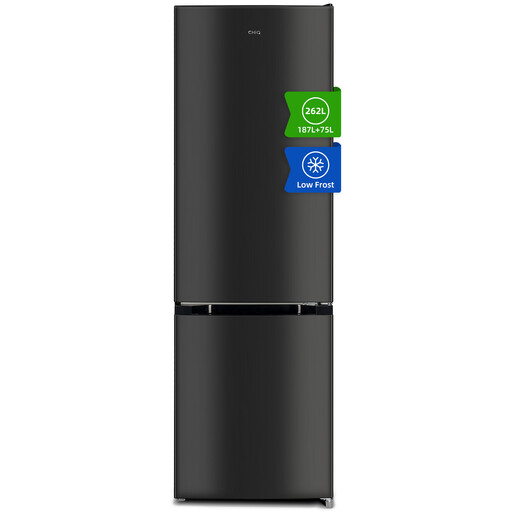 No image available
A fridge-freezer for storing chilled groceries and frozen food in one appliance.
Total capacity 262 L; Low Frost; reversible door.
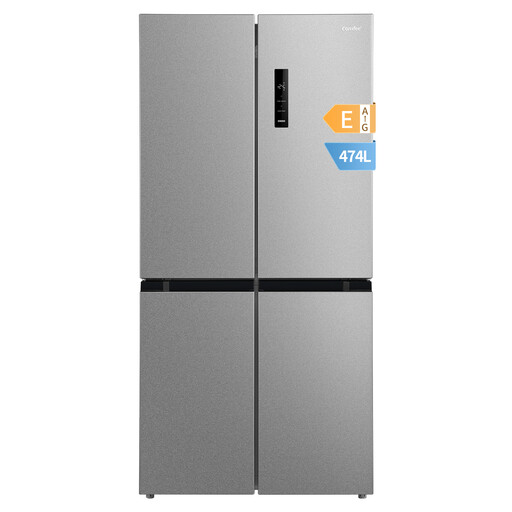 No image available
A four-door fridge-freezer with different storage zones for your household groceries.
Total capacity 474 L; energy rating E.
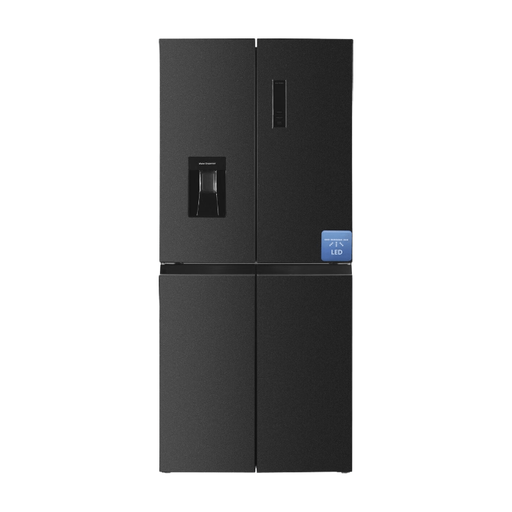 No image available
A freestanding fridge-freezer for anyone who wants to store chilled groceries and frozen food together.
Check that the stated external dimensions of 180 × 79 × 70 cm and the delivery route are suitable for your available space.
The Netherlands Nutrition Centre recommends a fridge temperature of 4 °C. Place a fridge thermometer in the middle of the bottom shelf and leave it there for half a day or overnight. Adjust the fridge if the reading is too high. The setting alone doesn’t prove what temperature the fridge reaches in that spot.
Put yoghurt back in the fridge promptly after use and keep it at 4 °C. Use a clean spoon when serving yoghurt from a tub. The Netherlands Nutrition Centre says opened full-fat yoghurt keeps for 5–7 days in the fridge; after that, check its appearance and smell, then taste it. For an unopened pack, follow the storage advice and date on the packaging.
The label helps you compare models based on factors including their energy rating and annual electricity consumption. According to the European Commission, since 1 March 2021, the EU label for household fridges has used a scale from A to G. Compare the details for the specific model; Milieu Centraal also recommends choosing a suitable size.
In the Netherlands, statutory rights apply, but there is no fixed statutory warranty period. What you can reasonably expect from a fridge depends on factors including the product and normal use; if something goes wrong, the retailer must provide a solution. A manufacturer’s warranty may offer additional cover, but it doesn’t replace your statutory rights. This is the Dutch Government’s guidance.
When buying a similar new appliance, private customers can use the old-for-new scheme, including when they buy online. The shop can’t charge you to take the old appliance away. If collection at the time of delivery isn’t possible, the Dutch Government describes a free collection or return option.