
Workshop leader with lots of leftovers
After a session, you need room for several sealed portions alongside chilled ingredients. The Consumentenbond lists capacity and layout as important points to consider when choosing a fridge.


Choose a fridge based on the number of cooled soup portions, the space available and whether you also want to freeze portions. Compare the usable fridge capacity and layout. A large fridge or a cooling setting does not mean hot soup can be cooled safely in it: the Voedingscentrum advises letting leftovers cool first and refrigerating them within two hours. If your workshop falls under the rules for a food business, follow the relevant food safety plan.
After a session, you need room for several sealed portions alongside chilled ingredients. The Consumentenbond lists capacity and layout as important points to consider when choosing a fridge.
You store a limited number of portions and need to fit the appliance into a small space. Measure the space and doorway, and check that your containers will fit on the shelves.
If you want to keep soup for longer than the recommended fridge storage time, you’ll also need freezer space. The Voedingscentrum advises keeping leftovers in the fridge for no more than two days.
Best for: a few cooled portions and limited space. Beko lists 88 litres of fridge space for the LS9052WN.
Consider: there’s less room for several portions alongside other ingredients, so check that your containers will fit.
Best for: several portions alongside chilled ingredients, if you have somewhere else to freeze them. Inventum lists a capacity of 362 litres for the KK1850W.
Consider: compare the external dimensions and annual energy use with the space available and how you plan to use it.
Best for: if you want to freeze soup as well as store portions in the fridge, and don’t have a separate freezer.
Consider: freezer space isn’t available for chilled soup; the European Commission lists fridge and freezer capacities separately on the energy label.
Count the portions you usually store, and measure your containers and the space where the appliance will go. For a fridge-freezer, compare the fridge capacity separately from the freezer capacity.
| Point to consider | What to look for | Who is this important for? |
|---|---|---|
| Usable fridge space | Compare the fridge capacity in litres and the shelf layout; check that your containers will fit alongside other ingredients. | If I want to store several portions alongside other ingredients, I look at the layout and the space for my containers; around 36% of consumers make fridge space their top purchasing priority. |
| Temperature control | Use a thermometer to check the actual fridge temperature; the selected setting isn’t a temperature reading. | When I want to store leftover soup, I want to be able to check the temperature and follow the correct storage guidance; around 28% of consumers prioritise temperature control. |
| Available space | Measure the external dimensions, doorway and clearance needed around the appliance; also check that you can access the shelves. | In a small workshop space, the fridge needs to fit without making it difficult to access containers; around 18% of consumers say limited space is their main purchasing concern. |
| Freezing and energy use | Compare fridge and freezer capacities separately, and check the annual energy use in kWh as well as the energy rating. | If I want to keep portions for longer, I need enough freezer space and want to take energy use into account; around 18% of consumers prioritise freezing and energy use. |
For domestic storage, the Voedingscentrum recommends keeping your fridge at 4 °C. Let leftovers cool first, then put them in the fridge or freezer within two hours. For business processes, follow the requirements of the relevant food safety plan.
The capacity in litres or a feature such as SuperCool doesn’t tell you how quickly a large quantity of hot soup will reach the required temperature.
Let soup cool first, then refrigerate leftovers in line with the relevant storage advice or food safety plan. Check the temperature of the food where necessary.
Some of a fridge-freezer’s capacity is used for freezing, so it isn’t available for chilled portions. The European Commission shows these storage capacities separately on the energy label.
Compare the fridge capacity with your containers and supplies, and also check that the freezer space meets your needs.
An energy rating and annual energy use in kWh tell you different things about an appliance; actual energy use also depends on how it’s used.
Compare the annual energy use of models with a suitable fridge capacity, and consider how often you’ll use the fridge. Milieu Centraal also highlights the use of a second fridge.
Inventum lists models with a range of fridge capacities, including the KK1850W and KK1420.
Beko lists both a compact model and a larger freestanding fridge.
Liebherr lists an under-counter model and a larger freestanding fridge.
The freestanding KKV143WIT is a medium-sized fridge with no listed freezer compartment.
Bosch provides information about freestanding and built-in fridges.
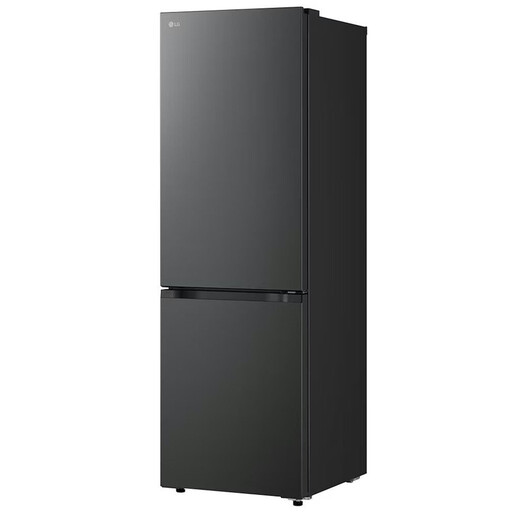
These product picks are fridge-freezers for cooled soup portions and, where needed, freezing portions. Compare the separate fridge and freezer capacities with the space you have available.
 No image available
The separate fridge and freezer compartments may suit you if you want to store cooled portions and freeze some too; a cooling setting doesn’t prove that hot soup will cool safely.
The product information lists 220 l of fridge space and 113 l of freezer space, adjustable glass shelves and annual energy use of 172 kWh. SuperCool is also listed.
 No image available
This under-counter model may suit limited space and a smaller stock of food; check beforehand that its stated dimensions will fit the space where you plan to put it.
The product information lists 107 l of fridge space, a 13 l freezer compartment and external dimensions of 84,50 × 54,90 × 55,70 cm. Super Cooling and a temperature control dial are also listed.
 No image available
The separate storage compartments are useful if you want to keep some portions of soup chilled and freeze others; measure the space before choosing.
The product information lists 187 l of fridge space, 73 l of freezer space and a width of 55 cm. It also lists adjustable shelves, a reversible door and energy rating E.
 No image available
This under-counter model may suit you if you’re storing a limited number of cooled portions and have little space; check the external dimensions and room for the door to open.
The product information lists a capacity of 129 l, external dimensions of 54 × 54 × 88 cm, two glass shelves and two door shelves. It also lists a temperature control dial and annual energy use of 92 kWh.
 No image available
This fridge-freezer has separate fridge and freezer compartments for portions you want to keep chilled and those you want to freeze. Super Cooling doesn’t prove that hot soup will cool safely.
The product information lists 232 l of fridge space, 98 l of freezer space, four fridge shelves and electronic temperature control. It also lists a reversible door, a cabinet depth of 57 cm and energy rating E.
Don’t rely on the fridge to cool a large pan of hot soup quickly. The Voedingscentrum advises letting leftovers cool first, then putting them in the fridge or freezer within two hours. For relevant professional processes, the NVWA lists smaller portions, cold water or ice, and regular stirring as ways to help cool food down.
The Voedingscentrum recommends a fridge temperature of 4 °C. Put a fridge thermometer in the middle of the bottom shelf, leave it there for half a day or overnight, and adjust the fridge if necessary.
The Voedingscentrum advises keeping leftovers chilled for no more than two days. It also gives two days as the storage time for the specific example of thickened soup with meat and vegetables. For professional activities, also follow the relevant food safety plan.
Not simply because it’s called a cookery workshop. According to the NVWA, businesses that produce, process or sell food must work with a food safety plan based on HACCP or an approved hygiene code; whether this requirement applies to the organiser depends on the specific business activity. For relevant business processes, the NVWA says that cooked food that isn’t served immediately must be cooled to below 7 °C within five hours.
Compare both the energy rating and annual energy use in kWh; the EU energy label also shows storage capacities and noise levels. According to the Dutch Government, you can hand in an old household appliance at the shop or online retailer where you buy a new, similar appliance, or at your local council recycling centre.