
A cook with little worktop space
You want to keep covered fruit salad chilled without putting an appliance on your limited worktop. Where to place the fridge and how to ventilate it are important considerations.


First, choose a fridge that fits without blocking the doorway or the required ventilation space. Once it’s in place, check whether it actually reaches 4 °C. A freestanding tabletop fridge, an under-counter fridge and a narrower model each solve different space problems. Then compare the usable fridge space and, if you also want to freeze food, how much room the freezer compartment takes up.
You want to keep covered fruit salad chilled without putting an appliance on your limited worktop. Where to place the fridge and how to ventilate it are important considerations.
The available width determines which compact fridge will fit. Also check the depth, door clearance and space for your salad containers.
You want to store frozen food as well as chilled salad, so you need to weigh up having a freezer compartment against the fridge space left over.
A good fit if: you have a suitable space and mainly need room for fresh food.
Consider: check the ventilation requirements; a freestanding model isn’t automatically suitable for built-in installation.
A good fit if: you also want to store small amounts of frozen food in the same compact appliance.
Consider: the freezer compartment takes up space that would otherwise be available for chilled food.
A good fit if: you have a suitable kitchen niche and want to keep your worktop clear.
Consider: the niche, door fixing and ventilation must be suitable for the exact model.
A good fit if: the available width rules out a standard tabletop model.
Consider: a narrower cabinet doesn’t guarantee that your salad containers will fit comfortably; check the layout and temperature too.
| What to consider | What should you check? | Who should pay particular attention? |
|---|---|---|
| Positioning and worktop space | Measure the height, width and depth. Also check the door clearance and the specified ventilation space. | If I have little worktop space, I want to know whether there’s a suitable freestanding spot or niche that won’t block the door or ventilation. Around 36% of consumers give top priority to positioning and keeping their worktop clear. |
| Chilling fruit salad | Check whether you can adjust the temperature, then use a fridge thermometer after installation to see if it reaches 4 °C. | I want to keep covered fruit salad chilled, rather than relying on the temperature setting alone. Around 29% of consumers put verifiable cooling performance at the top of their list. |
| Fridge space and freezer compartment | Compare fridge and freezer capacities separately, and check whether your containers fit between the shelves and drawers. | If I want to store frozen food as well as salad, I weigh up the layout against the fridge space available for fresh food. Around 21% of consumers say the fridge-freezer layout is their main consideration. |
| Energy use and noise | For models that meet your needs, compare the stated annual energy consumption in kWh and noise level in dB. | I want to know what the stated energy use and noise level mean for my own needs, especially if the fridge is close to a living area. Around 14% of consumers give these factors top priority. |
A fridge that fits the available width may still not have enough clearance for the door, niche and ventilation.
Measure the entire space and read the installation instructions for the exact model before you choose.
An unsuitable set-up could mean altering your kitchen or choosing a different model.
A freezer compartment takes up space that could otherwise be used for chilled salad containers. The stated fridge capacity also isn’t the same as the space you can use in practice once you account for drawers and shelves.
Compare fridge and freezer capacities separately, and check that your own containers fit between the shelves and drawers.
The temperature inside the fridge may differ from what you’d expect based on the setting.
The Netherlands Nutrition Centre (Voedingscentrum) recommends checking the temperature with a fridge thermometer. Keep the salad covered and adjust the fridge if necessary.
Offers freestanding tabletop models with and without a freezer compartment.
Offers the compact KK550 without a freezer compartment and the KV550 with one.
The Rd 1400 Pure is a freestanding tabletop model without a freezer compartment.
The KU21RVFE0 is an under-counter model with a fixed hinge for a suitable kitchen niche.
These products are designed for compact cooling in a small kitchen, with freestanding tabletop fridges and narrower compact models.
 No image available
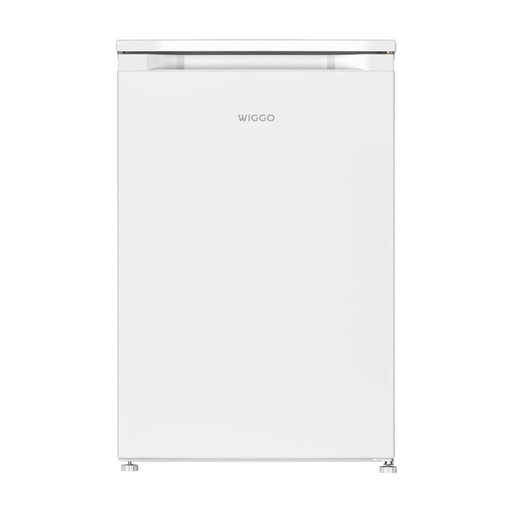
A freestanding tabletop model to consider if you want to make use of the space beside or beneath your worktop.
Stated capacity: 88 litres. Energy label E.
 No image available
A freestanding tabletop model to consider if you’re not looking for an under-counter fridge and want to make use of the space available.
The product name states that it is 55 cm wide, comes in white and has an energy label rating of D.
 No image available
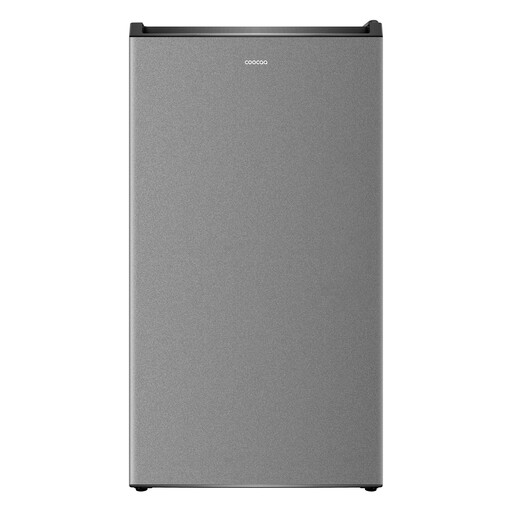
A compact model with a chiller compartment to consider if width is a key constraint. Check the actual fridge temperature once it’s in place.
Stated capacity: 90 litres. With chiller compartment and energy label E.
 No image available
A compact fridge to consider if you’re looking for a small model; measure the available space and door clearance first.
Stated fridge capacity: 83 litres. Energy label E.
 No image available
A compact model to consider if you’re looking for a fridge that’s 47 cm wide. Check the full installation space and measure the temperature once it’s in place.
Stated capacity: 92 litres. With chill drawer and energy label E.
The Netherlands Nutrition Centre (Voedingscentrum) recommends keeping fruit salad well covered in the fridge and setting the fridge to 4 °C. For the opened product described in its storage guide, the Voedingscentrum recommends keeping it in the fridge for two days; if it’s a packaged product, also follow the instructions on the relevant label.
Measure the temperature inside the fridge with a fridge thermometer. The Voedingscentrum recommends placing the thermometer in the middle of the bottom shelf, leaving it there for half a day or overnight, and adjusting the fridge if the reading is higher than 4 °C.
Don’t assume that a freestanding model is suitable for this. Check the installation and ventilation requirements for the exact appliance. For an existing built-in niche, choose an under-counter model that fits the niche and door mounting.
According to the European Commission, EU energy labels for household fridges have used the A–G scale since 1 March 2021. The label includes information such as energy consumption, storage capacity and noise level. You’ll also need your own electricity tariff to calculate your energy costs.
Under statutory consumer rights in the Netherlands, the seller is responsible for providing an appropriate solution if the product doesn’t perform as you could reasonably expect under normal use. This doesn’t mean there’s a fixed statutory warranty period of two years. If you’re a private consumer buying a similar new appliance, the Dutch government says the free old-for-new scheme also applies to online purchases.