
Storing small portions of cheese
You want to keep opened portions of cheese chilled and wrapped separately. The measurable temperature and type of cheese will both influence your choice.


First, choose a fridge where you can measure and set the temperature at the storage point to 4 °C, as recommended by the Netherlands Nutrition Centre. Then match the usable fridge space to your wrapped portions. A compact fridge without a freezer compartment may suit small quantities, while a larger table-top model offers more room to organise your food. Choose a freezer compartment only if you also want to freeze suitable products.
You want to keep opened portions of cheese chilled and wrapped separately. The measurable temperature and type of cheese will both influence your choice.
You need room for a few portions and everyday groceries, but the fridge’s external dimensions and usable layout must fit your kitchen.
You want to weigh up energy use, noise and the added value of a freezer compartment before choosing a second appliance.
Suitable when: you store only a few portions and other chilled groceries, and have limited space for the appliance.
Consider: check that the layout and external dimensions suit your needs; there is no freezer space.
Suitable when: you want to store several wrapped portions alongside everyday groceries and have enough space.
Consider: the stated capacity doesn’t tell you exactly how many containers will fit on the shelves.
Suitable when: you want to freeze suitable products as well as chill cheese.
Consider: compare the fridge and freezer capacities separately; the Netherlands Nutrition Centre says soft cream cheese is less suitable for freezing.
Suitable when: you store only a small quantity and can check the temperature where you keep it.
Consider: a small separate compartment limits your storage options. A Severin product sheet dated 4 June 2024 gives the KB 8877 a net capacity of 45 litres and a 5-litre chiller compartment.
The Netherlands Nutrition Centre recommends a fridge temperature of 4 °C. So measure the temperature where you store the cheese and follow the storage advice for the type of cheese you have.
| What to consider | What to check before buying | Who is this important for? |
|---|---|---|
| Measurable fridge temperature | Check whether you can set the temperature, then measure it after installation with a fridge thermometer. | I want to store opened portions of cheese at a temperature I can monitor and wrap them properly. Around 36% of consumers prioritise being able to measure the temperature. |
| External dimensions and layout | Measure the space where the fridge will go and your containers; compare the external dimensions, fridge capacity and adjustable shelves. | If my kitchen has limited space, I want to know whether both the fridge and my wrapped portions will fit. Around 29% of consumers give the right dimensions and layout their top priority. |
| Energy use and noise | Compare the annual energy use in kWh and the noise figure on the EU energy label; also consider whether you need an extra fridge. | I want to know what an extra appliance will use and whether its noise level suits where it will stand. Around 21% of consumers prioritise running costs and noise. |
| With or without a freezer compartment | Compare the fridge and freezer capacities separately, and check the storage advice for the cheese you want to freeze. | I also want to be able to freeze suitable products without overlooking how much fridge space is available for cheese. Around 14% of consumers give the extra freezer option their top priority. |
The setting you choose doesn’t automatically tell you the temperature where you keep your cheese.
After installation, measure the temperature with a fridge thermometer and adjust the fridge if necessary.
The Inventum KV550’s stated capacity of 113 litres comprises 97 litres of fridge space and 16 litres of freezer space.
Compare the fridge capacity on its own with the space you need for your containers.
A fridge uses electricity for as long as it is switched on. Milieu Centraal recommends checking whether a second fridge needs to run all the time.
Check the annual energy use on the energy label and first see whether your existing fridge has room for the portions.
The KK471W is a slim fridge without a freezer compartment; the KV550 has separate fridge and freezer sections.
The Rd 1400 is a table-top fridge without a freezer compartment, for anyone mainly looking for fridge space.
The product sheet describes the KB 8877 as a very small fridge with a separate chiller compartment.
The KTR15NWEB is a table-top fridge without a freezer compartment, with features including shelves and SuperCooling.
These models are compact fridges for small portions and other chilled groceries. For each model, check the layout, fridge capacity and any freezer space, as well as the temperature where you plan to store your food.
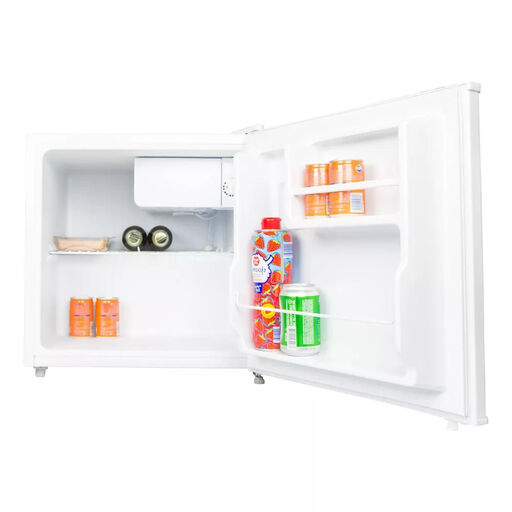
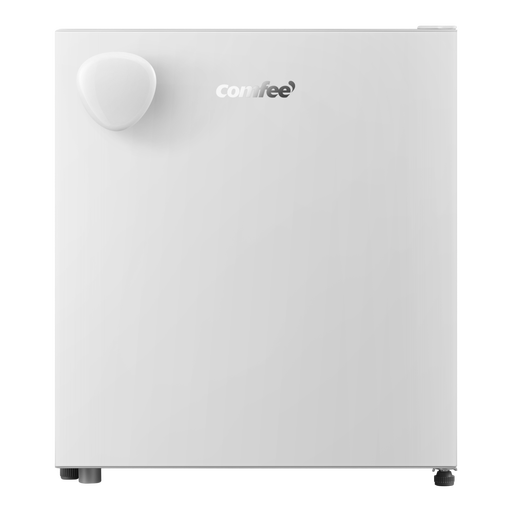 No image available
Its capacity and compact width may suit a limited space; check that your portions will fit on the shelves.
43 L capacity; 44,5 cm wide; three temperature settings, adjustable shelves, bottle rack and separate chiller compartment. Energy label class E.
The setting you choose doesn’t confirm the temperature where you store your food; measure it after installation.
 No image available
This compact fridge may suit a small amount of chilled food; check the available space before you buy.
43 L capacity; external dimensions 49,2 × 47,2 × 45 cm; temperature control dial and a metal shelf.
The product description recommends a room temperature of at least 10 °C. It says the separate compartment is intended for temporarily storing frozen products, not for freezing food.
 No image available
The three shelves and separate chiller compartment provide different places for chilled portions; check that the layout suits your containers.
90 L capacity; three glass shelves; stated temperature range of 0–10 °C for the main fridge compartment and −5–5 °C for the separate chiller compartment. Energy label class E.
The temperature setting doesn’t tell you the temperature around your cheese; check it where you store it.
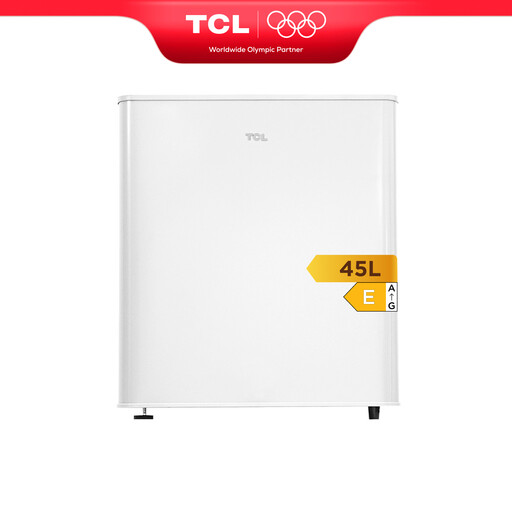 No image available
This table-top model has a separate freezer compartment; compare the available fridge space with the number of portions you want to store.
The product name gives a capacity of 45 L; the description lists 42 L of fridge space and a 3 L freezer compartment. External dimensions 449 × 485 × 512 mm; temperature range 0–10 °C.
After installation, measure the temperature where you store your cheese.
 No image available
The adjustable shelves and different compartments can help you keep portions and other chilled groceries organised separately.
92 L capacity; 47 cm wide; seven temperature settings, adjustable glass shelves, salad drawer and door shelves. Energy label class E.
Check the actual temperature where you store your food and make sure the external dimensions suit your available space.
The Netherlands Nutrition Centre recommends 4 °C. Place a fridge thermometer in the middle of the bottom shelf, leave it there for half a day or overnight, then adjust the fridge if the reading is too high.
The Netherlands Nutrition Centre recommends keeping cheese chilled in sealed packaging. For hard cheese, it suggests using cheese paper or reusable food wrap. For opened soft cream cheese and other types of cheese, check their specific storage advice and the label.
No. The Netherlands Nutrition Centre says to cut away at least 1 cm around the mould only for hard cheeses such as Gouda or Edam. Don’t automatically apply this exception to soft cheese or other mouldy foods.
Check the climate class and the ambient temperatures permitted by the manufacturer for the exact model. According to the Consumers’ Association, not all fridges work properly at temperatures below 10 °C, so don’t assume that every model is suitable for an unheated space.