
Anyone who wants to check the storage temperature
You want to know whether opened cream is being kept at the right temperature, so you check it with a fridge thermometer.


Start with the temperature: the Netherlands Nutrition Centre recommends keeping your fridge at 4 °C, so use a fridge thermometer to check that this temperature is reached where you store the cream. Then measure the available space, allowing for the clearance specified in the manual. Only then decide between a compact model, an under-counter fridge without a freezer compartment or a model with a freezer compartment. A cool box that only cools relative to the surrounding temperature is not an obvious alternative unless you can monitor its temperature.
You want to know whether opened cream is being kept at the right temperature, so you check it with a fridge thermometer.
You weigh up the appliance’s dimensions and the doorway against the available installation space and the fridge capacity you need.
You decide how much fridge space you need and whether a freezer compartment is important.
First check that the temperature is suitable for storing cream. Then measure the appliance and allow for the recommended installation clearance. Finally, choose a layout that suits the other things you want to store.
| What to consider | What should you check? | Who is this important for? |
|---|---|---|
| Temperature for cream | Check the temperature control and, once the fridge is in place, use a fridge thermometer to measure the temperature on the bottom shelf. | If I store opened cream, I want to know how cold it is where I keep it. Around 36% of consumers rank temperature control as their top priority. |
| Kitchen space | Measure the height, width, depth and doorway; check the manual to see how much clearance the model needs around it. | If space is limited, the appliance needs to fit and the door must be able to open properly. For around 29% of consumers, finding a fridge that fits is the top priority. |
| Fridge space and freezer compartment | Compare the stated fridge capacity separately from the freezer capacity, and check whether the packaging will fit on a usable shelf. | If I want to store cream and everyday groceries, I want to know how much usable space there really is. Around 21% of consumers put usable capacity first. |
| Energy use and noise | Compare the energy label and stated annual energy consumption; if you have an open-plan kitchen, check the noise rating too. | If the fridge is in an open-plan kitchen, energy use and noise are factors in my choice. Around 14% of consumers consider these most important. |
Cooling relative to the surrounding temperature does not guarantee that opened cream will be kept at 4 °C.
For cream, choose an appliance that lets you measure and maintain the actual storage temperature.
The Inventum KV550B has a stated total capacity of 113 litres, made up of 97 litres of fridge space and 16 litres of freezer space. The freezer space is not available for chilled products.
Compare fridge and freezer capacities separately, and decide first whether you need a freezer compartment.
The doorway and the clearance specified in the manual also determine whether a fridge will fit in your chosen spot.
Measure the installation space and check the installation manual for the complete model number before buying.
A figure in a product example depends on the electricity price used and does not necessarily tell you how much a fridge will cost you to run.
Compare the models’ stated annual energy consumption, and use your own tariff if you want to calculate the cost.
The Dutch model information includes under-counter fridges both with and without a freezer compartment.
The TS190340N is a freestanding under-counter model to compare if you have limited installation width.
The range illustrates the difference between a compact fridge and a thermoelectric cool box.
The KTR15NWEB is an under-counter fridge without a freezer compartment to include when comparing fridge capacity.
According to the manufacturer, the KB 8877 has a compact layout with a separate chiller compartment.
This selection includes compact under-counter fridges without a freezer compartment and fridges with a freezer compartment for storing cream and other chilled products.
 No image available
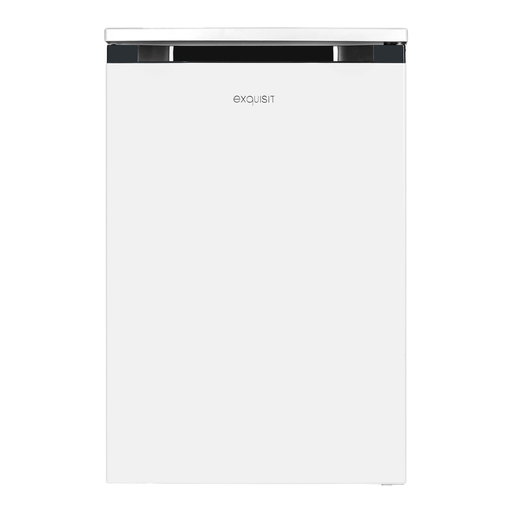
An under-counter fridge without a freezer compartment to consider if you want to use all the available space for chilled products.
88 litres net capacity; E energy rating; dimensions 85 × 48 × 45 cm; three adjustable glass shelves; reversible door; mechanical temperature control.
 No image available
A model with a freezer compartment to consider if you want to store frozen products as well as chilled cream.
95 litres of fridge space and 14 litres of freezer space; adjustable shelves; reversible door. The freezer space is not included in the available fridge capacity.
 No image available
A fridge-freezer to compare if you want to store chilled and frozen products separately.
120 litres total capacity, split into 107 litres of fridge space and 13 litres of freezer space; C energy rating; dimensions 84,50 × 54,90 × 55,70 cm; temperature control dial.
 No image available
A fridge-freezer to consider if you need freezer space as well as room for chilled products.
187 litres of fridge space and 73 litres of freezer space; stated width 545 mm; reversible door; E energy rating; stated fridge temperature range 2–8 °C.
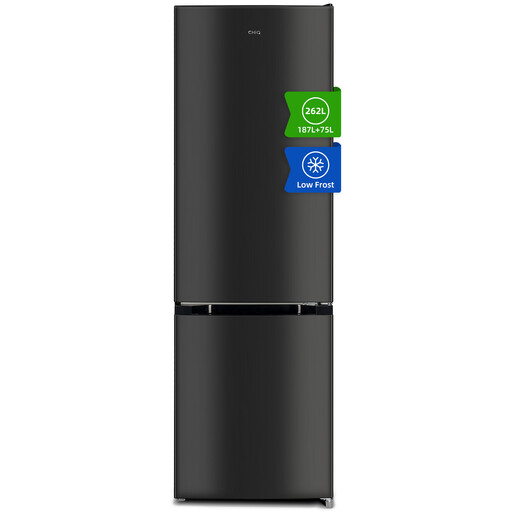 No image available
A fridge-freezer to include in your comparison if you store both chilled and frozen products.
262 litres total capacity; bottom-mounted freezer compartment; low-frost feature; reversible door; adjustable layout; 4-star freezer rating.
The Netherlands Nutrition Centre recommends keeping your fridge at 4 °C. Place a fridge thermometer in the middle of the bottom shelf, leave the fridge closed for half a day or overnight, and adjust the setting if the reading is higher. This is storage advice, not a legal temperature limit for domestic fridges.
It depends on the type of cream and its packaging. The Netherlands Nutrition Centre says opened, unwhipped whipping cream keeps for 4–6 days in the fridge, while opened instant whipped cream with sugar keeps for 1 day. Do not automatically apply these times to cooking cream or squirty cream; check the instructions on your own packaging.
Follow the installation manual for the exact model rather than assuming a standard clearance. For example, an Inventum manual for the KV550 specifies 10 cm of clearance around that particular appliance; this measurement does not automatically apply to other models.
According to the Dutch government, if a product is faulty, you are entitled to a product that works properly and should contact the retailer. The retailer cannot simply send you to the manufacturer. Before buying, also check which delivery and installation services are available.
The Dutch government explains that energy labels for household appliances are compulsory and provide information about energy consumption. According to the government, you can dispose of an old household appliance by returning it to the shop or online service where you buy a new, similar appliance, or by taking it to your local council recycling centre.