
Anyone looking for reliable cooling
You store opened cream and want to check that your fridge is cold enough. The type of cream and how you store it both matter.


If your fridge has enough space, buying a second appliance just for opened cream is usually not the first step. Check whether you can set your fridge to 4 °C and measure the temperature, as advised by the Voedingscentrum. If you need a fridge, choose a suitable tabletop model and decide separately whether you want a freezer compartment. According to Tristar, a thermoelectric mini fridge cools to 15 °C below the ambient temperature, so it won’t necessarily maintain a constant temperature of 4 °C.
You store opened cream and want to check that your fridge is cold enough. The type of cream and how you store it both matter.
You’re looking for a main fridge that fits in a small kitchen and has room for your other everyday groceries too.
You want to weigh up whether you’ll use the available space mainly for chilled food or also need a small freezer compartment.
For cream, the temperature inside the appliance matters more than its size alone. The Voedingscentrum advises setting your fridge to 4 °C and checking the temperature.
When: You have enough fridge space and can check whether your fridge reaches 4 °C.
Consider: You avoid buying a second appliance. If the temperature is too high, you’ll need to adjust the settings or address an issue with the fridge.
When: You need a main fridge and want to use most of the available space for chilled groceries.
Consider: There’s no freezer compartment. Measure the space and check the temperature once the fridge is in place.
When: You want a small freezer compartment for other products as well as space for chilled cream.
Consider: The freezer compartment takes up space that could otherwise be used for chilled groceries.
When: Only if you can confirm that the internal temperature will stay suitable for cream in your intended setting and conditions.
Consider: The stated cooling performance relative to the ambient temperature doesn’t guarantee a fixed internal temperature. Check whether it can reach 4 °C.
| What to consider | What to check before buying | Who is this important for? |
|---|---|---|
| Cooling temperature | Check whether you can set the fridge to 4 °C, then measure the temperature after installation with a fridge thermometer. | If I store opened cream, I want to know whether my fridge reaches the recommended temperature. Around 31% of consumers make reliable cooling their top priority. |
| Size and fridge capacity | Measure the space available and compare the external dimensions with the fridge capacity. | In a small kitchen, I want an appliance that fits and still has room for my everyday groceries. Around 25% of consumers put this combination first. |
| Energy consumption | Compare the stated annual consumption in kWh for suitable models. Milieu Centraal points out that two cooling appliances use more energy together than one. | As a fridge is always on, I want to take its annual energy consumption into account when choosing a model. Around 19% of consumers give this their top priority. |
| Freezer compartment | Compare the fridge and freezer capacities separately, and decide whether you’ll actually use the freezer compartment. | If I also want to freeze food, I’m looking for a freezer compartment without overlooking the fridge space. For around 13% of consumers, a freezer compartment is the top priority. |
| Noise | Compare the stated noise level in dB and consider where the fridge will go. | If my fridge is near my living or sleeping area, I want to take the stated noise level into account. Around 12% of consumers put noise first. |
According to the manufacturer, the Tristar KB-7604 cools to 15 °C below the ambient temperature. That doesn’t mean it maintains a constant internal temperature of 4 °C.
When choosing a fridge for cream, focus on the temperature you can measure in the conditions where you’ll use it, not just the word ‘mini’ or its capacity in litres.
A fridge runs continuously. Milieu Centraal recommends choosing a suitable size and comparing the stated annual energy consumption in kWh.
First, check whether your existing fridge is suitable. Then compare appropriate models by fridge capacity and annual energy consumption.
Of the stated 113 litres in the Inventum KV550, 97 litres are fridge space and 16 litres are freezer space.
Compare the fridge and freezer capacities separately, and only choose a freezer compartment if you’ll use it for other products too.
The Dutch range includes compact tabletop models with and without a freezer compartment, including the KK550 and KV550.
The tabletop range includes the Rd 1400 without a freezer compartment and the Rb 1401 with one.
The range includes tabletop models without a freezer compartment, including the KTR15NWEB.
The KB-7604 is an example of a very small thermoelectric mini fridge.
These models are designed for chilled cream and other everyday groceries. The selection includes tabletop models with and without a freezer compartment, as well as an under-counter fridge.
 No image available
A good choice if you want a separate freezer compartment as well as space for chilled cream and other groceries.
Total capacity is 109 litres: 95 litres of fridge space and 14 litres of freezer space.
Energy label rating C, stated consumption of 89 kWh per year and a noise level of 37 dB.
Temperature control via a dial.
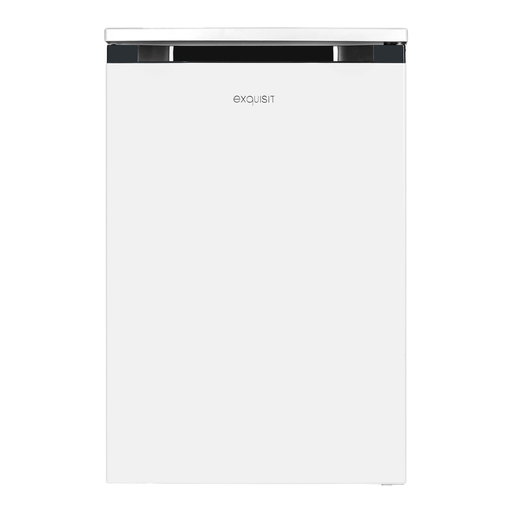 No image available
A good fit if you want to store chilled groceries and have a separate freezer compartment too.
The fridge section holds 107 litres and the freezer compartment 13 litres.
Energy label rating C, stated consumption of 87 kWh per year and a noise level of 37 dB.
The product description states that the appliance is not suitable for use by children.
 No image available
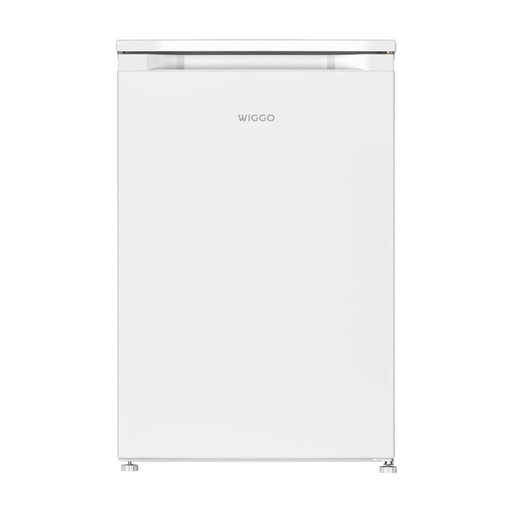
A good choice if you’re looking for a tabletop fridge for cream and other chilled food.
Capacity of 129 litres; stated consumption of 92 kWh per year.
Energy label rating E and a noise level of 39 dB.
The product name specifies a width of 54 cm.
 No image available
Suitable for chilled cream and other everyday food.
Net capacity of 107 litres and mechanical temperature control.
The product description lists a salad drawer, adjustable glass shelves, door balconies and a built-in defrost function.
The product name specifies a width of 55 cm.
 No image available
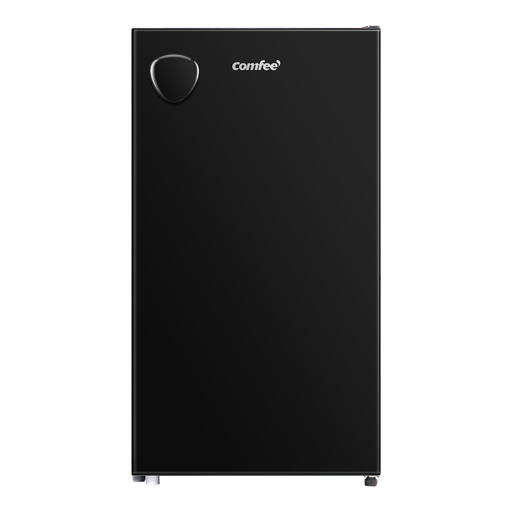
A good fit if you’re looking for a compact fridge for chilled groceries in a small living space.
Capacity of 88 litres, adjustable thermostat and energy label rating E.
Dimensions: 44,5 × 47 × 82,7 cm; the door is reversible.
The product description says the built-in cooling zone for drinks and snacks is for short-term use only: don’t store anything in it for longer than two hours to prevent freezing.
Not if your existing fridge has enough space and you can check that it reaches 4 °C. A second fridge also uses electricity; Milieu Centraal points out that two cooling appliances use more energy together than one.
It depends on the type of cream. For opened, unwhipped whipping cream, the Voedingscentrum recommends 4–6 days in the fridge, and 3–5 days for cooking cream. For other types, follow the relevant product advice and check the label. Put the cream back in the fridge promptly after use.
Place a fridge thermometer in the middle of the bottom shelf and keep the door closed for half a day or overnight. Then check whether the temperature is 4 °C, as advised by the Voedingscentrum. If the fridge is too warm, adjust the settings and measure again.
Check the climate class and the ambient temperatures the specific model is designed for. The Consumentenbond explains that a climate class indicates the minimum and maximum temperatures at which a fridge is intended to operate. Don’t rely only on how cold the shed feels.
According to the Dutch government, fridges are among the appliances that must carry an energy label. If a product is faulty, contact the retailer to resolve the issue. The Dutch government states that the Netherlands has no fixed statutory guarantee period.