
Workshop host with lots of fresh ingredients
You want to keep several portions of leafy greens chilled and organised during preparation and the workshop. So, look at the usable fridge space and check the temperature while it is in use.


Choose a fridge to suit the amount of lettuce and other ingredients you need to chill at the same time, and check that your containers and the appliance will fit in the space available. A compact model suits a small stock of ingredients, while a larger fridge or professional refrigeration may be more practical if you have more ingredients or need to prepare food intensively. A crisper drawer is no substitute for checking the temperature. The Netherlands Nutrition Centre recommends setting your fridge to 4 °C. Food businesses must also follow the relevant food safety rules and product labelling.
You want to keep several portions of leafy greens chilled and organised during preparation and the workshop. So, look at the usable fridge space and check the temperature while it is in use.
You have limited space and only need to store a small amount of lettuce. Compare the external dimensions with the space available, and check that your containers will fit in the salad drawer and on the shelves.
You want to be able to reach chilled ingredients quickly while you work. If you prepare or sell food as a business, follow the food safety plan or hygiene code that applies to your activities, as required by the NVWA.
Work out how much lettuce and how many other ingredients you need to chill at the same time. Then check the temperature, usable layout and space the appliance will take up.
| What to consider | What should you check? | Who should prioritise this? |
|---|---|---|
| Storage temperature | Check whether the temperature can be adjusted, and measure it with the fridge loaded and positioned as it will be in use. | If I want to keep perishable lettuce cold during preparation and the workshop, I need to be able to check the product temperature; around 31% of consumers prioritise reliable temperature control. |
| Usable storage for ingredients | Measure your containers and check the dimensions of the drawer and shelves; the capacity in litres won’t tell you whether your containers will fit. | I want to be able to fit all my containers of lettuce and other ingredients inside without stacking them awkwardly; around 25% of consumers choose a fridge mainly for the space it offers for their ingredients. |
| Condition of the lettuce | Check the design and size of the salad drawer. Don’t treat a freshness claim as a guaranteed storage period for opened lettuce. | If I’m storing delicate leafy greens, I want a suitable place to keep them; around 19% of consumers focus mainly on the condition of leafy greens. |
| Size and positioning | Measure the width, height and depth, as well as the door swing, and follow the installation instructions for your chosen model. | I have limited space in the workshop kitchen and want to make sure the fridge will fit; around 13% of consumers prioritise the space available for the appliance. |
| Energy consumption | Compare annual kWh figures only between similar appliances, and take the length of time you’ll use the fridge into account. | If I use the fridge for workshops, I want to weigh its energy consumption against the capacity I need; around 12% of consumers focus mainly on running costs. |
A drawer can help limit moisture loss, but it doesn’t tell you the temperature of the food and won’t, by itself, prevent cross-contamination.
Measure the fridge temperature and keep lettuce separate from potential sources of cross-contamination. Use clean equipment.
A fridge may appear to have enough capacity on paper, but the containers you use might not fit properly in the drawer or on the shelves.
Measure your containers, the usable drawer and shelves, the space for the appliance and the door swing before choosing a model.
A professional model doesn’t automatically mean that its temperature setting is suitable for perishable ingredients. The available drawer space may also not suit the amount of stock you need to store.
Choose this type of model to suit your specific workflow and container layout. Check the setting and the temperature of the food.
For a small stock of ingredients, the KK471W is a compact domestic fridge. According to Inventum, this model has a capacity of 94 litres and a removable salad drawer.
According to Bosch, the freestanding KSV33VLEP is a fridge without a freezer compartment, with 324 litres of fridge space and a VitaFresh freshness system.
According to Liebherr, the RBbsb 525i has a Fruit & Vegetable-safe drawer with higher humidity.
According to Beko, the B7RMLNE445ZXP has 365 litres of fridge space and a stated width of 59,7 cm.
According to Polar, the professional DA994 is a drawer fridge for 2 × GN 1/1 containers, with a net capacity of 51 litres.
These Joybuy products are fridge options for storing workshop ingredients in a compact space. For each model, compare the usable fridge space with the containers and stock you actually want to store.
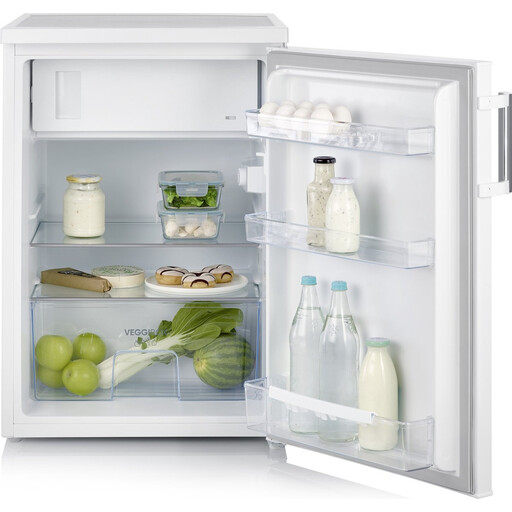
 No image available
The salad drawer provides a separate place to store lettuce and other chilled ingredients in a small workshop kitchen.
The stated capacity is 129 litres. The model has two glass shelves and a temperature control dial.
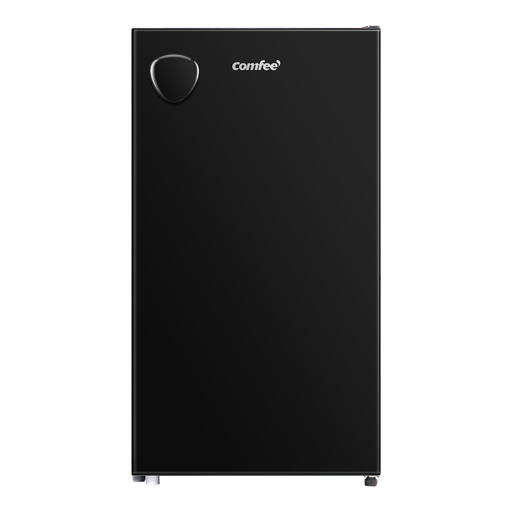 No image available
The separate crisper drawer can provide a dedicated place to store vegetables when you have a small stock of ingredients.
The stated capacity is 88 litres; the model has a thermostat, adjustable shelves and a reversible door.
According to the product description, the separate cooling zone is only intended for short-term chilling; don’t store food in it for longer than 2 hours.
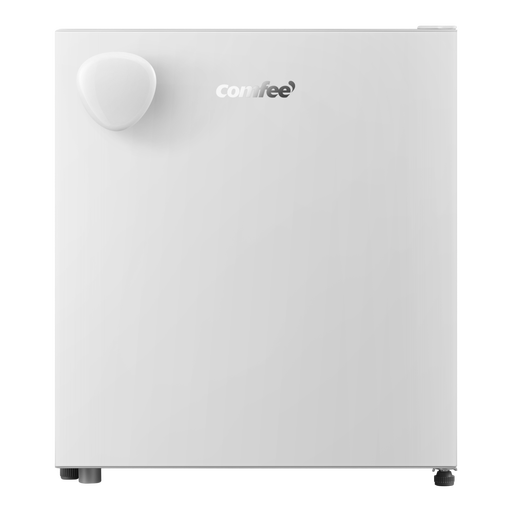 No image available
The description mentions a vegetable compartment for items such as lettuce, making it suitable for a small stock of ingredients and limited space.
The stated capacity is 43 litres and the width is 44,5 cm. The model has three temperature settings and a covered vegetable compartment with high humidity.
 No image available
The vegetable box provides a separate place for vegetables if you want to store other chilled ingredients as well as lettuce.
The total capacity is 120 litres, comprising 107 litres of fridge space and 13 litres of freezer space. The model has a temperature control dial.
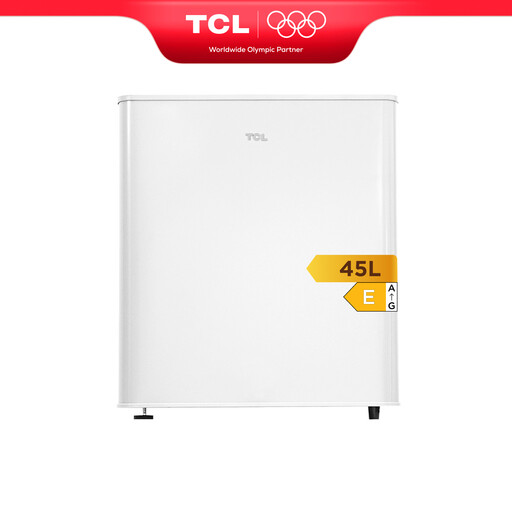 No image available
The stated width of 47 cm may be useful if you have a narrow space for the appliance; the description also mentions a crisper drawer for fruit and vegetables.
The product information sheet lists 4 °C as the recommended setting for the fridge compartment. Check the temperature during actual use.
The Netherlands Nutrition Centre recommends setting your fridge to 4 °C and checking the temperature with a fridge thermometer. For professional food storage, you should also follow the applicable food safety plan and the storage temperature on the product label. In the cases described by the NVWA where no label instructions are available, the temperature must be 7 °C or below.
For opened raw whole-leaf lettuce, the Netherlands Nutrition Centre gives a fridge storage period of 2–5 days; for opened raw mixed salad without dressing, it gives 2 days. These are different products, and neither is a general storage guarantee for all lettuce. Keep raw lettuce separate from raw meat, chicken and fish, and use clean equipment.
The Netherlands Nutrition Centre recommends placing a fridge thermometer in the middle of the bottom shelf, leaving it there for half a day or overnight, and adjusting the setting if the temperature rises above 4 °C. For professional use, the NVWA also recommends checking the temperature of perishable food with a digital probe thermometer; simply reading the fridge display isn’t enough.
For domestic fridges, compare the stated annual consumption in kWh only with appliances that are similar in terms of use and capacity. For a consumer purchase in the Netherlands, the product must be of satisfactory quality; according to the Dutch government, there is no fixed statutory guarantee period, and the retailer is your point of contact if something goes wrong. Check separately which terms apply if you’re buying for business use.
Not simply because it’s called a cookery workshop. According to the NVWA, you must follow an HACCP food safety plan or applicable hygiene code for the activities described, where food is prepared, processed or sold. Check whether the rules apply to your workshop based on how it is actually organised and the activities involved.