
Cook sharing fridge space
You want to store leftover soup safely and clearly labelled alongside other people’s food, and first need to work out whether the shared fridge is up to the job.


You don’t automatically need a fridge of your own: use the shared fridge if there’s room for sealed, dated containers and you can keep the soup at 4 °C. If space is consistently lacking, choose a model whose external dimensions and layout suit your kitchen and containers. A freezer compartment is most useful if you want to keep soup for longer and its freezing capacity suits the portions you make.
You want to store leftover soup safely and clearly labelled alongside other people’s food, and first need to work out whether the shared fridge is up to the job.
You don’t have enough fridge space of your own and are looking for a model that will physically fit, without underestimating the space your soup containers need.
You make more portions than you can eat within two days, so you’re comparing fridge space with a useful freezer compartment.
Best when: there’s room for sealed containers and the fridge can be kept at 4 °C.
Consider: you’ll need to agree on space, temperature and clearing away containers.
Best when: you need your own fridge space and usually eat the soup within two days, or already have a suitable freezer.
Consider: without a freezer compartment, you can’t freeze soup in this appliance.
Best when: you want to keep portions for longer and don’t have another suitable freezer.
Consider: the freezer compartment takes up space that would otherwise be available for chilled containers.
The Netherlands Nutrition Centre advises keeping cooked leftovers at 4 °C and eating chilled leftovers within two days. Use the points below to decide whether the existing fridge is up to the job or you need a model of your own.
| What to consider | What should you check? | Who should pay most attention? |
|---|---|---|
| Safe, organised storage | Check whether the fridge can be kept at 4 °C and whether there’s room for clean, sealed containers. | If I’m storing soup alongside other people’s food, I want to be able to manage the temperature and space for my containers properly. Around 33% of consumers prioritise safe, organised storage. |
| Space for containers | Measure the available space and the height and width of your containers; compare these with the layout of the exact model. | In a small kitchen, I want a fridge that fits and has room for my containers. Around 27% of consumers make usable space for containers their top priority. |
| Keeping soup for longer | Check the fridge capacity, freezer capacity and freezing capacity in kg per 24 hours. | If I want to keep portions that I won’t eat within two days, I need a suitable way to freeze them. Around 20% of consumers prioritise keeping food for longer. |
| Energy use | For models that fit, compare the energy label and stated annual consumption in kWh. | If I’m considering an additional appliance, I also want to take its energy use into account. Around 13% of consumers prioritise reducing energy use. |
| Noise | Compare the stated noise level in dB(A) for models that meet your size and cooling requirements. | If the fridge is close to my living space, its stated noise level may be a factor. Around 7% of consumers make noise their top priority. |
A freezer compartment uses some of the total capacity. The distance between shelves also determines whether your containers will fit.
Compare the fridge and freezer capacities separately, and measure your containers before choosing a model.
A second fridge uses electricity; agreeing on space, temperature and containers may be all you need.
First check how much space is available in the existing fridge. Then compare the stated annual energy use of models that fit. Milieu Centraal advises taking the energy use of a second fridge into account.
An additional appliance will use electricity on an ongoing basis.
The amount of fresh soup that can be frozen at once isn’t the same as the freezer compartment’s capacity.
As well as checking the capacity in litres, check the stated freezing capacity in kg per 24 hours.
The TS190340N is a freestanding table-top model, 47.5 cm wide, worth comparing if width is limited.
The KTR15NWEB is a table-top model without a freezer compartment, for anyone who values chilled storage space over freezing.
The KV600 combines fridge space with a separate freezer compartment for anyone who also wants to freeze portions.
The Rc 1400 Pure is a table-top model to compare if the stated noise level is an important factor.
The RF045DWE0 product line is a compact fridge worth looking into if space is limited.
These models offer fridge space for household use. The selection includes one model with a separate freezer compartment, as well as models whose product titles state their fridge capacity and energy class. Check the external dimensions and layout against your containers and the space available.
 No image available
An option if you’re looking for a separate fridge and don’t need a freezer compartment.
The product title lists a capacity of 88 litres and energy class E. This model has no freezer compartment.
 No image available
An option if you want to freeze portions as well as chill soup.
The product details list 95 litres of fridge space and a separate 14-litre freezer compartment. So the total capacity of 109 litres isn’t all available for chilled soup.
 No image available
An option if you’re mainly looking for chilled storage space. Measure the external dimensions and check that the layout suits your containers.
The product title lists a capacity of 129 litres and energy class E.
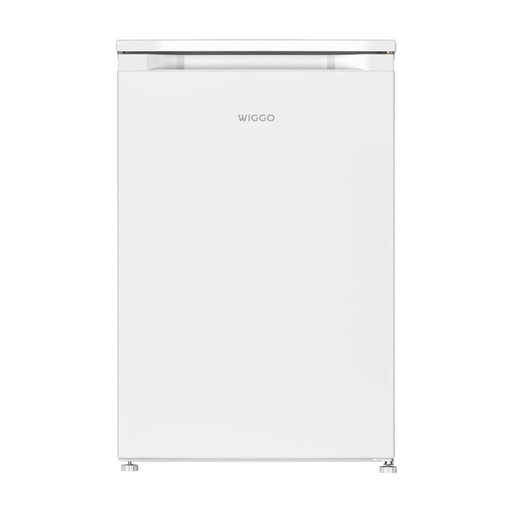 No image available
A model to consider if you’re looking for extra fridge space and need it to fit in your kitchen.
The product title lists a fridge capacity of 107 litres and energy class D.
 No image available
An option to compare if width is limited; also measure the space needed for the door to open and for your soup containers.
The product title lists a capacity of 92 litres, a width of 47 cm and energy class E. The product details don’t specify a freezer capacity, so you’ll need a separate suitable freezer if you want to keep soup for longer.
Let the soup cool within two hours, transfer it to clean, sealable containers if needed, and label them with the date. The Netherlands Nutrition Centre advises storing it at 4 °C and eating chilled leftovers within two days. Freeze the soup if you want to keep it for longer.
Not if the existing fridge has enough space and you can store the soup at the recommended temperature. Milieu Centraal advises taking the energy use of a second fridge into account.
Measure the available space and check the external dimensions, door clearance and installation instructions for your chosen model. If the kitchen may be unheated, also check the model’s climate class and suitable ambient temperature.
When you buy as a consumer in the Netherlands, you’re entitled to a product that works properly. The Government of the Netherlands describes this as the legal guarantee. If there’s a problem, the retailer must provide a solution. An additional manufacturer’s or paid-for warranty doesn’t replace this legal right.
EU rules set requirements for the energy labelling of household refrigeration appliances. Compare the energy label and product information sheet for the exact model. An energy label won’t tell you whether your containers will fit or whether the temperature in your kitchen is set correctly.