
Keeping soup for tomorrow
You divide leftovers into small containers and want to keep them chilled safely for a short time. In that case, reliable temperature control and a practical layout are important.


If you’ll eat your soup within two days, having enough usable fridge space and being able to check that the temperature is around 4 °C matter more than having a freezer compartment. If you want to store portions for longer, choose a model with freezer space, but bear in mind that this comes at the expense of fridge space. Also compare the dimensions, layout and annual energy consumption of models that fit your kitchen.
You divide leftovers into small containers and want to keep them chilled safely for a short time. In that case, reliable temperature control and a practical layout are important.
You want to keep some soup for longer, so you’re weighing up whether you need suitable freezer space as well as fridge space.
You need room for several containers without buying a larger appliance than necessary. External dimensions, shelves and annual energy consumption all matter.
The Netherlands Nutrition Centre advises keeping covered leftovers in the fridge for no more than two days and freezing them if you want to store them for longer. So first consider how you’ll store the soup and how much space your containers will take up.
A good fit if: there’s enough room for your containers and you can use a thermometer to check that the fridge is cooling to around 4 °C.
Bear in mind: an extra fridge that’s always switched on will use more electricity.
A good fit if: you’ll eat the soup within two days and mainly need space for chilled containers.
Bear in mind: you won’t be able to freeze portions in this appliance.
A good fit if: you often want to keep portions for more than two days and don’t have suitable freezer space.
Bear in mind: the freezer compartment takes up space that could otherwise be used for chilled containers, so check both compartments.
| What to consider | What should you look for? | Who should pay particular attention? |
|---|---|---|
| Safe chilling | Choose an adjustable fridge and use a thermometer to check that it cools to around 4 °C. The setting or display alone won’t tell you the temperature next to the soup. | If I want to eat leftover soup within two days, I need to know whether the fridge actually stays cold enough. Around 36% of consumers prioritise safe chilling. |
| Space for containers | Measure your containers and the available space. Check the shelves and the fridge capacity on its own; the stated litre capacity isn’t the same as the space your containers will take up. | If I want to store several small containers, the layout needs to work for me rather than relying on the total capacity alone. Around 29% of consumers give suitable container space their top priority. |
| Freezing portions | Compare the freezer capacity on its own with the size of your containers, and check whether you already have suitable freezer space. | If I want to keep soup for more than two days, I need space to freeze portions. Around 21% of consumers prioritise this option. |
| Energy consumption | Compare the annual consumption in kWh of models that meet your needs for space and food storage. An extra fridge will use electricity too. | If I choose an appliance that’s always switched on, I want to factor in its annual energy consumption once the capacity and layout are right. Around 14% of consumers prioritise low annual energy consumption. |
The Netherlands Nutrition Centre warns that warm leftovers can raise the temperature inside the fridge. Leftovers should also never be left out of the fridge for more than two hours.
Divide the soup into small, clean, airtight containers, let it cool and put it in the fridge or freezer within two hours.
Shelves and drawers affect how much space you can actually use. In a model with a freezer compartment, the fridge and freezer capacities are also listed separately.
Measure your containers and check the internal layout and the space between the shelves before choosing a model.
Milieu Centraal points out that two cooling appliances use more energy together than one larger appliance that meets your needs.
First check whether your existing fridge has enough space and cools to around 4 °C. If not, compare the stated annual energy consumption in kWh of suitable models.
A second fridge that’s always switched on will use more electricity; actual consumption depends on the appliance and how you use it.
The KK550 is a compact fridge without a freezer compartment, designed for anyone looking for a space-saving cooling solution.
The KKV956WIT is a compact fridge without a freezer compartment and has adjustable shelves.
The TSE1285N combines fridge space with a small freezer compartment.
The compact models reviewed show how fridge capacity and freezer space can vary from one model to another.
This selection includes compact fridges for leftovers, with models both without a freezer compartment and with freezer space.
 No image available
An option if you want to keep leftovers chilled and need freezer space too.
The product description lists 95 litres of fridge space, two glass shelves and an annual energy consumption of 89 kWh. The product name states energy label C.
 No image available
Worth considering if you need fridge space for several containers and want to be able to adjust the temperature.
The product description lists a 129-litre capacity, two adjustable glass shelves, a crisper drawer and an annual energy consumption of 92 kWh. The product name states energy label E.
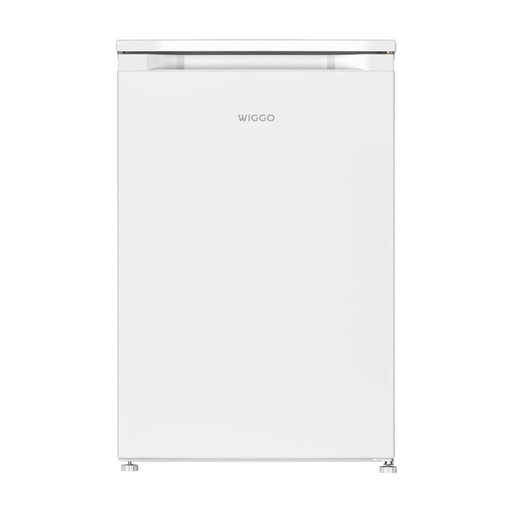 No image available
An option for chilled portions if you’re looking for a freestanding compact fridge with mechanical temperature control.
The product description lists a 107-litre capacity, a glass shelf and a crisper drawer. The product name states energy label D.
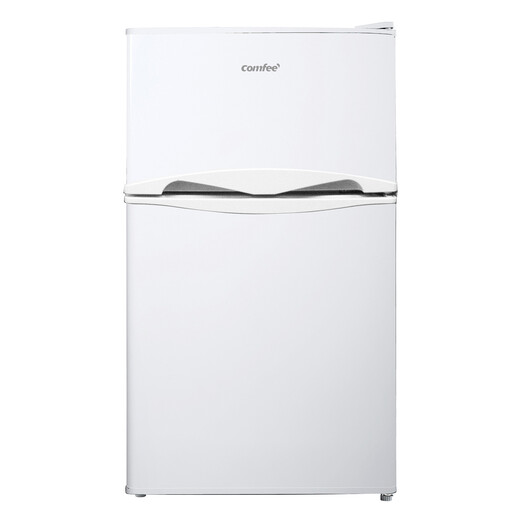 No image available
An option if you want to adapt the layout to containers of different sizes.
The product description lists two removable glass shelves and a removable basket. The product name mentions an adjustable thermostat and energy label E.
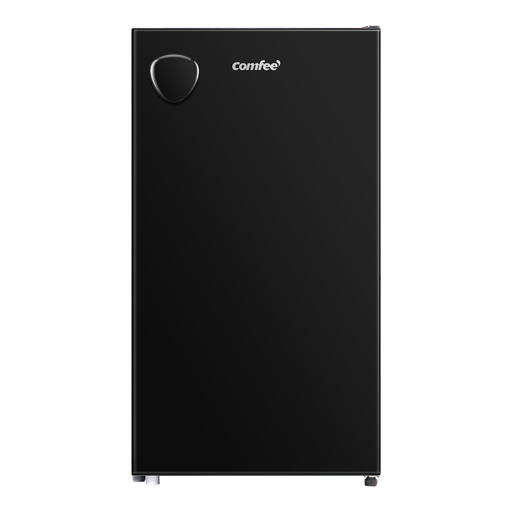 No image available
Worth considering if you’re looking for a compact fridge to fit under a worktop.
The product description lists an 88-litre capacity, removable glass shelves and a crisper drawer. The product name mentions an adjustable thermostat and energy label E. According to the description, the separate cooling zone is only intended for short-term chilling; don’t store food in it for more than two hours.
The Netherlands Nutrition Centre recommends keeping it covered in a fridge set to 4 °C for no more than two days. Let the soup cool first, but put the leftovers in the fridge or freezer within two hours of cooking. Freeze portions if you want to keep them for longer.
The Netherlands Nutrition Centre recommends placing a fridge thermometer in the middle of the bottom shelf and leaving it there for half a day or overnight. If the temperature reading is above 4 °C, adjust the fridge and take another reading.
No. The stated capacity doesn’t tell you how much room your containers will take up on the shelves. Measure your containers and check the internal layout; for models with a freezer compartment, compare the fridge and freezer capacities separately too.
Yes. For household fridges covered by EU energy labelling rules, the relevant energy label must be clearly displayed, including when sold online. The label includes details such as the energy class, annual energy consumption, fridge and freezer capacities, and noise level.