Start by considering how much leafy green veg and how many other ingredients you need to chill at the same time, as well as the space available for the appliance. Then compare the usable fridge capacity and salad drawer. The Voedingscentrum recommends a fridge temperature of 4 °C and advises storing vegetables in the salad drawer. A fridge-freezer is only really worthwhile if you also need freezer space, as that space cannot be used for fresh ingredients.
Who is this relevant for?
Workshop leaders who want to chill food safely
If you prepare perishable ingredients and use them during a workshop, it helps to be able to control the temperature. The NVWA outlines the requirement for businesses that prepare, process or sell food to work with a food safety plan or hygiene code; whether this requirement applies depends on the activity.
Cooks preparing delicate leafy greens
A well-organised salad drawer can help you store whole leafy greens separately. For vegetables you have chopped yourself or bought pre-chopped, the Voedingscentrum advises keeping them in a sealed container in the fridge.
Organisers with lots of ingredients to store at once
If leafy greens need to fit in the fridge alongside other workshop supplies, usable fridge space matters more than the appliance’s total capacity. So compare the fridge compartment and its layout, particularly in a fridge-freezer.
What should you look for?
Freestanding fridge without a freezer compartment
Best for: storing mainly chilled ingredients at the same time, when you do not need freezer space.
Bear in mind: the floor space required and the lack of a freezer compartment; compare the fridge capacity and the position of the salad drawer.
Fridge with a separate fresh food compartment
Best for: storing delicate, uncut leafy greens separately, if the drawer suits the amount you need to store.
Bear in mind: the drawer’s dimensions and layout. A fresh food compartment does not replace temperature control; claims about freshness should be assessed for each model.
Fridge-freezer
Best for: storing fresh ingredients as well as freezing or keeping other products frozen.
Bear in mind: the freezer compartment is not extra fridge space. Check the capacity and layout of the fridge compartment separately.
Built-in fridge
Best for: a kitchen with a suitable built-in space, if you do not want a freestanding appliance.
Bear in mind: the dimensions of the housing space, door fitting and installation requirements for the exact model.
Whichever fridge you choose, check both the temperature setting and the temperature the appliance reaches in use.
| What to consider |
What to look for when buying |
Who should give this more weight |
| Temperature control |
Check whether you can set the temperature, then measure the temperature the appliance actually reaches once installed. The Voedingscentrum recommends 4 °C. |
If I want to keep perishable ingredients chilled while preparing and running a workshop, temperature control is a priority. Around 36% of consumers put this first. |
| Storing leafy greens |
Check the salad drawer’s dimensions and accessibility, and whether it has humidity control. Keep chopped vegetables in a sealed container and follow the product’s storage advice. |
If you want to store delicate leafy greens neatly, focus on a suitable drawer and sealed storage after chopping. Around 29% of consumers prioritise this. |
| Usable fridge space |
Compare the fridge compartment’s capacity and drawer layout with the amount you need to chill at once; do not count freezer space as fridge space. |
When I’m chilling several ingredients at once for a workshop, I want to know how much will really fit in the fridge compartment. Around 21% of consumers focus mainly on fridge capacity. |
| Positioning and energy use |
Measure the space available or the built-in housing space, and check the installation requirements. For suitable models, compare annual energy use in kWh on the energy label. |
If the space available or annual energy use determines my choice, I check the dimensions and energy label first. Around 14% of consumers prioritise these factors. |
Common mistakes when choosing
-
Assuming total capacity is all available for fresh vegetables
In a fridge-freezer, some of the capacity is set aside for frozen food. That space is not available for leafy greens or other fresh ingredients.
Compare the fridge capacity and drawer layout separately with the amount of food you need to fit in the appliance at once. If there is not enough room, you may need a second way to keep food chilled.
-
Assuming a fresh food drawer makes temperature control unnecessary
A vegetable drawer and a safe fridge temperature are separate things to consider. A manufacturer’s claim about a drawer does not, by itself, prove that every type of leafy green will stay fresh for longer.
Check both the drawer layout and the fridge temperature reached. For pre-chopped vegetables, follow the packaging and storage advice.
-
Comparing an old energy label directly with the current one
The energy label for fridges has changed. Energielabel.nl states that the current label has been in use since 1 March 2021.
Compare models with enough fridge space using the current label and the stated annual energy use in kWh.
-
Choosing a built-in fridge based on appliance width alone
The housing space dimensions, door fitting and installation requirements for the specific model also need to be right. Matching the external dimensions alone does not confirm that the appliance can be fitted in your kitchen.
Measure the housing space and check all the model’s installation details before buying.
Brands to compare by model
Bosch
Worth comparing if you are looking for a freestanding fridge without a freezer compartment or a fridge-freezer.
- Bosch lists 324 l of fridge capacity and VitaFresh for the KSV33VLEP. For the KGN33NSDB, Bosch specifies a door alarm.
- According to Bosch, the KGN33NSDB has 189 l of fridge capacity. These features apply to the models mentioned, not the brand as a whole.
Liebherr
An option worth considering if you are looking for a separate storage space for delicate vegetables.
- Liebherr describes the RBsfd 5221 as having a Fruit & Vegetable-safe with higher humidity.
- The appliance’s total capacity of 351 l is not the same as the salad drawer’s capacity. Claims about keeping food fresh for longer are made by the manufacturer.
LG
The GBBS524APY is a fridge-freezer with an LG Fresh Balancer for fruit and vegetables.
- Fresh Balancer is a drawer feature specific to this model.
- LG’s claims about freshness are not an independent comparison with other fridges. Check that the fridge space and drawer layout suit the amount you need to store.
Siemens
Siemens offers built-in and freestanding fridges with a range of layouts; the Dutch brand page mentions hyperFresh.
- A built-in model may be suitable if your kitchen has a suitable housing space and the installation details match.
- Check the features and housing dimensions for the full model number. Siemens lists the KI81RSDE0 as no longer available; this model is not a current buying recommendation.
Joybuy products for workshop supplies
These options range from compact and built-in fridges to fridge-freezers. Compare the usable fridge space, drawer layout and space available with the amount you want to store at once.
 No image available
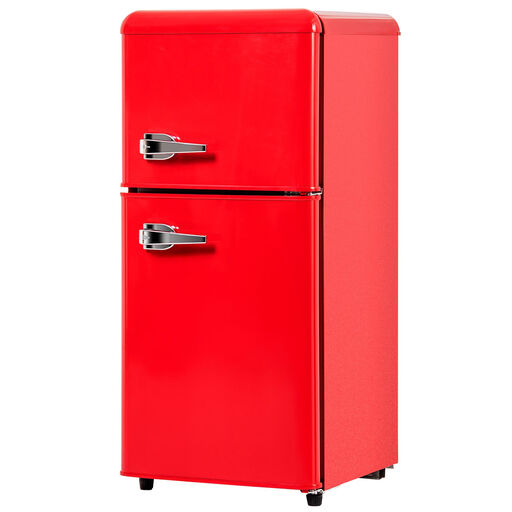
Retro fridge-freezer, 60 l, red
Suitable for a small amount of food when you also need a separate freezer compartment.
Total capacity is 60 l: 38 l of fridge space and 22 l of freezer space.
The product lists seven temperature settings, adjustable shelves, 102 kWh per year and an E energy rating.
View on Joybuy
 No image available
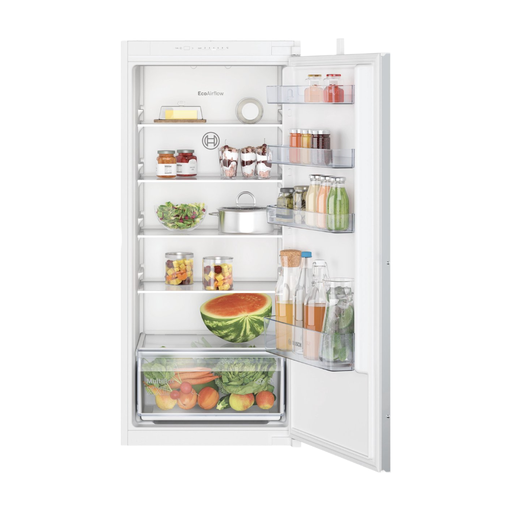
Bosch KIR41NSE0 Series 2 built-in fridge, 122 cm
Suitable for a kitchen with a compatible housing space if you are looking for a fridge without a separate freezer compartment.
The product information lists a net capacity of 204 l and one temperature zone, adjustable to around 4 °C.
The model has a sliding door system. Manual defrosting may be needed if ice builds up.
View on Joybuy
 No image available
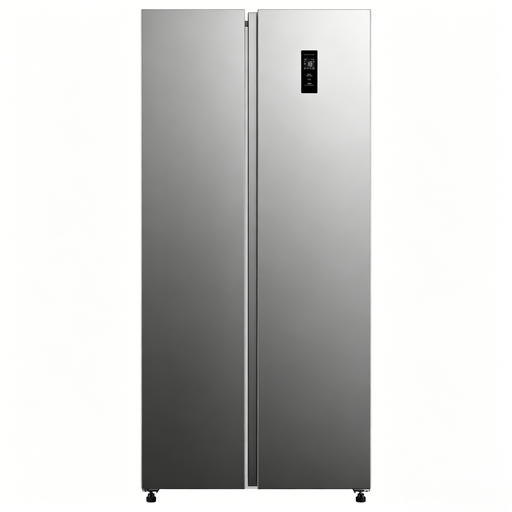
Sonlu CC-520WE fridge-freezer, 444 l
Suitable for a large household’s food supplies if you need both fridge and freezer space.
The product information lists 276 l of fridge space and 168 l of freezer space, a salad drawer and digital temperature control.
According to the product information, the appliance is intended solely for household food storage, so check that it is suitable for the nature of your workshop. The model is 83 cm wide and has an E energy rating.
View on Joybuy
 No image available
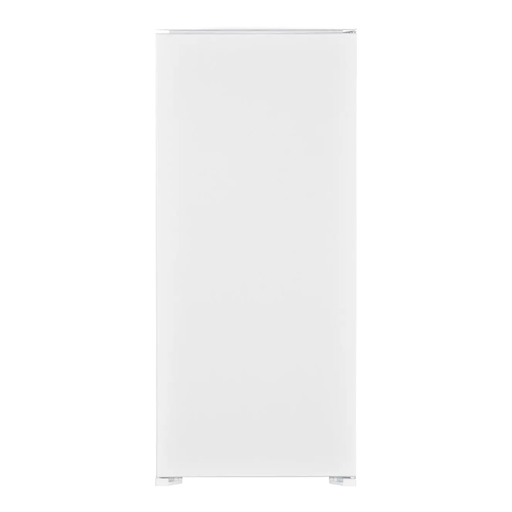
Wiggo WFR-BUR123E(W) built-in fridge, 181 l
Suitable for a built-in kitchen if the stated housing dimensions match the space available.
The model has a capacity of 181 l, one salad drawer, three glass shelves and a temperature control dial.
The stated housing space is 54 cm wide and 122 cm high. The appliance is white and has an E energy rating.
View on Joybuy
 No image available
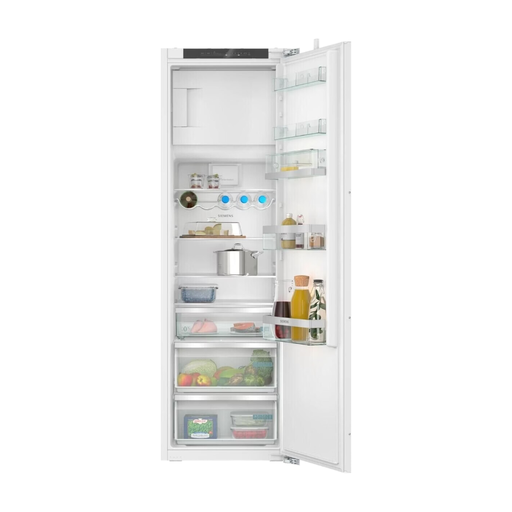
Siemens KI82LADD0 built-in fridge, 80 cm high
Suitable for a built-in kitchen if you want to combine fridge space with a small freezer compartment and the housing dimensions match.
The product information lists 246 l of fridge space, a 34 l freezer compartment and a hyperFresh drawer for fruit and vegetables.
The model has digital temperature control and two temperature zones in the fridge compartment. The freezer capacity is not fridge space for fresh leafy greens.
View on Joybuy
Frequently asked questions
What temperature should you set for perishable workshop ingredients?
The Voedingscentrum recommends a fridge temperature of 4 °C. Once the appliance is installed, use a thermometer to check the temperature it actually reaches, and put perishable ingredients back in the fridge promptly after use.
How should you store chopped leafy greens during a workshop?
Keep vegetables you have chopped yourself, and other pre-chopped vegetables, in a sealed container in the fridge. According to the Voedingscentrum, packaged vegetables are best kept in their original packaging where possible; also follow the storage advice for the specific product.
What should you check before installation?
Measure the space available and compare it with the dimensions and installation requirements for the exact model. For a built-in fridge, also check the housing dimensions, door fitting and access to the salad drawer.
Is an HACCP food safety plan required for every cookery workshop in the Netherlands?
The word ‘workshop’ alone does not determine this. The NVWA says that businesses which prepare, process or sell food must work with an HACCP food safety plan or an applicable hygiene code. Establish whether your activity falls within this business context; this does not mean every private workshop is automatically subject to the requirement.
What energy rating does a fridge need in the Netherlands?
According to the Dutch government, fridges are among the appliances that must carry an energy label. The current fridge label runs from A to G; Energielabel.nl states that this label has been in use since 1 March 2021. Also compare annual energy use in kWh.


