If your current fridge measures around 4 °C at the recommended point and has enough space, you don’t automatically need to buy a new appliance just for a tub of opened hummus. If you do need a replacement, choose the right size first; a freezer compartment is mainly useful if you also want to freeze other products or portions. A new fridge won’t make up for a long journey home without chilled storage.
Who is this relevant to?
Market shopper who wants to keep food safely chilled
You want to know whether your fridge is cold enough and how to store chilled hummus after the journey home. The Netherlands Nutrition Centre advises that highly perishable groceries should not be left out of the fridge for more than 2 hours.
Buyer with a small kitchen
You’re looking for a fridge that fits the available space and has enough room for your usual groceries. The Consumers’ Association discusses the difference between compact tabletop models and larger fridges.
Buyer who also freezes portions
You want to freeze portions as well as keep groceries chilled, so you’re looking for a model with a freezer compartment. Whether you need one depends on how you use it; freezer space isn’t essential for chilled hummus on its own.
What should you look for when choosing?
Keep your current fridge
A good fit if: you have enough space and, when measured, the temperature is around 4 °C.
The trade-off: the setting alone doesn’t tell you how cold it really is inside the fridge.
Compact fridge without a freezer compartment
A good fit if: you mainly store chilled groceries, have limited space or already use a separate freezer.
The trade-off: measure the space and the doorway; you won’t be able to freeze portions in the same appliance.
Fridge-freezer
A good fit if: you regularly want to freeze products or portions as well as keep everyday items chilled.
The trade-off: the freezer compartment takes up space you won’t need if you only want to keep things chilled.
First check the temperature and the space available. Then compare appliances by fridge capacity, whether they have a freezer compartment and their stated annual energy consumption.
| What to consider |
What to look for |
Who should consider this? |
| Temperature you can check |
Use a fridge thermometer; the Netherlands Nutrition Centre recommends 4 °C and explains how to measure the temperature in the middle of the bottom shelf. |
If I want to know whether my fridge is really cold enough, I don’t rely on the dial alone. This is the top priority for around 36% of consumers who mainly want effective cooling. |
| Dimensions and fridge capacity |
Measure the space available and compare the external dimensions and fridge capacity of the specific model. |
In a small kitchen, I want enough room for everyday groceries without choosing an appliance that won’t fit. Suitable dimensions and capacity are the main priority for around 29% of consumers. |
| Energy consumption |
Compare the stated annual energy consumption in kWh of models that are the right size for your needs. |
When I replace a fridge, I want to take energy consumption into account without choosing a bigger model than I need. This is the top priority for around 21% of consumers. |
| Freezer space |
Decide whether you actually want to freeze food and check the separately listed freezer capacity. |
I want to freeze portions as well as keep things chilled, so I look for a separate freezer compartment. This is the main reason for around 14% of consumers. |
Common buying mistakes
-
Replacing a fridge without checking the temperature
The setting doesn’t automatically tell you what a thermometer on the bottom shelf will read. Buying a new appliance without checking first may be unnecessary.
First measure the temperature in your current fridge and check whether the layout offers enough room for your groceries.
-
Assuming a freezer compartment is essential for opened hummus
Hummus should be kept in the fridge for everyday storage; freezer space only matters if you also want to freeze products or portions.
Choose a fridge-freezer only if you’ll actually use the freezer compartment and have space for it.
-
Thinking that chilling food at home makes up for a long journey home
A fridge at home can’t undo what may have happened during an extended period without chilled storage.
Put chilled groceries away as soon as you get home. The Netherlands Nutrition Centre recommends using a cool bag if it’s very warm or the journey home is long, and not leaving highly perishable food out of the fridge for more than 2 hours.
Brands to consider
Beko
The Beko TSE1285N is a freestanding tabletop model for anyone looking for a compact space-saving option.
- Beko lists a fridge capacity of 101 l and external dimensions of 84 × 54 × 59 cm for this model.
- Check the layout and energy label of the version you choose; these specifications don’t apply to every fridge from the brand.
Liebherr
The Liebherr Rd 1400 Pure is a tabletop model without a freezer function, according to the product description cited.
- Liebherr lists a total volume of 125 l, a noise level of 34 dB and a temperature range of +2 °C to +8 °C for this model.
- These are the manufacturer’s specifications; the temperature in your fridge also depends on the setting and conditions at home.
Bosch
The Bosch KGN33NLEB is a freestanding fridge-freezer for anyone who also wants a separate freezer compartment.
- Bosch lists a fridge capacity of 193 l and a freezer capacity of 89 l for this model.
- Bosch lists energy class E and a noise level of 42 dB. This isn’t a compact tabletop model, so compare its dimensions with the space available.
Samsung
The Samsung RB34C600ESA/EF is a larger fridge-freezer for anyone looking for more storage space.
- Samsung lists a total capacity of 344 l and energy label E for this model.
- Claims about features or even cooling don’t prove that opened hummus will keep for a specific length of time.
Fridges at Joybuy
This selection focuses on compact fridges for chilled groceries, including tabletop and under-counter models.
 Image unavailable
Sonlu CS-100L single-door fridge
A compact fridge without a freezer compartment for anyone mainly looking for chilled storage.
Single-door model; energy class E.
View at Joybuy
 Image unavailable
Wiggo WL-BTT88E(W) tabletop fridge, 54 cm
A tabletop model for anyone who wants to store chilled groceries in a compact space.
54 cm; white finish; energy class E.
View at Joybuy
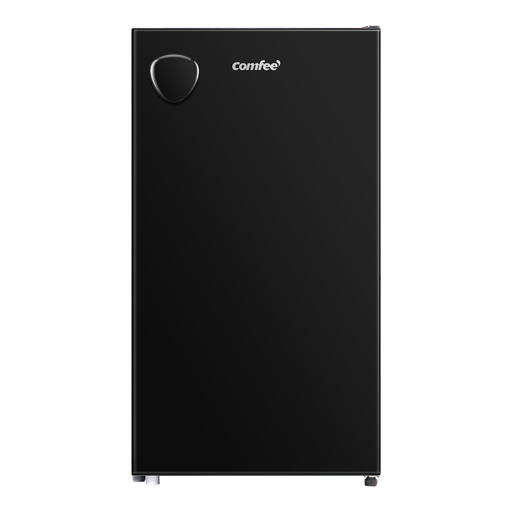 Image unavailable
COMFEE’ RCD92BL2EUY(E) under-counter fridge, 88 l
An under-counter model for anyone looking for a compact space to store chilled groceries.
88 l; adjustable thermostat; energy class E.
The product information states that the separate cooling zone is only intended for short-term storage: don’t leave products in it for more than 2 hours to prevent them from freezing.
View at Joybuy
 Image unavailable
TCL RF120DWE0 fridge, 90 l, with chiller box
A compact fridge for anyone with limited space who wants to store chilled groceries.
90 l; with chiller box; energy class E.
View at Joybuy
 Image unavailable
CHiQ JR92DSE fridge, 92 l, 47 cm
A slim model for anyone looking for a compact fridge for everyday chilled groceries.
92 l; 47 cm wide; 7 temperature settings; energy class E.
View at Joybuy
Frequently asked questions
How long can opened hummus be kept in the fridge?
For plain hummus, the Netherlands Nutrition Centre recommends keeping homemade hummus in the fridge for 1–3 days and shop-bought hummus for 5–10 days. Also follow the instructions on the packaging and use clean cutlery.
What should I do with hummus on the way home from the market?
Put chilled groceries away as soon as you get home. The Netherlands Nutrition Centre recommends using a cool bag if it’s very warm or the journey home is long, and not leaving highly perishable food out of the fridge for more than 2 hours.
How can I check whether my fridge is cold enough?
The Netherlands Nutrition Centre recommends 4 °C. Place a fridge thermometer in the middle of the bottom shelf, leave it there for half a day or overnight, then check the temperature it has recorded.
How do I compare the energy consumption of fridges?
Compare the stated annual energy consumption in kWh of models that suit your space requirements. The cost in pounds will also depend on your electricity tariff.
Which energy label applies to new fridges?
Fridges use the A–G scale, not the old plus ratings. According to the European Union, the energy label must also be clearly displayed when products are sold online.


