Who is this relevant for?

Home cook with limited worktop space

If you make dressing at home and want to keep your worktop clear, check whether a fridge will fit on the floor or under the worktop. The Consumers’ Association distinguishes between freestanding tabletop models and under-counter models.

Maker of perishable dressing

If you use ingredients such as dairy, it’s worth checking the actual fridge temperature and following a suitable storage routine. The Netherlands Nutrition Centre recommends setting your fridge to 4 °C.

Anyone considering extra fridge space

If you already have a fridge and are thinking about getting a second one, weigh up the space you need for jars against the electricity consumption. Milieu Centraal recommends carefully considering whether you need a second fridge.

What should you consider when choosing?

Slim freestanding tabletop fridge

Best for: a narrow spot on the floor, if you want to keep your worktop clear.

Consider: the appliance takes up floor space; also check the doorway and the clearance required around it.

Larger tabletop or under-counter fridge

Best for: anyone who wants to chill everyday groceries as well as dressing, and has enough space.

Consider: a larger fridge needs a suitable spot. Don’t use a freestanding model as a built-in appliance without checking the installation requirements.

Mini fridge on the worktop

Best for: anyone who needs very little fridge space and can genuinely spare some worktop room.

Consider: even a small appliance takes up worktop space, so measure the spot before choosing a model.

Keep using your existing fridge

Best for: anyone with enough room for sealed jars who can check the temperature.

Consider: you won’t need to make space for a second appliance, but the existing layout must still work for your jars and other groceries.

What to consider What should you look for? Who should pay particular attention?
Positioning and worktop space Measure the height, width and depth; check ventilation clearance and the doorway, and make sure the model is designed for the intended installation. I want to keep the worktop clear and first need to know whether there’s room on the floor, with space for the door and ventilation. Around 33% of consumers prioritise where the fridge will go.
Temperature control Check whether the temperature can be adjusted, then measure it with a fridge thermometer once the appliance is in place. The Netherlands Nutrition Centre recommends 4 °C. If my dressing contains perishable ingredients, I want to check the actual temperature, not just the thermostat setting. Around 27% of consumers put reliable temperature control at the top of their list.
Layout and usable space Compare the size of your jars with the compartments and check whether the shelves are adjustable. I want space for jars and other groceries, so I need to know what will fit on the shelves. Around 20% of consumers give usable space and layout top priority.
Energy consumption and noise For models that fit, compare the annual energy consumption on the energy label and the stated noise level. Work out any electricity costs using your own tariff. If I’m getting an extra appliance, I want to factor in its energy consumption and, especially in a small home, compare the stated noise levels too. Around 20% of consumers start by looking at running costs and noise.

Common pitfalls

  • Choosing a mini fridge because it sounds small

    A compact appliance can still take up a large part of your worktop. Milieu Centraal also recommends carefully considering whether you need a second fridge.

    First measure the space available on your worktop and floor, and check whether your current fridge already has room for the jars.

    An extra appliance takes up space and uses electricity.

  • Assuming the thermostat setting shows the storage temperature

    The selected setting isn’t the same as measuring the temperature where you store your dressing. The Netherlands Nutrition Centre recommends setting your fridge to 4 °C.

    Use a fridge thermometer once the appliance is in place, then check the temperature again after making any adjustments.

  • Applying the storage life of shop-bought dressing

    A packaged product may not contain the same ingredients as your homemade dressing. For a specific packaged dressing product, the Netherlands Nutrition Centre advises checking the label.

    Take the perishable ingredients you’ve used into account and follow general advice for chilled leftovers, rather than applying the storage time for another product.

Brands to consider

Inventum

The models listed offer a range of widths and capacities.

  • Inventum says the KK471W has a 94-litre capacity and adjustable shelves; it is 47,2 cm wide.
  • Inventum lists the KK550 as having a 131-litre capacity and a width of 55 cm.
  • These are model specifications, not independent cooling-performance test results. The manufacturer’s page lists the KK470W as no longer available.

Beko

The TSE1424N is a freestanding tabletop model worth comparing for a spot under or beside the worktop.

  • Beko lists the TSE1424N as having a 128-litre fridge compartment and dimensions of 84 × 54 × 59 cm.
  • Check that the actual setup and layout suit your space and jars. The stated dimensions don’t tell you what the temperature will be like in your home.

Liebherr

The Rc 1400 Pure is a tabletop model worth comparing if stated noise levels and temperature settings matter to you.

  • Liebherr lists this model as having a 125-litre capacity, a noise level of 34 dB and TouchControl settings from +2 °C to +8 °C.
  • These manufacturer figures don’t prove that every part of the fridge will be at 4 °C in every home. Check the temperature with a thermometer.

Bosch

The KTR15NWEB is a tabletop fridge without a freezer compartment, worth comparing if you need fridge space and a door-open alarm.

  • Bosch lists 134 litres of fridge space, dimensions of 850 × 560 × 580 mm and a door-open alarm.
  • Check that the dimensions and installation requirements suit the space you have in mind.

Joybuy product picks

These picks focus on tabletop models and an under-counter model for anyone who wants to store dressing and other chilled food without using the worktop as a permanent spot. Check the dimensions, layout and installation requirements for each model.

Exquisit KS16-4-051CW tabletop fridge with freezer compartment

Exquisit KS16-4-051CW

A tabletop model to compare if you want a freezer compartment as well as fridge space.

107 litres of fridge space; includes a freezer compartment.

Check that the layout has room for your jars and that the overall dimensions fit the spot you’ve chosen.

Joybuy

Wiggo WL-BTT88E(W) tabletop fridge

Wiggo WL-BTT88E(W)

A tabletop model to consider if you want to keep your worktop clear and need space for several groceries.

129-litre capacity; 54 cm wide; energy label E.

Measure the available space and check that your jars will fit in the compartments.

Joybuy
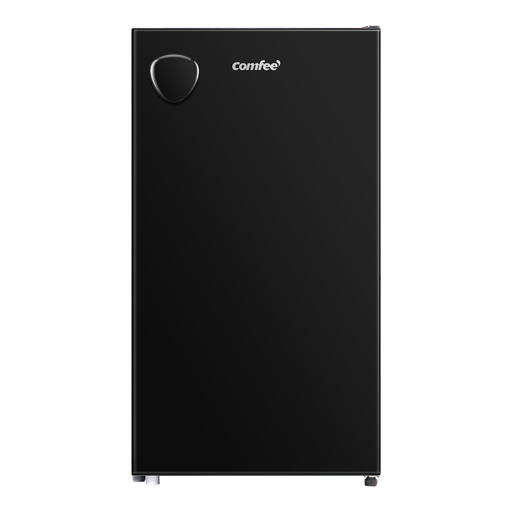
COMFEE' RCD92BL2EUY(E) 88-litre under-counter fridge

COMFEE' RCD92BL2EUY(E)

An under-counter model to consider if you want to make use of the space beneath a worktop.

88-litre capacity; adjustable thermostat; energy label E.

The product information describes a separate chiller compartment for short-term chilling; don’t store food in it for more than 2 hours.

Joybuy

TCL RF120DWE0 compact 90-litre fridge with chiller compartment

TCL RF120DWE0

A compact fridge to compare if you want to chill jars and other food.

90-litre capacity; three adjustable shelves; energy label E.

According to the product information, the chiller compartment has a temperature range of -5 °C to 5 °C; use the main fridge compartment for dressing.

Joybuy

CHiQ JR92DSE compact 92-litre fridge, 47 cm wide

CHiQ JR92DSE

A slim freestanding model to consider if you want to use floor space and keep your worktop clear.

92-litre capacity; 47 cm wide; seven temperature settings.

Measure the space and check that the layout suits the height of your sealed jars.

Joybuy

Frequently asked questions

How can I check whether the fridge is cold enough for perishable dressing?

The Netherlands Nutrition Centre recommends setting your fridge to 4 °C. Place a fridge thermometer in the middle of the bottom shelf, keep the door closed for half a day or overnight, and adjust the fridge if the measured temperature is too high.

How should I store homemade dressing after making it?

Use a clean, airtight container and refrigerate any ingredients that need to be kept chilled promptly. For leftovers, the Netherlands Nutrition Centre recommends refrigerating them within 2 hours and keeping them for no more than 2 days; this isn’t a universal storage life for every dressing recipe.

Can I put a freestanding tabletop fridge inside a closed kitchen cupboard?

Don’t rely on the external dimensions alone: the setup must meet the installation and ventilation requirements for that exact appliance. The Consumers’ Association distinguishes between freestanding tabletop models and under-counter models.

What warranty applies when buying a fridge in the Netherlands?

When you buy as a consumer, you’re entitled to a product that works as it should, and the retailer is your point of contact if something goes wrong. According to the Dutch government, there’s no fixed statutory warranty period in the Netherlands; a manufacturer’s warranty is additional.

Are the rules for selling homemade dressing from home the same as for making it for your own use?

Not necessarily. According to the Netherlands Food and Consumer Product Safety Authority, regular sales from home are subject to food safety requirements, including the use of a food safety plan. This guidance for businesses isn’t a general storage requirement for households cooking only for themselves.
