
Holidaymaker with fresh shopping
You want to keep grapes and other fresh food chilled during your stay, and need an interior layout that suits what you bring with you.


For a holiday home, choose a fridge that can be set to 4 °C and has enough usable space for grapes and your other shopping. The Netherlands Nutrition Centre recommends 4 °C as the standard fridge temperature. A freezer compartment is useful mainly if you also want to store frozen food, as it takes up space that would otherwise be available for chilling in a compact appliance. For suitable models, compare the stated energy use in kWh per year and, if the fridge will be in an unheated space, check the climate class of the specific model.
You want to keep grapes and other fresh food chilled during your stay, and need an interior layout that suits what you bring with you.
You need to fit a fridge into a compact kitchen and want to know whether an under-counter model, with or without a freezer compartment, offers enough usable space.
You’re mindful of energy use when the property isn’t occupied. If the fridge is in an unheated room, check that the model can operate there under the stated conditions of use.
| What to consider | What should you look for? | Who is this important for? |
|---|---|---|
| Chilling fresh food | Check that the temperature can be set to 4 °C and that the layout has room for grapes and other shopping. The Netherlands Nutrition Centre recommends 4 °C as the standard fridge temperature. | If I bring grapes and other fresh shopping, I want to be able to store them properly without paying for unnecessary features. Around 36% of consumers prioritise freshness. |
| Suitable size and layout | Measure the available space and doorway; compare the external dimensions and the separate fridge and freezer capacities if you also want to freeze food. | In a small kitchen, I want the appliance to fit and offer enough usable space for my shopping. Around 29% of consumers mainly choose based on size and fridge capacity. |
| Annual energy use | Compare the stated energy use in kWh per year for models with a suitable capacity. The EU energy label provides a standardised figure for comparison; actual energy use also depends on how and where the fridge is used. | If the fridge will stay on between visits, I want to take its stated energy use into account when choosing. Around 21% of consumers pay particular attention to electricity use. |
| Location | Measure the temperature where the fridge will go and compare it with the climate class and installation instructions for the exact model. The Consumers’ Association describes the climate class as the stated range of ambient temperatures. | For an unheated utility room, I want to know whether the chosen model can operate there. Around 14% of consumers consider the location their main concern. |
A compact exterior doesn’t necessarily mean the layout and temperature settings will suit what you want to store.
For the specific appliance, check its intended use, fridge capacity, adjustable temperature and product information sheet.
The energy rating alone doesn’t tell you how many kWh per year the chosen appliance uses. The Consumers’ Association points out that the rating takes capacity into account. A larger fridge may therefore have a good rating but still use more kWh per year than a smaller one.
For models with a suitable capacity, compare the stated annual energy use too.
Outside the stated range of ambient temperatures, the fridge may not cool as effectively.
Measure the temperature in the intended location and, before buying, compare it with the climate class and the model-specific instructions.
The KK550 is an under-counter fridge without a freezer compartment, for anyone looking for plenty of chilled storage in a compact size.
The Re 1000 Pure is a lower under-counter fridge with no stated freezer compartment, designed for a space with limited height.
The KTR15NWEB is an under-counter fridge without a freezer compartment, with a stated fridge capacity of 134 litres.
The TS190340N is a narrower under-counter option for spaces where width is a key consideration.
This selection includes compact fridges for fresh shopping in a small kitchen or holiday home; one model also has a freezer compartment.
 Image unavailable
A compact option for anyone looking to store grapes and other fresh shopping in a small kitchen.
Under-counter fridge; 88 litres; energy rating E; black.
 Image unavailable
An option if you want to store frozen food as well as chilled shopping.
Under-counter fridge with freezer compartment; 107 litres; energy rating C; white; 5-year guarantee.
The freezer compartment takes up some of the total capacity.
 Image unavailable
An under-counter fridge for anyone looking to store fresh shopping in a holiday home or compact kitchen.
54 cm wide; energy rating E; white.
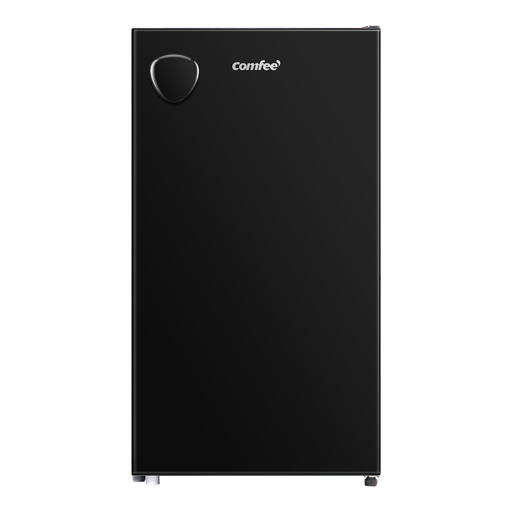 Image unavailable
An under-counter model for anyone looking for a compact space to store fresh shopping.
88 litres; energy rating E; black.
According to the product information, the separate cooling zone is intended for drinks and snacks kept for up to 2 hours; don’t use it for longer-term storage.
 Image unavailable
A slim option for anyone looking to save space and store grapes alongside other fresh shopping.
92 litres; 47 cm wide; energy rating E.
According to the product information, the stated ambient temperature range is 16–38 °C and this model has no winter mode. Before installation, check that the temperature in your chosen location stays within this range.
Keep grapes in the fridge, in a paper bag, their packaging or on a plate. The Netherlands Nutrition Centre recommends leaving them on the stem where possible and avoiding dampness. The suggested storage time of 1–2 weeks is a guideline, not a guarantee for every bunch.
Set the fridge to 4 °C, following the Netherlands Nutrition Centre’s general storage advice. Follow the installation and ventilation instructions for your chosen model. If the appliance is in an unheated room, compare the measured ambient temperature with its climate class.
For models with a capacity that suits your needs, compare the stated energy use in kWh per year on the energy label. The European Commission describes this as a standardised figure for comparison; actual energy use also depends on how and where the fridge is used.
You’re entitled to a product that works as it should, and you can contact the seller if something goes wrong. According to the Government of the Netherlands, there is no fixed two-year statutory guarantee period in the Netherlands; a manufacturer’s guarantee or an additional guarantee product is on top of your statutory rights.
Yes. According to the Government of the Netherlands, when a private customer buys a new appliance, the seller must take back an old appliance of a similar type under the ‘old for new’ scheme. This also applies to online purchases. Agree the practical arrangements for collection at delivery with the seller.