
Storing lettuce
You want to keep lettuce chilled during your stay and need somewhere to store delicate leaves without crushing them. The Voedingscentrum recommends setting your fridge to 4 °C.


For a holiday home, first choose a fridge that fits the available space and lets you set and check the temperature at 4 °C. A salad drawer can help keep things organised, but it doesn’t guarantee that lettuce will keep for longer. A model without a freezer compartment gives you more space for fresh food, while a freezer compartment is only useful if you also store frozen food. If the house is unheated in winter, check that the lowest ambient temperature is within the climate class and the instructions for your chosen model.
You want to keep lettuce chilled during your stay and need somewhere to store delicate leaves without crushing them. The Voedingscentrum recommends setting your fridge to 4 °C.
You’re short on space and want to decide whether fridge space matters more than a freezer compartment. Measure the available space before choosing an under-counter model.
You use the house during cold spells or leave it empty at those times. Check that the ambient temperature falls within the climate class and the model-specific instructions; the Consumentenbond explains that a fridge’s climate class indicates its operating temperature range.
| What to consider | What should you look for? | Who is this important for? |
|---|---|---|
| Cooling and storing lettuce | Set the fridge to 4 °C and check the actual temperature with a thermometer. Make sure the drawer or shelf has enough room without squashing the lettuce. | If you regularly bring lettuce with you, you’ll want to keep it chilled and easy to find; around 33% of consumers say reliable cooling for lettuce is their top priority. |
| Size and fridge space | Measure the available space, doorway and clearance needed to open the door. Compare the external dimensions and fridge capacity separately, especially for a model with a freezer compartment. | If you have a small kitchen, you’ll want an appliance that fits and offers enough fridge space; around 27% of consumers prioritise the space available for installation. |
| Power consumption | For models that fit, compare both the energy label and the stated annual consumption in kWh. Also consider whether you’ll leave the fridge on between stays. | If occupancy varies, power consumption during periods when the house is empty may be a factor; around 20% of consumers put this at the top of their list. |
| Cold installation space | Measure how cold the space gets in winter and compare that temperature with the climate class and the instructions for the specific model. | If you use the holiday home during cold spells or leave it empty, operation at the lowest ambient temperature is crucial; around 20% of consumers put suitability for these conditions first. |
A drawer can help you store food separately and keep it organised, but it doesn’t prove that lettuce will stay fresh for longer. How long it keeps also depends on the product and the temperature.
Check the fridge temperature and follow the appropriate storage advice. Think of the drawer as a practical storage feature, not a guarantee of extra freshness.
For a model with a freezer compartment, the total capacity isn’t the same as the space available for chilled food. That means you may have less room for lettuce than you expect.
Compare the fridge capacity, freezer compartment and external dimensions separately.
The energy rating takes capacity into account. A larger fridge may use more electricity overall, even if it has a good rating.
Compare the stated annual consumption in kWh of models that suit your space and needs.
An unheated space can get colder than the temperature range a model is designed for. This could make the fridge compartment warmer than you want it to be.
Measure the lowest ambient temperature and compare it with the climate class and the manufacturer’s instructions.
Liebherr offers compact fridges, including the Rci 1620 Plus, which has a separate EasyFresh compartment.
Inventum offers under-counter models in various sizes, including the KK550S and KK600.
Bosch’s range includes the KTR15NWEB, an under-counter model without a freezer compartment.
Beko offers slim under-counter models; the TS190340N is worth considering if you also want a freezer compartment.
This selection includes compact fridges for chilled food, with models both with and without a separate freezer compartment. Compare the stated capacities and check that the size and layout suit your holiday home.
 No image available
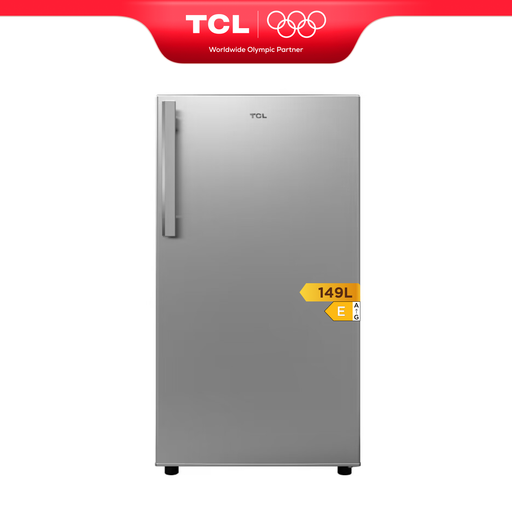
An option if you want to store chilled food as well as use a separate ice box; check that the fridge capacity suits your needs.
Total capacity 149 l; fridge compartment 122 l; freezer compartment 27 l; E energy label.
 No image available
A compact under-counter model to consider if you’re looking for a fridge for chilled food; check the layout and usable space for the food you want to store.
Capacity 88 l; E energy label; black.
 No image available
An option if you need freezer space as well as room for chilled food; check how much space is available for refrigeration.
Capacity 109 l; C energy label; white.
 No image available
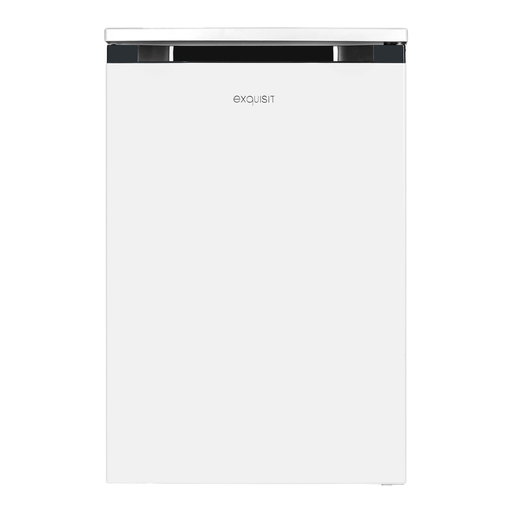
A model to compare if you need space for chilled food and a separate freezer compartment; check the layout and available fridge space.
Capacity 107 l; C energy label; white.
 No image available
An option designed for chilled storage; before buying, check the layout, available space and temperature control to make sure it suits your needs.
E energy label.
Set the fridge to 4 °C and check the actual temperature with a fridge thermometer. The Voedingscentrum recommends placing the thermometer in the middle of the bottom shelf.
The Voedingscentrum recommends keeping raw iceberg lettuce in the fridge for 2–5 days, and mixed raw salad without dressing for 2 days. Check the condition of the food too, and follow the label if it’s in a sealed pack; a salad drawer won’t automatically extend these storage times.
That depends on the lowest ambient temperature and the specific model. Compare the temperature in the room with the climate class, and check the manufacturer’s instructions if conditions are colder.
As well as the energy rating, compare the stated annual consumption in kWh. Milieu Centraal recommends taking annual consumption into account; a larger fridge may use more electricity overall, even if it has a good energy rating.