What should you look for when choosing?
Measure the space and check the installation instructions for the exact model before comparing capacities. Then choose based on what you want to store in the same fridge: mainly fresh food, or frozen food as well.
| What to consider |
What should you check? |
Who should consider this most? |
| Dimensions and positioning |
Compare the height, width and depth with the space available. Also check the clearance needed and door opening in the model-specific installation instructions. |
If your kitchen is short on space, you’ll want to know in advance whether the appliance will fit and the door can open properly. Around 29% of consumers give priority to a suitable size. |
| Fridge space for fruit |
Compare the fridge capacity and check whether the shelves and drawer have room for your usual bunches of grapes and other groceries. |
If you store lots of fresh fruit, you’ll want to be able to put grapes away without wedging them between other groceries. Around 29% of consumers prioritise usable space for fruit. |
| Annual energy consumption |
Compare the stated annual energy consumption in kWh for models with enough fridge space. Use your own electricity tariff to work out a personal estimate. |
If you want to take energy use into account, compare suitable models by their annual consumption. Around 18% of consumers make electricity use their top priority. |
| Freezer compartment |
Decide whether you want to freeze food in the same appliance, and compare the fridge and freezer capacities separately. |
If you store frozen food as well as fresh produce, an integrated freezer compartment may be useful. Around 12% of consumers prioritise this feature. |
| Noise |
Compare the stated noise levels for the exact models. A product specification is not a listening test in your home. |
If your kitchen is next to your living space, the stated noise level may carry more weight in your decision. Around 12% of consumers put noise at the top of their list. |
The energy label lists details including annual energy consumption, capacity and noise level. The energy rating alone is no substitute for comparing the stated consumption and available space; Milieu Centraal recommends choosing a size that suits your needs.
Joybuy products
These Joybuy products are compact fridges for fresh groceries in a small kitchen. Compare their stated dimensions and capacities with the space you have and the groceries you usually buy.
 No image available
Bella BKK090.1BE table-top fridge, 88 litres, E energy rating
An option to compare if you’re looking for a compact fridge for grapes and other fresh groceries.
88 litres; E energy rating.
View at Joybuy
 No image available
Wiggo WL-BTT88E(W) table-top fridge, 54 cm, E energy rating
The stated width makes this model worth comparing if the space available is a key constraint.
54 cm; E energy rating.
View at Joybuy
 No image available
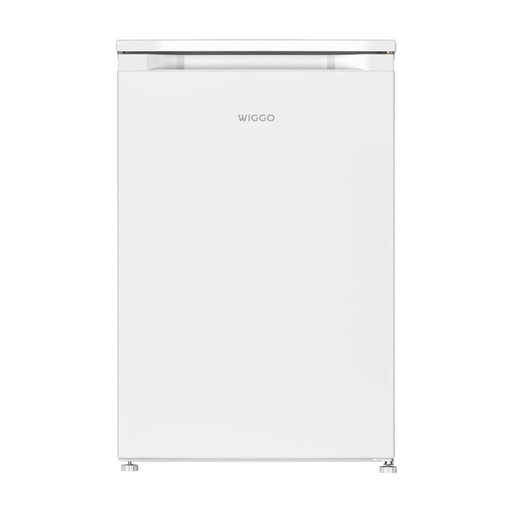
Wiggo WL-TT82D(W) table-top fridge, 55 cm, D energy rating
Compare the stated dimensions with the space in your kitchen, and check that the layout suits the room you need for grapes.
55 cm; D energy rating.
View at Joybuy
 No image available
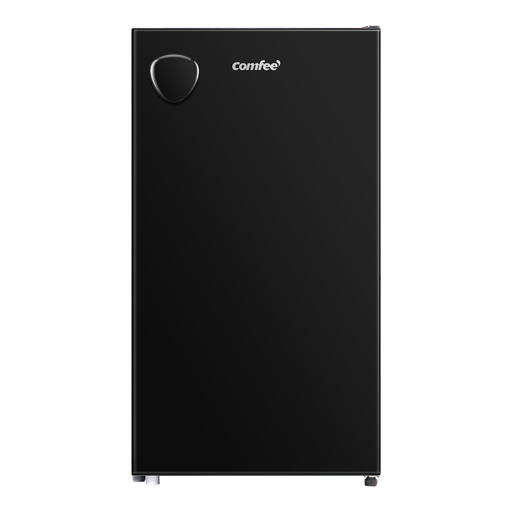
COMFEE' RCD92BL2EUY(E) under-counter fridge, 88 L
Worth a look if you’re after a fridge described in the product name as fitting under a worktop; check the exact installation instructions and dimensions.
88 L.
View at Joybuy
 No image available
CHiQ JR92DSE compact fridge, 92 L, 47 cm, E energy rating
The stated width may suit a narrow space; also check that the capacity and layout work for your groceries.
92 L; 47 cm wide; E energy rating.
View at Joybuy
Frequently asked questions
How should I store grapes in the fridge?
The Netherlands Nutrition Centre recommends keeping opened grapes in the fridge for 1–2 weeks, compared with 3–4 days in a fruit bowl. This is storage advice, not a guarantee for every bunch. It’s best to leave grapes on the vine, keep them dry and set your fridge to 4 °C, in line with the Netherlands Nutrition Centre’s general recommendation.
Can I push a freestanding table-top fridge tightly into an existing cupboard?
Don’t assume you can based on the outside dimensions alone. Check the installation instructions for the exact model for clearance, ventilation and door opening; a freestanding model isn’t automatically suitable for built-in installation.
What do the energy label and annual consumption tell me?
The label lists details including the A–G energy rating, consumption in kWh per year, capacity and noise level. Multiply the stated annual consumption by your own price per kWh for a personal estimate of electricity use.
What warranty cover do I have in the Netherlands if my fridge doesn’t work properly?
When you buy as a consumer, the product must meet what you can reasonably expect; if there’s a fault, the retailer is your point of contact. According to the Dutch Government, the Netherlands has no fixed statutory warranty period. A manufacturer’s warranty is in addition to your statutory rights.
Does a fridge need an energy label, and what happens to my old fridge?
The Dutch Government lists fridges as appliances that must have an energy label. If you buy a new appliance of a similar type as a private individual, the retailer must take your old appliance away free of charge under the like-for-like take-back scheme. This also applies to online purchases.


