
Hosting with a full fridge
You’re preparing food for a group and want to be able to chill a covered dish. The Netherlands Nutrition Centre recommends putting chilled food back in the fridge as soon as possible.


For a meal with guests, you can usually use your existing fridge, provided the covered dish fits and a fridge thermometer reads around 4 °C; the Netherlands Nutrition Centre recommends this temperature. If you do decide to buy a fridge, measure both the available space and the dish. Compare fridge capacity separately from any freezer space, and check the annual energy consumption in kWh.
You’re preparing food for a group and want to be able to chill a covered dish. The Netherlands Nutrition Centre recommends putting chilled food back in the fridge as soon as possible.
You’re looking for extra fridge space for everyday use, but need to make sure the appliance and its layout suit the available space and your dish. Milieu Centraal warns that an unnecessarily large fridge can use more electricity than needed.
You’ve decided to buy a fridge and want to weigh its capacity against its annual electricity consumption. The European Commission says the energy label shows the annual consumption and capacity.
A good fit if: there’s room for the covered dish and the temperature you measure is suitable.
Bear in mind: the dial setting alone doesn’t tell you how cold it is inside the fridge.
A good fit if: you need extra fridge space for everyday use and have limited room.
Bear in mind: freezer space isn’t suitable for chilling fruit salad; IKEA lists the LAGAN as having 97 l of fridge space and 16 l of freezer space.
A good fit if: you often chill large dishes and other food, but don’t need extra freezer space.
Bear in mind: compare the external dimensions and annual energy consumption of specific models.
A good fit if: you need a freezer as well as extra fridge space.
Bear in mind: compare fridge and freezer capacities separately; freezer space isn’t available for your dish.
| What to consider | What to look for | Who is this important for? |
|---|---|---|
| Keeping the salad chilled | Measure the temperature with a fridge thermometer and keep the dish covered. | If I want to keep the salad chilled for a meal with guests, I want to check the temperature rather than rely on the dial setting alone. Around 33% of consumers prioritise reliable cooling. |
| Room for dishes | Measure the covered dish and the clearance between shelves; check the fridge capacity separately. | If I need to store other dishes for a group as well as the salad, I want to know how much fridge space is genuinely usable. Around 27% of consumers prioritise space for food. |
| Size and placement | Compare the external dimensions with the available space, and check the door and layout. | If my kitchen has limited space, I want to know in advance whether the appliance will fit where I plan to put it. Around 20% of consumers prioritise a suitable size and placement. |
| Annual energy consumption | Compare the consumption in kWh per year for models with a suitable capacity. | If I’m going to use a fridge long-term, I want to take its electricity use into account rather than looking at its size alone. Around 20% of consumers prioritise energy consumption. |
The EU energy label shows information including the energy class and annual consumption in kWh. Milieu Centraal also recommends choosing a capacity that suits your needs: a larger fridge can take up more space and use more electricity.
The total capacity of a fridge-freezer includes the freezer compartment, which isn’t available for your fruit salad.
Compare the stated fridge capacity and check that the covered dish will fit between the shelves.
Your existing fridge may be enough if the dish fits and the temperature is right. An extra appliance also uses electricity if you leave it switched on after the meal.
First, check the available space and the temperature. Only compare extra appliances if you need more fridge space on an ongoing basis.
The Joybuy listing title for the Bosch KGN33NSDB says 308 l, while Bosch lists 189 l of fridge space and 90 l of freezer space. Those volumes add up to 279 l.
Before buying, check the product information and the separate fridge and freezer capacities for the exact version on offer.
The LAGAN range includes a compact freestanding fridge with a freezer compartment, designed for smaller kitchens.
The freestanding Rd 4200 Pure is aimed at anyone looking for fridge space without a freezer compartment.
The KGN33NSDB is a fridge-freezer for anyone who needs a freezer as well as fridge space.
The KK1420 is an example of a freestanding fridge without a freezer compartment and with several shelves.
This selection includes everything from a built-in fridge and a compact fridge to fridge-freezers. Choose a type that suits your available space and whether you need a freezer compartment.
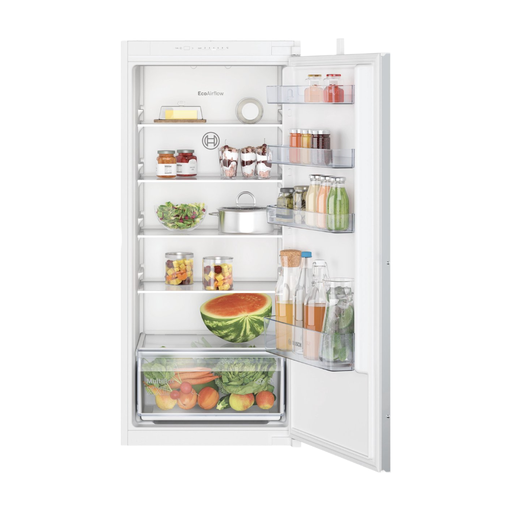 No image available
A built-in fridge to consider if you’re looking for fridge space without a freezer compartment and have a suitable niche.
The product name specifies a height of 122 cm and a sliding-door system. Installation requires a suitable niche and ventilation space.
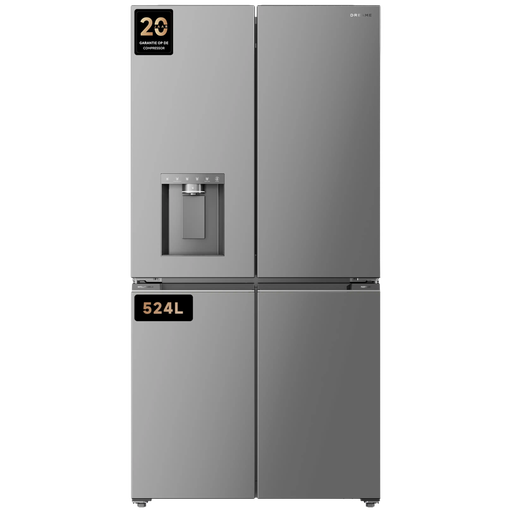 No image available
A freestanding fridge-freezer to consider if you need freezer space as well as fridge space.
The product name specifies 524 l, No Frost and Wi-Fi. Bear in mind that freestanding installation requires space and ventilation.
 No image available
A compact fridge to consider if you’re short on space. Measure your dish and the clearance between the shelves first.
The product name specifies energy class E.
 No image available
A fridge-freezer to consider if you need fridge space and a separate freezer compartment.
The product name specifies 187 l of fridge space, 73 l of freezer space and a width of 55 cm. Check that the dimensions and layout suit your space and dish.
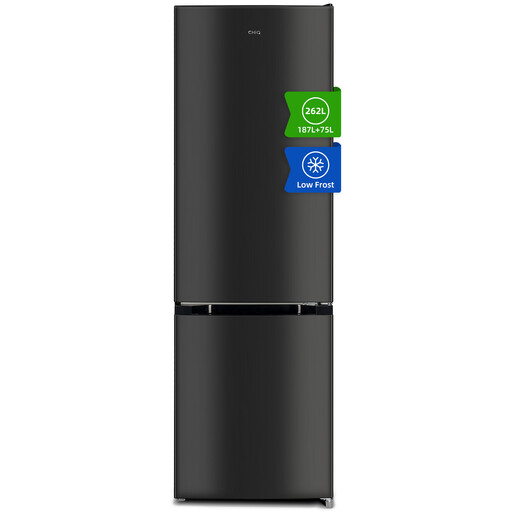 No image available
A fridge-freezer to consider if you need a freezer as well as fridge space. Check the layout to make sure a covered dish will fit.
The product name specifies 262 l and Low Frost.
The Netherlands Nutrition Centre says opened fresh fruit salad will keep in the fridge for two days. Store it well covered, and follow the relevant label instructions for packaged products too.
Use a fridge thermometer and check it after half a day or overnight. The Netherlands Nutrition Centre recommends a fridge temperature of 4 °C; adjust the temperature setting if needed.
No, you don’t need a freezer compartment to keep salad chilled. Choose a fridge with a freezer compartment if you also want to freeze food, and compare fridge capacity separately from freezer capacity.
The EU energy label shows information including the energy class and annual consumption in kWh. Compare annual consumption across models of a suitable size. Your actual energy use and costs also depend on how you use the fridge and your electricity tariff.
According to the Government of the Netherlands, you’re entitled to a product that works properly; there’s no fixed period for the statutory guarantee in the Netherlands. If a product is faulty, contact the seller. A manufacturer’s guarantee is in addition to your statutory rights.