
Vandaag of morgen in huis

Kwaliteit gegarandeerd

Welkomstaanbiedingen ontgrendelen: GRATIS bezorging | Tot 80% korting | Gratis 30 dagen JoyPlus-proefperiode
Download de app
You’ll usually buy a fridge freezer for several years. Even so, many people focus mainly on capacity and appearance. This can result in a model that won’t fit through the doorway, makes too much noise or proves less practical than expected.
The main pitfalls:
Don’t just measure the available space. Also check:
An American-style fridge freezer, side-by-side fridge freezer or four-door fridge freezer often provides plenty of capacity, but it also requires more floor space. A standard fridge freezer measuring around 55 to 60 cm wide is easier to fit into a compact Dutch kitchen.
Also check the packaged dimensions. An appliance measuring 180 cm high may be considerably taller in its packaging. After transport, leave a large fridge freezer standing upright as instructed in the manual before plugging it in.
Look at the balance between fridge and freezer space. A household that cooks fresh food frequently will benefit more from a spacious fridge compartment. If you store a lot of food, several freezer drawers will be more useful.
As a guide, you can use the following profiles:
A flexible layout with adjustable glass shelves, spacious door shelves and a salad drawer is often more practical than a high theoretical total capacity.
The EU energy label shows, among other things, the energy class and annual consumption. Use both details when comparing an energy-efficient fridge freezer. Annual consumption in kWh gives you a more concrete idea of electricity usage than the letter class alone.
The noise level is particularly relevant in an open-plan kitchen or a home where a bedroom or study is next to the kitchen. Models rated at around 37 to 40 dB are described as relatively quiet in their product specifications. Actual noise levels can vary depending on the floor, how full the appliance is and where it is positioned.
Also consider the cooling technology:

Why it suits this profile: With a width of 54.5 cm and a total capacity of 260 litres, this model is suitable for a smaller kitchen or a household that doesn’t store large quantities of food.
The dimensions and 40 dB noise level are clearly stated. However, bear in mind that this model requires manual defrosting and has an energy rating of E.
260 litres of capacity, reversible door, adjustable shelves and a separate fresh food drawer.
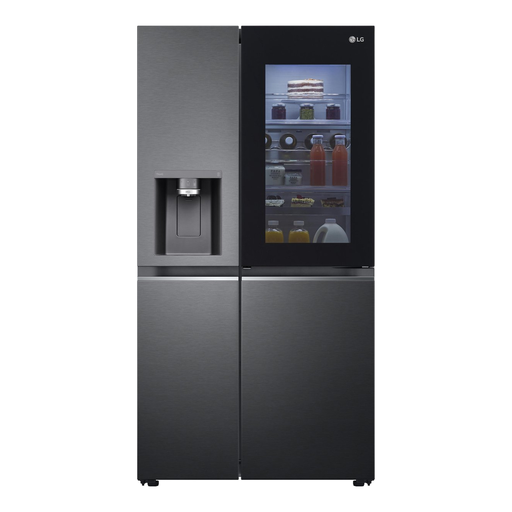
Why it suits this profile: With 635 litres of capacity, a water and ice dispenser, No Frost and ThinQ WiFi controls, this model is aimed at households looking for plenty of space and extra features.
The product specifications state a width of 91.3 cm, a depth of 73.5 cm and annual consumption of 348 kWh. Measure the available space in advance and bear in mind that a larger appliance generally uses more energy.
416 litres of fridge space, 219 litres of freezer space, 36 dB and an integrated water and ice dispenser.
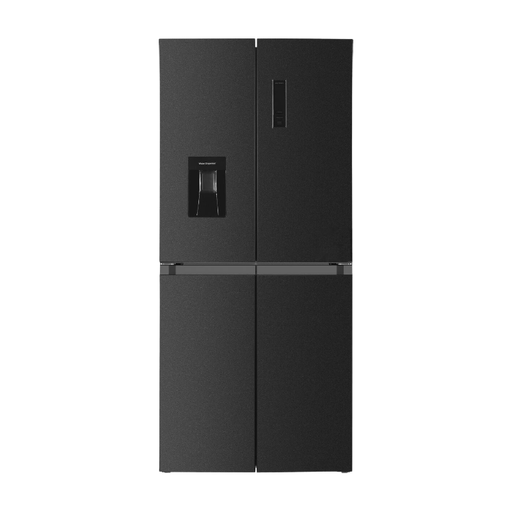
Why it suits this profile: The four doors, 419-litre capacity and six freezer drawers provide a well-organised layout for a fridge freezer for a large family or anyone who tends to buy in bulk.
The water dispenser has a refillable reservoir and, according to the product information, doesn’t require a fixed connection. The appliance is 79 cm wide and uses 182 kWh per year.
419 litres in total, Total No Frost, energy rating C, 39 dB and a Fast Freeze function.
Use this quick checklist:
We’ve put together a complete, up-to-date list of products that fully meet these strict selection criteria and the applicable European safety regulations.
That depends on the number of people in your household and how often you shop. Around 250 to 320 litres may be suitable for two to three people. A large family or someone who likes to stock up will usually need 400 litres or more. Always check the separate fridge and freezer capacities.
No Frost can be useful if you want to avoid manual defrosting. However, the feature doesn’t make the appliance completely maintenance-free. Clean the interior, door seal and any water reservoirs according to the manual. Also compare annual energy consumption, rather than simply checking whether No Frost is included.
Multiply the stated annual consumption in kWh by your current electricity tariff. This is only an indication: actual costs depend on the ambient temperature, temperature setting, how full the appliance is and how often the door is opened. A larger model may offer more capacity, but it won’t automatically have lower running costs.
