
Workshop host using opened ingredients
Wants to put hummus back quickly during a busy workshop and check the fridge temperature. The Voedingscentrum recommends a fridge temperature of 4 °C.


Choose a fridge-freezer where you can quickly put opened hummus back and set and check the temperature. The Voedingscentrum recommends a fridge temperature of 4 °C. Also compare the usable layout, the space available for installation, whether you need freezer space and the stated annual energy consumption. Safe storage also depends on good hygiene and how long the hummus is left out of the fridge.
Wants to put hummus back quickly during a busy workshop and check the fridge temperature. The Voedingscentrum recommends a fridge temperature of 4 °C.
Needs a fridge-freezer that fits the available space and offers enough easily accessible room for chilled ingredients. The Consumentenbond points out that the stated capacity does not always reflect what will actually fit in a fridge.
Wants to freeze portions as well as chill ingredients, so needs to weigh up freezer space against the fridge space required during the workshop.
Start with temperature control and a layout that lets you put ingredients back quickly. Then compare the available space, annual energy consumption and any freezer function you genuinely need.
| What to consider | What to look for when buying | Who is this important for? |
|---|---|---|
| Temperature control | Check whether you can set the temperature to 4 °C, then use a fridge thermometer to measure the actual temperature. The Voedingscentrum recommends 4 °C. | If I’m putting containers back repeatedly during a workshop, I want to know the fridge is cold enough. Around 33% of consumers prioritise temperature control and being able to put food back quickly. |
| Usable fridge space | Check the layout and fridge capacity separately from the freezer capacity, and make sure the shelves suit the containers you use. The Consumentenbond advises against relying on the stated capacity alone. | When I have several opened ingredients, I want to be able to arrange and reach everything easily. Around 27% of consumers give accessible fridge space top priority. |
| Size and installation space | Measure the available space and compare it with the dimensions of the exact model. If the fridge will be in an unheated space, also check its climate class and the manufacturer’s guidance. | If my workshop kitchen is short on space, I want to know in advance whether the fridge will fit and is suitable for that location. This is the top priority for around 20% of consumers. |
| Annual energy consumption | For models of a suitable size, compare the stated consumption in kWh per year on the energy label. The Consumentenbond points out that energy consumption is also important when comparing models. | As the fridge is on all the time, I want to take its annual energy consumption into account without choosing an oversized model. Around 13% of consumers prioritise electricity consumption. |
| Freezing portions | Check whether the freezer function is suitable for freezing food, and compare the freezer capacity separately with the portions you want to store. | If I want to freeze portions after a workshop, I need suitable freezer space without compromising on the fridge space needed for ingredients. Around 7% of consumers give freezing food top priority. |
The selected setting doesn’t automatically tell you the actual temperature inside the fridge. Good hygiene and how long the hummus is left out of the fridge matter too.
Measure the temperature once the fridge is set up and adjust it if necessary. Put hummus back promptly after use and use clean utensils.
The total capacity in litres includes the freezer compartment and doesn’t tell you how easily several containers will fit on accessible shelves.
Compare the fridge and freezer capacities separately, and check the layout of the exact model.
An energy rating on its own doesn’t tell you the annual consumption in kWh. A narrow fridge also won’t necessarily suit the amount of food you need to store or the temperature where it will be installed.
Compare the stated annual energy consumption of models that are a suitable size. If the fridge will be in an unheated space, check its climate class.
The Beko RCHE300K40WN is a freestanding fridge-freezer that is 54 cm wide, making it a possible option if installation space is limited.
Samsung lists a total capacity of 344 l for the freestanding RB34C670DWW/EF.
LG lists a total capacity of 375 l for the freestanding GBBS322CPY.
According to Bosch, the Bosch KGN392LAG is a freestanding fridge-freezer with a 260 l fridge compartment and a 103 l freezer compartment.
These fridge-freezers are options for workshops where accessible fridge space, adjustable cooling or a freezer compartment are important. Compare the stated capacity and features with the containers, ingredients and installation space you actually have.
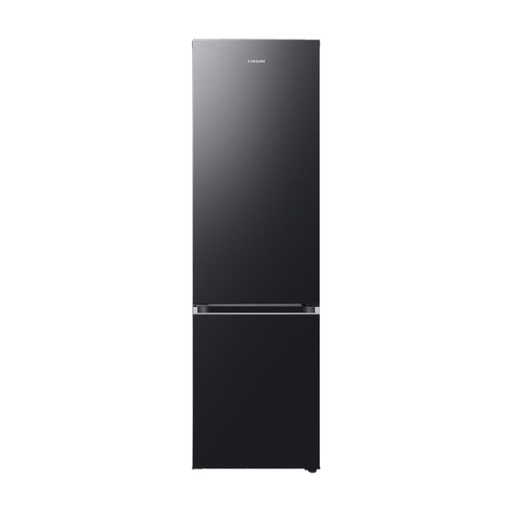 No image available
An option to compare if you want to keep several workshop ingredients chilled and are considering adjustable cooling features.
Fridge capacity: 273 l; total capacity: 387 l; energy class A; stated consumption: 108 kWh per year; No Frost; Power Cool.
 No image available
A compact option to compare if space is limited and you want to be able to set the fridge temperature.
Total capacity: 260 l; fridge: 187 l; freezer: 73 l; width: 55 cm; energy class E; stated fridge temperature range: 2–8 °C; adjustable shelves; reversible door.
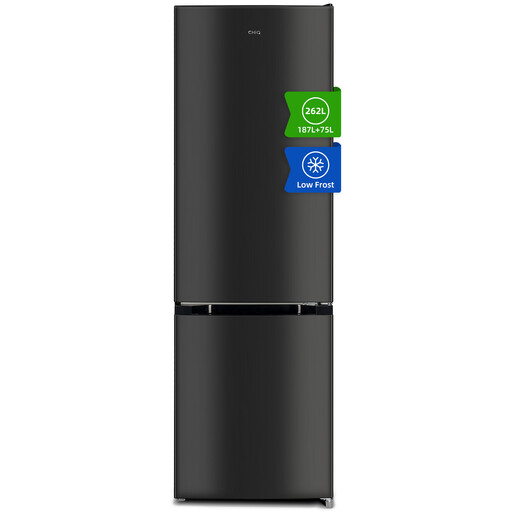 No image available
An option to compare if you want to store both chilled ingredients and portions in a freezer compartment.
Total capacity: 262 l; Low Frost; freezer compartment at the bottom; 4-star freezing function; adjustable shelves and door compartments; reversible door.
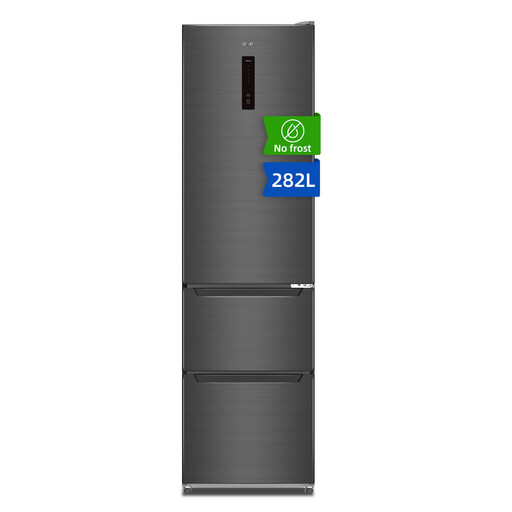 No image available
An option to compare if you want to weigh the stated fridge capacity and temperature settings against the total capacity.
Total capacity: 282 l; fridge capacity: 197 l; No Frost; energy class E; stated noise level: 37 dB; temperature control panel.
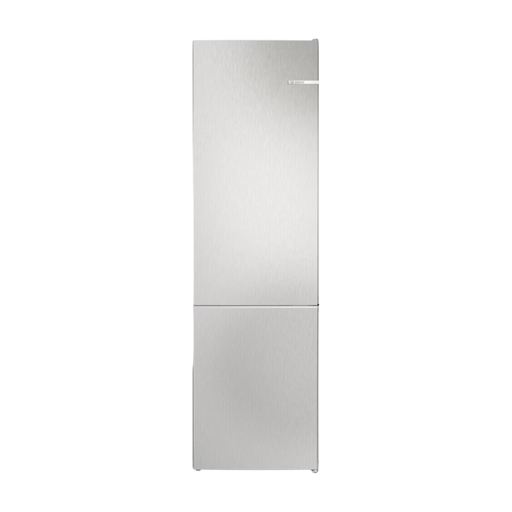 No image available
An option to compare if you’re considering a generous fridge capacity and the stated energy consumption. Also check whether the model fits in your workshop space.
Bosch lists a 260 l fridge capacity, 103 l freezer capacity, energy class A, No Frost and a noise level of 29 dB. The product information lists 112 kWh per year and dimensions of 2030 × 600 × 665 mm.
For plain hummus stored in the fridge, the Voedingscentrum recommends keeping homemade hummus for 1–3 days and ready-made hummus for 5–10 days. Follow the packaging instructions too, and keep the hummus chilled.
Set the fridge to 4 °C, as recommended by the Voedingscentrum, and check the actual temperature with a fridge thermometer. The Voedingscentrum advises placing the thermometer in the middle of the bottom shelf.
Put chilled hummus back as soon as possible after use. The Voedingscentrum advises not leaving highly perishable food out of the fridge for more than 2 hours. A fridge won’t re-chill food that has already been left unrefrigerated for too long.
Compare the consumption in kWh per year shown on the energy label for models of a suitable size. The Consumentenbond points out that annual energy consumption is a useful figure for comparison; the actual cost also depends on how you use the fridge and your electricity tariff.
If you run a food business that prepares, processes or sells food, the NVWA requires you to work with an HACCP food safety plan or an approved hygiene code. Whether these rules apply to a particular organiser depends on what they actually do; simply calling it a workshop doesn’t determine this.