Choose a fridge-freezer with enough fridge space to put opened cream away promptly, and whose temperature you can check. Then decide how much freezer space you need for other workshop ingredients and compare the separate capacities, external dimensions and annual energy consumption. A larger model isn’t automatically the most practical choice for a small workshop kitchen. The Voedingscentrum recommends storing opened cream at 4 °C.
Who is this important for?
Workshop host who often uses cream
Wants to put opened cream away promptly after use and be able to check the temperature. A door alarm can be useful if the fridge is opened frequently, but it’s no substitute for checking the temperature. The Voedingscentrum recommends storing opened cream at 4 °C.
Organiser with a small kitchen
Needs both fridge and freezer space, and must balance the external dimensions and usable shelf space against the room available. The Consumentenbond highlights differences in model type and capacity when choosing.
Workshop host who also freezes ingredients
Uses the freezer compartment regularly, so compares fridge and freezer capacities separately, as well as the maintenance requirements. The energy label lists the capacity of each compartment, among other details.
What should you consider when choosing?
For opened cream, usable fridge space is the priority; freezer space matters mainly for other ingredients you genuinely want to freeze.
| What to consider |
What should you look for? |
Who is it most relevant for? |
| Fridge temperature when the door is opened frequently |
Check the temperature setting and whether there’s a door warning. Once the fridge is in place, use a fridge thermometer to check that it’s cold enough. |
If I’m putting cream away frequently during a workshop, I want to be able to check the temperature rather than rely solely on the setting. Around 36% of consumers therefore make reliable cooling their top priority. |
| Dimensions and fridge space |
Measure the space available and compare the external dimensions, fridge capacity and shelf layout of the exact model. |
In a small workshop kitchen, I want to leave room for packaging and serving dishes without finding that the appliance doesn’t fit. Around 29% of consumers prioritise suitable dimensions and usable fridge space. |
| Freezer space for other ingredients |
Compare the fridge and freezer capacities separately, and decide which ingredients you’ll actually freeze. |
If I also freeze ingredients for a future workshop, I want enough freezer space without mistaking it for space for opened cream. Around 21% of consumers give usable freezer space top priority. |
| Energy consumption |
Compare the annual consumption in kWh of appliances with a suitable capacity. To estimate your own costs, multiply this by your electricity rate per kWh. |
Because the fridge is switched on outside workshop hours too, I want to take its energy consumption into account alongside the capacity I need. Around 14% of consumers prioritise running costs. |
Common pitfalls
-
Confusing the set temperature with the measured temperature
The temperature can vary within the fridge and may differ from the setting. So the set temperature doesn’t necessarily tell you how cold the shelf where you keep the cream is.
After setting up the fridge, check it with a thermometer and put opened cream away promptly after use.
-
Counting freezer space as storage space for opened cream
Fridge and freezer capacities are separate. According to the Voedingscentrum, freezing can change the texture of cream.
Compare the fridge capacity separately and reserve freezer space for ingredients you actually want to freeze.
-
Assuming the same model number always means the same specification
For the Beko B3RCSO255W, Beko lists static cooling and energy class D, whereas a Joybuy listing with the same model number specifies No Frost and class E.
Before buying, check the product information sheet and the full specification, and compare them with the manufacturer’s details.
Brands to consider
Bosch
The freestanding KGN33NSDB fridge-freezer is worth considering if separate temperature controls and a door alarm are important to you.
- Bosch Netherlands lists a 189 l fridge capacity, 90 l freezer capacity, Total No Frost and a width of 61,4 cm for this model.
- These specifications apply to the KGN33NSDB. They aren’t an independent performance assessment and don’t mean that every Bosch fridge has the same features.
Inventum
The KV1808W is a freestanding fridge-freezer worth comparing if you’re looking for relatively generous fridge space and features for larger quantities.
- Inventum lists a 199 l fridge capacity, 71 l freezer capacity, supercooling and No Frost for this model.
- According to Inventum, the KV1808W is 180 cm tall. Check that its height and layout suit your workshop space; claims about the benefits of its features come from the manufacturer.
Beko
The freestanding B3RCSO255W is 54 cm wide and, according to Beko, has a bottom-mounted freezer compartment.
- Beko lists static cooling and energy class D for this model.
- Before buying, check the full specification and product information sheet to make sure the cooling type and energy class listed match the model on offer.
Liebherr
The CBNdgc 5733 Plus BioFresh NoFrost is a larger freestanding fridge-freezer to include in your comparison if you’re also looking at more spacious models.
- Liebherr lists a total capacity of 360 l and external dimensions of 201,5 × 59,7 × 67,5 cm for this specification.
- Its height and depth may be impractical in a small workshop kitchen. Claims about food storage with BioFresh and DuoCooling come from the manufacturer.
Fridge-freezers at Joybuy
These fridge-freezers offer fridge space for opened cream, as well as freezer space for other workshop ingredients. Compare the stated capacities, dimensions and specifications with the space you have available and the way you plan to use the appliance.
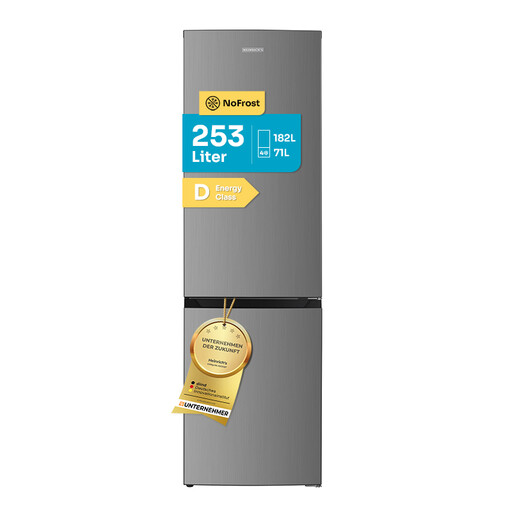 Image unavailable
Heinrichs fridge-freezer, 253 l
An option if you want to keep cream chilled and also need freezer space for other ingredients.
182 l fridge capacity; 71 l freezer capacity; 39 dB; No Frost; LED lighting; reversible door.
View at Joybuy
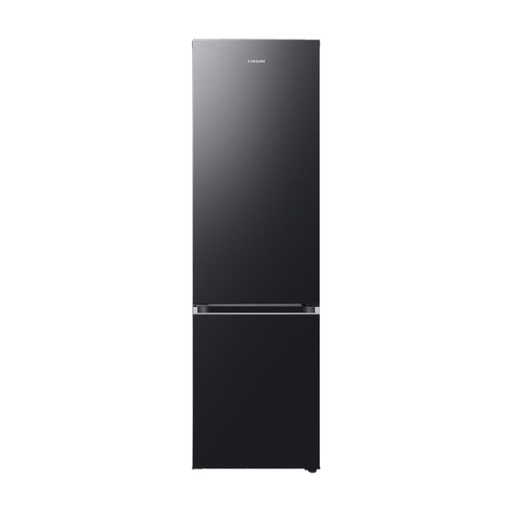 Image unavailable
Samsung RB38C607AB1/EF, Premium Black Steel
An option if you want to keep opened cream chilled and take the stated energy consumption into account.
Energy class A; 108 kWh; height 2030 mm.
View at Joybuy
 Image unavailable
TCL RF338BSE0, 260 l
An option if you’re looking for a narrower fridge-freezer with room to chill cream and freeze other ingredients.
187 l fridge capacity; 73 l freezer capacity; 55 cm wide; Fresh Zone; reversible door; energy class E.
View at Joybuy
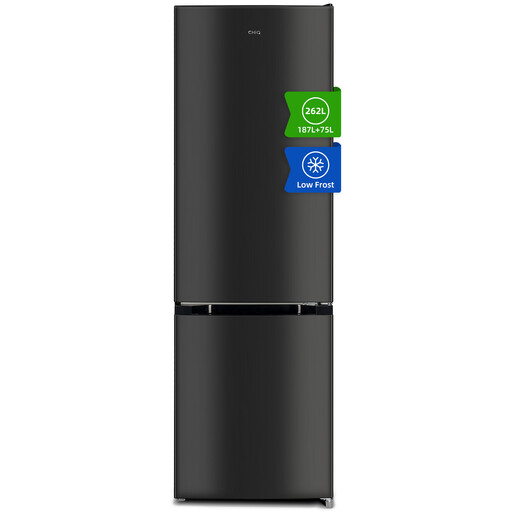 Image unavailable
CHiQ JR263LGE, 262 l
An option if you want to keep cream chilled and use the freezer compartment for other ingredients.
Low Frost; 4-star freezing; reversible door.
View at Joybuy
 Image unavailable
Midea MDRB457FGE46, 330 l
An option if you’re looking for a larger overall capacity as well as chilled storage for cream.
Total Frost Free; energy class E; Inox.
View at Joybuy
Frequently asked questions
How should you store opened cream during a workshop?
After use, put the container back promptly in a fridge set to 4 °C and check the temperature. For opened, unwhipped cream, the Voedingscentrum recommends keeping it in the fridge for 4–6 days. Follow the product label too, and avoid contamination from used kitchen utensils. This advice isn’t a guarantee if the product has been handled incorrectly.
Is the freezer compartment a good alternative for opened cream?
Not if you want to preserve the same texture: according to the Voedingscentrum, freezing can change the texture. The freezer compartment may, however, be suitable for other ingredients. The Voedingscentrum recommends setting the freezer to at least −18 °C.
How can you check that the fridge is cold enough once it’s in place?
The Voedingscentrum recommends placing a fridge thermometer in the middle of the bottom shelf and leaving it there for half a day or overnight. Then check the temperature and adjust the fridge if it’s above 4 °C.
What food safety rules apply if the workshop prepares or sells food commercially?
For a business that prepares, processes or sells food, the NVWA sets out the requirement to work with an HACCP food safety plan or an applicable hygiene code. For pre-packed products, follow the storage temperature on the label; if there isn’t one, the NVWA specifies 7 °C or below. Check which code applies to your specific business activity: the household recommendation of 4 °C isn’t automatically the same legal limit.
What should you do if your fridge breaks, and how should you dispose of an old fridge?
For a faulty product bought as a private consumer, the Dutch government says the seller is your point of contact for an appropriate solution, such as a repair or replacement. According to the Dutch government, free take-back of an old appliance when buying a similar new one applies to private consumers, not businesses. Bear this in mind if the workshop is buying the appliance for business use.


