
Host with lots of food containers
You prepare vegetables shortly before a shared feast and need to fit the sealed containers in neatly alongside your regular shopping.


If you’ll eat your prepared vegetables within two days, the Netherlands Nutrition Centre recommends storing them in the fridge. If you’re cooking further in advance, freezing is the way to go. So compare the fridge and freezer compartments separately, and also consider the dimensions, freezing capacity and annual energy consumption. A larger appliance won’t necessarily suit your kitchen or everyday needs better.
You prepare vegetables shortly before a shared feast and need to fit the sealed containers in neatly alongside your regular shopping.
You cook more than two days before the meal and want to freeze portions rather than keep them chilled for too long.
You need room for the occasional large meal, but the appliance also has to fit your kitchen and be a practical size for everyday use.
Choose this if: the vegetables will be eaten within two days and the sealed containers fit in the fridge compartment. The Netherlands Nutrition Centre recommends setting your fridge to 4 °C.
Trade-off: extra freezer space matters less for this meal, but safe chilling and putting food away promptly are still important.
Choose this if: you’re preparing the vegetables more than two days before serving. Check whether the freezer compartment is suitable for freezing fresh food.
Trade-off: a four-star rating tells you about the temperature the freezer compartment can reach, but not how quickly food freezes. If you’re freezing lots of portions, also compare the stated freezing capacity.
Choose this if: the meal is an occasional peak in demand and you want the appliance to suit your needs throughout the rest of the year too. Measure the available space and compare annual energy consumption on the EU energy label.
Trade-off: an appliance that’s too small may not have enough room for the feast, while a consistently oversized fridge may use more energy than necessary, according to Milieu Centraal.
| What to consider | What to look for | Who should give this more weight? |
|---|---|---|
| Fridge space and layout | Compare the fridge capacity separately from the freezer capacity. Check that the shelf layout and external dimensions work for your sealed containers. | If I need to store containers of vegetables alongside my regular shopping, I want to know how much of the fridge compartment is practically usable. Around 29% of consumers put fridge space first. |
| Freezer compartment for cooking ahead | Check the freezer capacity, whether the appliance is suitable for freezing fresh food, and how many portions will fit in the drawers. For larger quantities, compare the stated freezing capacity. | If you cook ahead, you’ll want to freeze portions rather than keep them chilled for longer than recommended. Around 29% of consumers give usable freezer space and the ability to freeze fresh food top priority. |
| External dimensions and installation | Measure the available height, width and depth, as well as the route into your home. Check the installation instructions and door configuration for the exact model. | If your kitchen is short on space, the appliance needs to fit without compromising on the fridge and freezer capacity you need. For around 21% of consumers, fitting in the kitchen is their top buying priority. |
| Annual energy use and everyday running | Compare the annual energy consumption in kWh of models with enough capacity. If the appliance will be near your living space, check its stated noise emissions too. | If you’re mainly thinking about use outside the festive period, you’ll want a suitable size and a clear idea of its stated energy consumption. Everyday energy use is the top priority for around 21% of consumers. |
A drawer designed for fresh produce doesn’t change the recommended storage time for cooked vegetables.
Plan when you cook according to when you’ll serve the vegetables. Freeze portions if you’re preparing them more than two days ahead.
Total capacity doesn’t tell you how much space is intended for chilling and how much for freezing. So even a roomy appliance may be less convenient for your containers than you expect.
Compare the fridge and freezer capacities separately, and check the layout and external dimensions of the exact model.
The star rating tells you about the temperature the freezer compartment can reach, not how quickly food will freeze.
If you want to freeze lots of portions at once, compare the stated freezing capacity and freeze the food in small portions.
The extra space may be useful for a large meal, but you’ll still be using the appliance the rest of the time.
First work out how much usable space you need day to day, then compare the annual energy consumption of models in a suitable size.
The KGN33NWDA is a freestanding fridge freezer worth considering if you want to weigh up fridge and freezer space separately.
The RB38C607AB1/EF is a taller fridge freezer to consider when weighing up capacity against the available installation height.
The CNbda 5723 Plus NoFrost is a model to compare if total capacity and stated noise emissions matter to you.
The B5RCNE366HXB1 is a freestanding fridge freezer with a bottom freezer compartment to consider if a slightly shorter appliance would suit you.
The GBV3100CSW is a model to compare if you’re looking for a 186 cm-high appliance with a larger total capacity.
These fridge freezers are selected to help you weigh up fridge and freezer space, dimensions and everyday use when storing prepared vegetables.
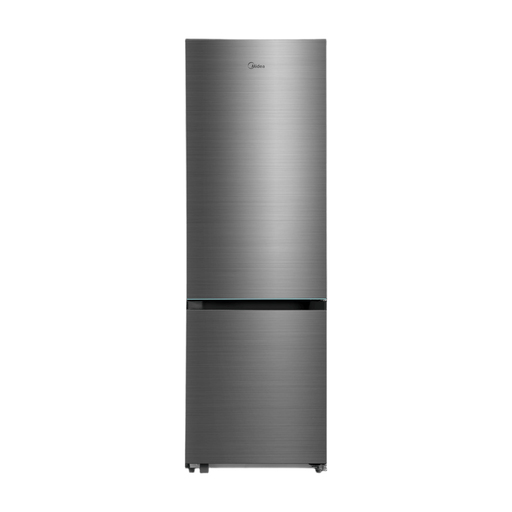 No image available
Could suit you if you want to weigh up the stated fridge and freezer space separately for containers and frozen portions.
232 l fridge space and 98 l freezer space; freezing capacity of 4.5 kg/24 hours. The stated dimensions are 59.5 × 57 × 186 cm and the door is reversible.
The product title lists an E energy rating and 35 dB.
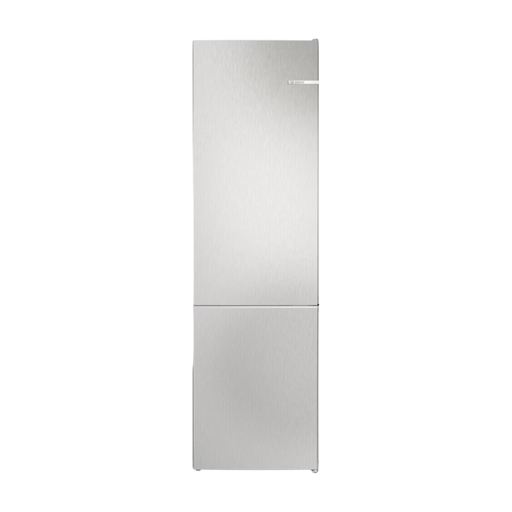 No image available
Could suit you if you need space for chilled containers as well as portions you want to freeze in advance.
260 l fridge space and 103 l freezer space; stated freezing capacity of 10 kg/24 hours.
The stated dimensions are 60 × 203 × 66.5 cm and the stated annual energy consumption is 112 kWh. The product title lists No Frost.
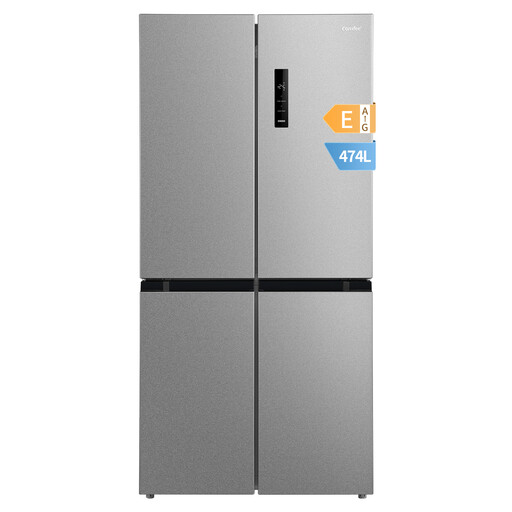 No image available
Could suit you if you want to organise different foods separately and have enough space for this model.
The stated total capacity is 474 l. The model has four doors, separate freezer drawers and a vegetable drawer with three temperature settings.
The stated dimensions are 838 × 653 × 1775 mm; the product title lists an E energy rating.
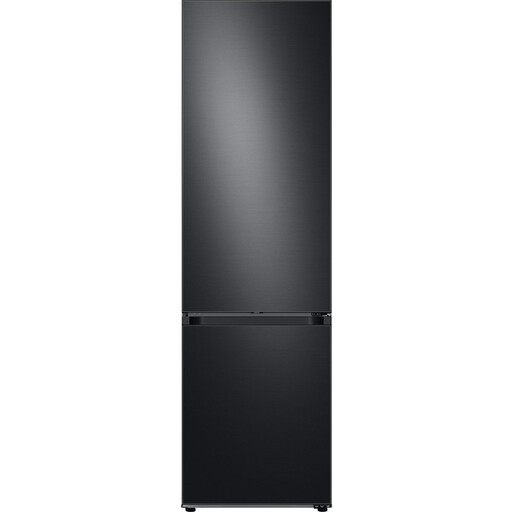 No image available
Could suit you if you want room for several containers in the fridge as well as freezer space for portions.
273 l fridge space and 114 l freezer space; stated freezing capacity of 8 kg/24 hours. The product title lists No Frost and an A energy rating.
The stated dimensions are 59.5 × 65.8 × 203 cm and the annual energy consumption is 108 kWh.
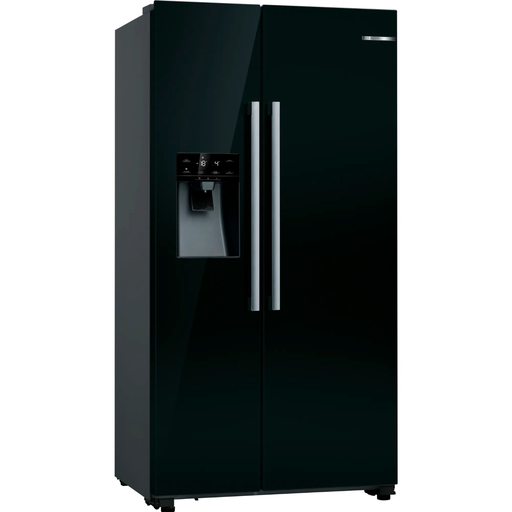 No image available
Could suit you if you need lots of fridge and freezer space and the wide external dimensions work in your kitchen and along the route into your home.
371 l fridge capacity and 191 l freezer capacity; stated freezing capacity of 12 kg/24 hours.
The dimensions are 908 × 762 × 1787 mm and the stated annual energy consumption is 323 kWh.
The Netherlands Nutrition Centre recommends keeping cooked vegetables in the fridge for no more than two days. It advises a maximum of three months in the freezer, after which the quality may deteriorate. Cool leftovers quickly, store them in a sealed container and don’t leave them out of the fridge for more than two hours.
The Netherlands Nutrition Centre recommends 4 °C for the fridge and at least −18 °C for the freezer. Let cooked dishes cool first, put them away promptly and freeze them in small portions; don’t add too much to the freezer at once.
According to the Netherlands Nutrition Centre, you can defrost leftovers in the fridge or microwave, but not on the worktop. Then heat them until piping hot throughout, stirring them as they heat.
The EU energy label for fridges and freezers includes information such as the energy class, annual energy consumption, capacity and noise emissions. Compare these details for the exact models you’re considering; the energy class alone doesn’t tell you the absolute annual energy consumption.
According to the Dutch Government, when you buy a similar new appliance, the retailer must take your old one away free of charge, including for online purchases. Check separately which practical removal or dismantling tasks are included in any service offered.