
Cooking a large batch of soup
You want to freeze several portions at once for a community meal. Check how much space is available in the drawers and the model’s freezing capacity.


Choose a fridge-freezer based on how much cooled soup you freeze at a time. Check that your containers fit in the drawers, then compare the freezing capacity of the exact model. Next, measure the space where it will go and compare annual energy consumption. The Netherlands Nutrition Centre advises that a suitable appliance is no substitute for cooling and storing soup properly.
You want to freeze several portions at once for a community meal. Check how much space is available in the drawers and the model’s freezing capacity.
You need to fit soup and your everyday groceries into an appliance that will pass through the doorway and fit in its intended spot. The stated capacity in litres doesn’t tell you how many containers will actually fit in the drawers.
You’re not buying it for just one meal, so you want to weigh up annual energy consumption alongside freezer space. Energielabel.nl notes that, as well as the energy label rating, you can check annual energy consumption.
Best for: a small kitchen, if your containers and everyday groceries will fit in the smaller freezer compartment.
Trade-off: a narrow exterior doesn’t tell you whether wide containers will fit in the drawers.
Best for: storing soup portions alongside your everyday groceries, if there’s enough room for the appliance and access routes.
Trade-off: compare annual energy consumption and check how much of the stated capacity is practical to use.
Best for: storing a quantity that won’t fit in a suitable fridge-freezer, if you have room for two appliances.
Trade-off: compare the space you’ll need and the combined annual energy consumption.
| What matters when buying | What to look for | Who is this most important for? |
|---|---|---|
| Freezing a batch of soup | Compare the amount you want to freeze at a time with the exact model’s freezing capacity in kg per 24 hours. Freeze the soup in small portions. | If I want to freeze a large pan of soup in one go, I need to know whether the appliance can handle that amount. Around 36% of consumers therefore make freezing capacity their top priority. |
| Usable freezer space | Measure your containers and check the internal dimensions of the drawers. Remember to allow space for your usual frozen food, too. | I want to store soup alongside my usual groceries, so I’m looking at how much space will really be available. Around 29% of consumers put usable space first. |
| Annual energy consumption | Compare the annual consumption in kWh of models with enough usable freezer space. | The appliance will stay on every day, even after the community meal, so I want to take its annual energy consumption into account. Around 21% of consumers put this consideration at the top of their list. |
| Installation space and maintenance | Measure the space and access routes. If you’re placing the appliance in an unheated room, compare the actual temperature there with the model’s climate information and instructions. | I want to know in advance whether the appliance will fit where I plan to put it and what maintenance it needs. Around 14% of consumers give this combination top priority. |
The Consumers’ Association notes that stated capacity is measured without drawers and shelves. So the figure doesn’t tell you how many containers will fit, or what size they can be.
Measure your containers and check the internal dimensions of the drawers. Remember to allow space for the food already in your freezer, too.
If your containers don’t fit, you may need extra freezer space after all.
A feature name doesn’t tell you how much of your batch of soup will fit in the appliance or can be frozen at once.
Compare the amount you want to freeze at a time with the exact model’s freezing capacity, and divide the soup into small portions.
In an unheated room, the ambient temperature can affect how the appliance works. The Consumers’ Association therefore recommends checking the climate class.
Measure the temperature where you plan to put the appliance and compare it with the climate class and instructions for the specific model.
Temperatures outside the permitted range can affect how well food is stored.
The freestanding KGN33NSDB fridge-freezer is a specific model to compare if separate temperature control matters to you.
The RCHE300K40WN is a model to compare if a narrower exterior is important to you.
The freestanding CNsfa 7723 is a larger model to compare when you need room for both your usual groceries and soup portions.
These fridge-freezers are worth comparing if you want to store soup portions alongside your usual chilled groceries. For each model, check that your containers fit and compare the listed features with the amount you need to store and the space available.
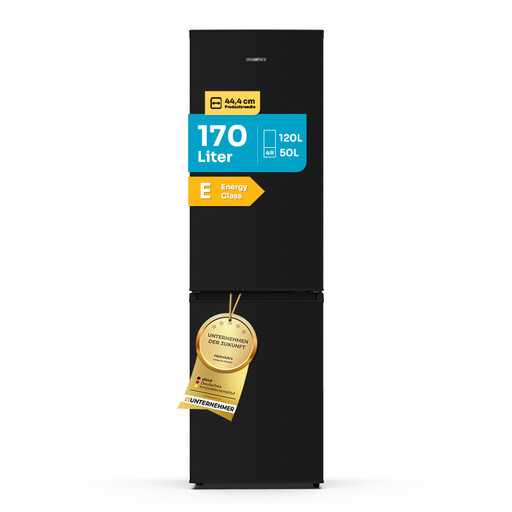 No image available
An option to compare if you’re looking for fridge and freezer space in one appliance.
Total capacity: 170 l; fridge capacity: 120 l; freezer compartment: 50 l. Energy class E; stated noise level: 40 dB.
Check that the drawer dimensions suit your portion containers.
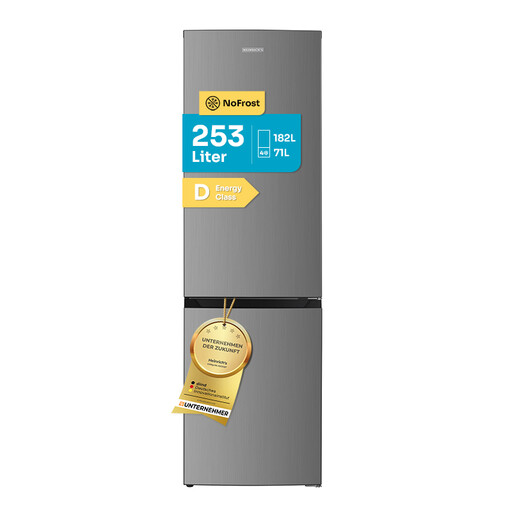 No image available
An option to compare if you want to weigh up the stated fridge and freezer capacities.
Total capacity: 253 l; fridge capacity: 182 l; freezer capacity: 71 l. Features No Frost and a reversible door hinge.
Check the internal dimensions of the drawers before assuming there’ll be room for your soup containers.
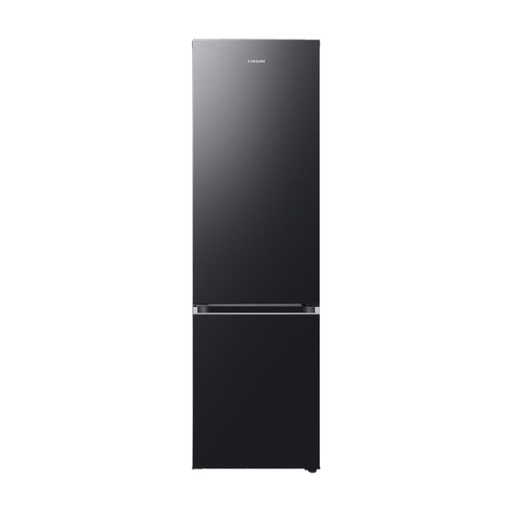 No image available
An option to compare if you want to consider annual energy consumption as well as freezer space.
Energy class A; stated annual consumption: 108 kWh. Colour: Premium Black Steel.
For your batch, check the freezing capacity and drawer dimensions of this exact model.
 No image available
An option to compare if you’re looking for a fridge-freezer with Total Frost Free.
Stated total capacity: 330 l. Energy class E; stated noise level: 35 dB.
Compare the exact model’s freezing capacity with the amount of soup you want to freeze at a time.
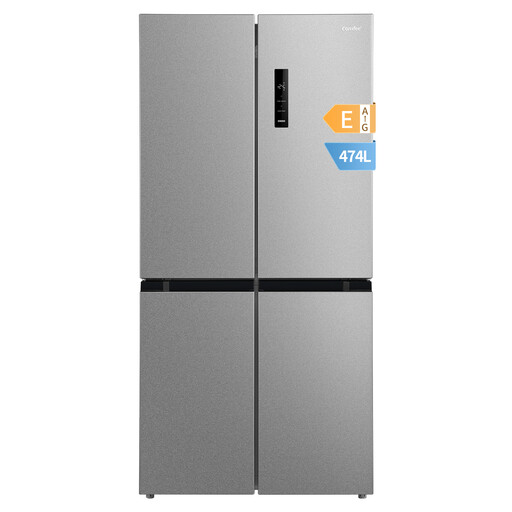 No image available
An option to compare if you’re looking for a four-door model with a stated total capacity of 474 l.
Vario Box; energy class E.
Check the layout and internal dimensions of the freezer space to see if it suits your portion containers.
Cool the soup quickly, divide it into small, well-sealed portions and put them in the fridge or freezer within two hours of cooking. The Netherlands Nutrition Centre recommends keeping your freezer at −18 °C or colder and not freezing too much at once. So, decide in advance how much soup you’ll put in the freezer at a time.
Defrost the soup in the fridge or, for small portions, in the microwave. Don’t leave it out of the fridge all day. Before eating, heat the soup until it’s piping hot.
That depends on the ambient temperature permitted for the exact model. Compare the lowest temperature at the intended location with the climate class and any additional instructions. The Consumers’ Association warns that an appliance may not work as well in a room that’s too cold.
According to the Dutch Government, if you buy a faulty appliance, you should contact the seller first. If you buy a new, similar appliance as a private customer, you’re also entitled to free collection of the old one when the new one is delivered. Arrange the practical details when you organise delivery.
If you sell food at a market or event, the Netherlands Food and Consumer Product Safety Authority (NVWA) requires it to be prepared, stored and sold safely and hygienically, including when you’re a private seller. The NVWA says a HACCP food safety plan is mandatory if you prepare and sell food several times a year. These rules for selling food don’t automatically apply to a one-off, free community meal.