
Student who enjoys chilled desserts
If you store cakes or desserts, it helps to have a fridge that can be set to 4 °C and has enough room for your own packaging. The Netherlands Nutrition Centre recommends keeping your fridge at 4 °C.


Choose a fridge with enough room for your dessert packaging and dishes, then use a thermometer to check that the temperature is in line with the Netherlands Nutrition Centre’s recommendation of 4 °C. A table-top model with a freezer compartment is a good fit if space and freezer storage are limited. If you share with others or need to store more frozen food, a larger fridge-freezer may be worth considering, provided its dimensions and annual energy use suit your needs.
If you store cakes or desserts, it helps to have a fridge that can be set to 4 °C and has enough room for your own packaging. The Netherlands Nutrition Centre recommends keeping your fridge at 4 °C.
A compact model may suit a small kitchen, but compare its external dimensions with the space available and check the fridge and freezer capacities separately. The Consumers’ Association lists size and capacity as key points to consider when choosing.
If you share a fridge and also store frozen food, you may need more fridge and freezer space than a small table-top model can offer. The space available for the appliance is another important consideration.
Best for: one student with limited space, mainly storing chilled desserts and the occasional item in the freezer.
Trade-off: freezer space is limited. For example, Inventum lists the KV550B as having 97 l of fridge space and 16 l of freezer space.
Best for: housemates who share more chilled and frozen food.
Trade-off: the appliance takes up more space. Bosch lists the KGN33NLEB as having 193 l of fridge space and 89 l of freezer space.
Best for: anyone with suitable freezer space elsewhere who mainly needs fridge shelves.
Trade-off: this model has no freezer space. Tomado lists the TLT4801W as having a 91 l fridge capacity and three glass shelves.
| What to consider | What should you check? | Who is this most important for? |
|---|---|---|
| Fridge temperature | Set the fridge to 4 °C and check the temperature with a fridge thermometer once it is in place. | If I store chilled cakes, I want to know the temperature they are actually kept at. Around 29% of consumers put correct storage temperature first. |
| Space for dishes | Measure the space for the appliance and your own packaging; compare the external dimensions, fridge capacity and shelf layout. | In a small student kitchen, I want the appliance to fit and my dessert boxes to fit on the shelves. Usable space is the first concern for around 24% of consumers. |
| Freezer space | Compare the stated freezer capacity separately and work out how much you actually want to freeze. | If I want to freeze food as well as store chilled desserts, I look at the freezer compartment’s capacity. Around 18% of consumers prioritise the freezer space they need. |
| Annual energy use | Compare the kWh per year on the energy label, along with the separate fridge and freezer capacities. | For a fridge that stays on all the time, I want to compare its stated energy use with its capacity. Around 17% of consumers put electricity use first. |
| Noise | Compare the stated dB rating of the exact models and consider where the fridge will go. | If my kitchen is close to my living or sleeping space, I want to take the stated noise level into account. Around 12% of consumers say noise is their main buying concern. |
The capacity in litres does not tell you whether a cake box or dish will fit on a particular shelf.
Measure the packaging you usually use and compare it with the internal layout and external dimensions of the exact model.
Freezer capacity varies by model. Inventum lists the KV550B as having 16 l of freezer space, while Bosch lists 89 l for the KGN33NLEB.
Work out how much you want to freeze and compare the stated freezer capacity, rather than relying only on whether the fridge has a freezer compartment.
An energy label gives information such as energy use and capacity. For the temperature inside your fridge, the Netherlands Nutrition Centre recommends checking it with a thermometer.
Compare annual energy use before buying, then check the fridge temperature with a thermometer after installation.
The KV550B is a table-top model with separate fridge and freezer compartments, for anyone looking for this layout in a small kitchen.
The TSE1285N is a freestanding table-top model. Its external dimensions can help you work out whether it will fit in the space available.
According to Tomado, the TRT4801W has a freezer compartment, while the TLT4801W is a fridge with no listed freezer compartment. Check the model code if you need to freeze food.
The CTe 2131 is a larger fridge-freezer with the freezer compartment at the top, for anyone who finds a table-top model too small and is looking for a width of 55 cm.
The KGN33NLEB is a larger freestanding fridge-freezer for households that want to store more chilled and frozen food.
These models include compact table-top fridges with a small freezer compartment and larger freestanding fridge-freezers. Compare the separate fridge and freezer capacities with the space available in your kitchen and the size of your dessert packaging.
 No image available
A compact option for chilled desserts and a small amount of frozen food.
95 l of fridge space and 14 l of freezer space; 85 × 55 × 58 cm. Energy class C, stated energy use of 89 kWh per year and two glass shelves.
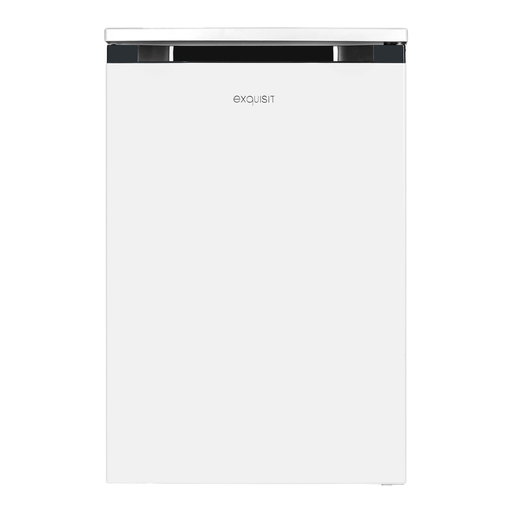 No image available
A table-top model for anyone who needs fridge space and would also like a small freezer compartment.
107 l of fridge space and 13 l of freezer space; 84,50 × 54,90 × 55,70 cm. Energy class C, stated energy use of 87 kWh per year and a noise level of 37 dB. The temperature is controlled with a dial.
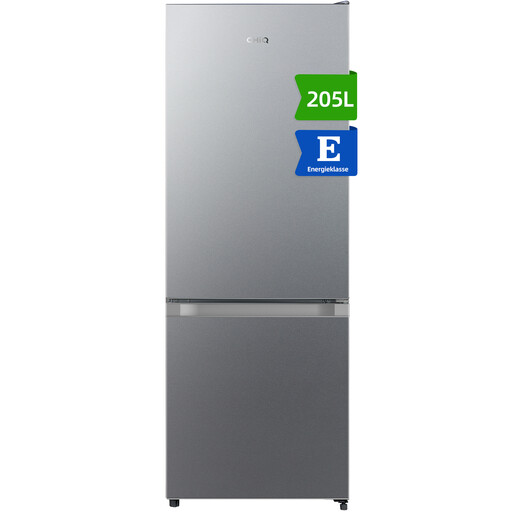 No image available
A freestanding fridge-freezer for anyone looking for more separate freezer space than a small table-top model can offer.
153 l of fridge space and 52 l of freezer space; 54 cm wide. Energy class E, adjustable shelves, reversible door and adjustable feet. Low Frost is listed.
 No image available
A larger fridge-freezer for shared chilled food and more frozen storage. Bear in mind how much space it needs.
232 l of fridge space and 98 l of freezer space; 59,5 × 57 × 186 cm. Energy class E, stated energy use of 248 kWh per year and a noise level of 35 dB. Total No Frost and Super Cooling are listed.
 No image available
A taller fridge-freezer for anyone who needs separate fridge and freezer space and has room for an appliance that is 182,3 cm high.
187 l of fridge space and 73 l of freezer space; 54,5 × 54,5 × 182,3 cm. Energy class E, adjustable shelves and a stated fridge temperature range of 2–8 °C. Manual defrosting is listed.
No. Check the actual temperature with a fridge thermometer too. The Netherlands Nutrition Centre recommends setting your fridge to 4 °C and measuring the temperature in the middle of the bottom shelf after half a day or overnight. The Storage Guide says that an opened cream cake will keep for one day in the fridge. Follow the label for an unopened pack.
No, not if you only store desserts in the fridge or have suitable freezer space elsewhere. If you want to freeze desserts or other food yourself, choose a model with a freezer compartment that meets your needs. The Storage Guide also gives freezing advice for opened cream cake and notes that its quality may deteriorate afterwards.
Compare the kWh per year on the energy labels for the exact models, along with their separate fridge and freezer capacities. Your actual electricity costs will also depend on your own tariff.
According to the Dutch Government, distance purchases generally come with a 14-day cooling-off period in many cases. Products must also conform to the sales agreement; if a product is faulty, the seller must provide a solution. The Netherlands does not have a fixed statutory two-year guarantee period for every product.
Fridges covered by EU energy-labelling rules must display the label clearly when sold online too. According to the European Union, the current fridge label uses an A–G scale and includes details such as kWh per year, fridge and freezer capacity, and noise. The rules specify an exception for second-hand products.