
Cook who makes stock in advance
Regularly makes extra stock for shared meals and wants to fit several cooled portions alongside the food already in the freezer.


If you regularly freeze several portions of stock, compare the dedicated freezer capacity, stated freezing capacity and drawer layout. For a few small portions, a more modest freezer compartment may be enough, provided the appliance and delivery route are suitable and its annual energy use meets your needs.
Regularly makes extra stock for shared meals and wants to fit several cooled portions alongside the food already in the freezer.
Freezes stock from time to time, but first needs to check that the appliance, doorway and delivery route will fit the available space.
Needs enough fridge and freezer space for the household, then compares the annual electricity use of models that fit.
Start with the amount of stock you want to freeze and the space available. Then compare the freezer layout and energy use of models that meet those requirements.
| What to consider | What to look for | Who should pay particular attention? |
|---|---|---|
| Usable freezer space | Compare the dedicated freezer capacity, the shape of the drawers and, for larger quantities, the stated freezing capacity in kg per 24 hours. | If I want to store several containers alongside the food already in the freezer, I focus on usable freezer space and capacity per 24 hours. Around 36% of consumers cite this as their main concern when buying. |
| Suitable size | Measure the height, width and depth, ventilation clearance, door swing and the entire delivery route. | If space in my kitchen is limited, I want to make sure the appliance will fit without the drawers being awkward for my containers. Around 29% of consumers prioritise whether an appliance will physically fit. |
| Annual energy use | Compare kWh per year and the energy rating of models that meet your size and capacity requirements. | When I use the appliance every day, I want to take its annual electricity use into account once the size and layout are right. Around 21% of consumers name energy use as their main concern when buying. |
| Maintenance | Check whether No Frost applies to the freezer compartment and whether the drawers and surfaces are easy to reach. | If I want to spend less time defrosting and cleaning, I look for an easy-to-maintain appliance without losing sight of capacity and fit. Around 14% of consumers prioritise maintenance. |
Total capacity includes the fridge compartment too. The Consumentenbond gives measured usable capacities for the Samsung RB38C607AS9; these are based on a different measurement method from the stated total capacity.
Compare the dedicated freezer capacity and drawer dimensions with your own containers. Keep stated and measured capacities separate.
The Voedingscentrum advises cooling cooked food quickly and refrigerating or freezing it within two hours. Freezing small portions helps you avoid putting too much in at once.
Cool the stock quickly, for example in a bowl of cold water. Divide it into small portions and cover and refrigerate or freeze them promptly.
An energy label also shows annual energy use in kWh. The rating alone does not tell you how much electricity a particular model uses each year.
Compare the kWh-per-year figure on models that already meet your space and freezer requirements.
An appliance needs to fit not only in the chosen spot, but also along the route to get there. Samsung recommends checking the space and delivery route for the specific model; remember to allow for ventilation too.
Measure the route and the space, and check the installation instructions for the exact model you’re considering.
A Dutch range that includes freestanding fridge freezers, such as the KV1850W, as an example for anyone prioritising freezer space.
Freestanding fridge freezers in a range of sizes; the KGN36NLEA is one example.
Fridge freezers including the RB38C607AS9/EF, an example of a model with energy rating A.
Freestanding fridge freezers, including the CNsdc 5203 Pure NoFrost, for comparing layout and noise specifications.
Fridge freezers including the GBV3200CEP, a large model to compare.
This selection of fridge freezers at Joybuy includes models for storing portions of stock alongside everyday chilled and frozen food.
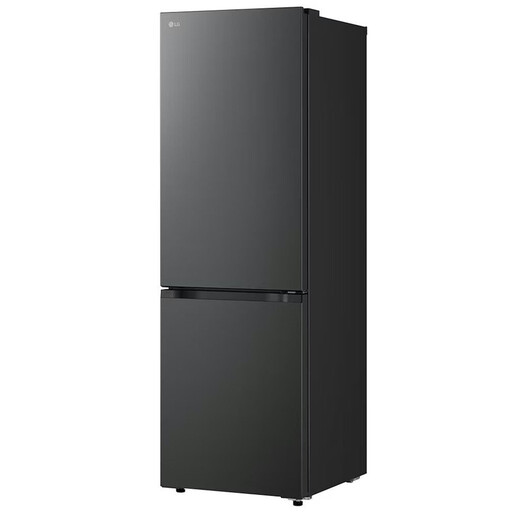 Image unavailable
An option for storing several portions alongside other frozen food, with a stated freezing capacity of 10 kg per 24 hours.
Total capacity: 333 l; fridge capacity: 220 l; freezer capacity: 113 l.
Dimensions: 595 × 1860 × 674 mm. Energy rating C. No Frost and three freezer drawers.
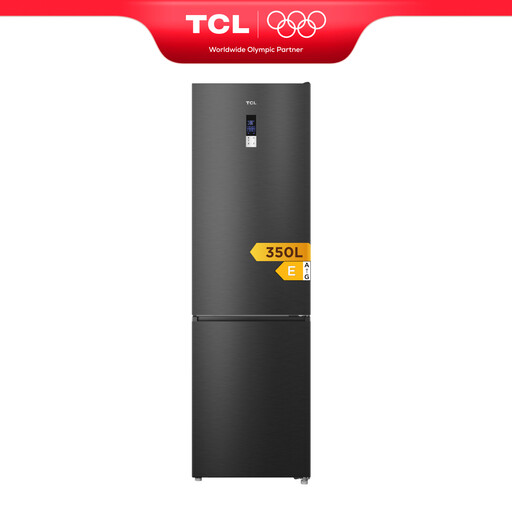 Image unavailable
An option if you want to store stock alongside everyday chilled food and other frozen items.
Total capacity: 350 l; fridge capacity: 248 l; freezer capacity: 102 l.
Energy rating E. Total No Frost, Multi Air Flow and a Variable Zone with adjustable temperature settings.
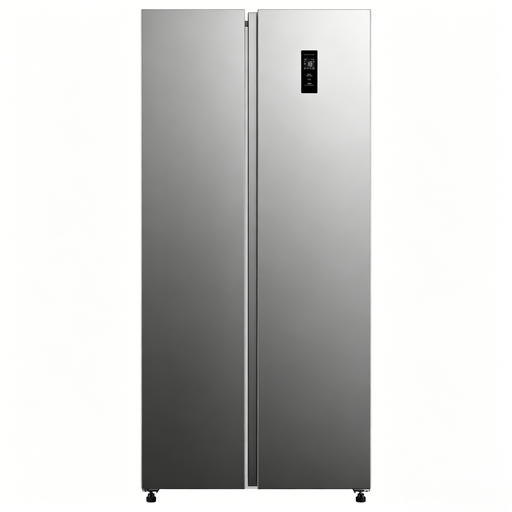 Image unavailable
A spacious side-by-side option to compare if you want to store several portions alongside your existing frozen food; check beforehand that it will fit in your kitchen.
Total capacity: 444 l; fridge capacity: 276 l; freezer capacity: 168 l.
Width: 83 cm. No Frost, separate temperature controls and a noise level of 40 dB. Energy rating E.
 Image unavailable
An option for anyone who freezes portions from time to time and is looking for a model that’s 55 cm wide.
Total capacity: 260 l; fridge capacity: 187 l; freezer capacity: 73 l. Freezing capacity: 3.3 kg per 24 hours.
Energy rating E. Three freezer drawers and manual defrosting. Check that the drawer layout works with your containers.
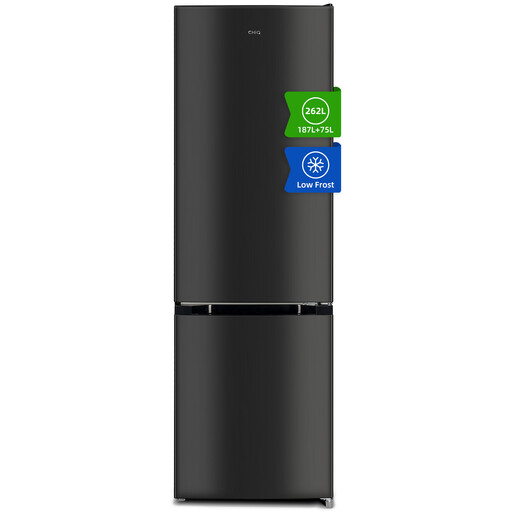 Image unavailable
An option for everyday use. For stock portions, check that the freezer space and layout suit your containers and existing frozen food.
Total capacity: 262 l. Low Frost and 4-star freezing.
Stated noise level: 39 dB. Check the dedicated freezer capacity and freezing capacity before choosing this model for larger quantities.
Cool the stock quickly and cover and refrigerate or freeze it within two hours. The Voedingscentrum advises keeping your fridge at 4 °C and your freezer at −18 °C or colder, and freezing small portions without overloading the freezer. These are storage recommendations; they don’t tell you how quickly a particular appliance will freeze your quantity.
The Voedingscentrum’s storage guide recommends keeping opened stock in the fridge for two days and in the freezer for three months; its quality may deteriorate after that. For home-cooked meals, the Voedingscentrum advises keeping them covered and refrigerated for no more than two days. Label each container with its contents and date.
Yes. According to the Rijksoverheid, fridges and freezers are among the appliances that must have an energy label. Since 1 March 2021, the EU scale for household refrigeration appliances has run from A to G; the label includes information such as annual energy use in kWh and capacity.
For a consumer purchase, the seller must take back an old, similar appliance free of charge, according to the Rijksoverheid. This also applies to online purchases. If it isn’t possible to hand it over at delivery, the Rijksoverheid describes alternatives for collection or free return.
No. ACM ConsuWijzer explains that your statutory rights apply alongside any manufacturer’s or seller’s warranty. If a fridge breaks down sooner than you could reasonably expect when used normally, the seller is responsible for providing an appropriate solution; there is no single fixed statutory warranty period for all fridges.