What should you look for when storing small portions of yoghurt?
First, make sure you can keep the yoghurt at the right temperature and easily reach the containers. Then compare the total capacity and energy consumption. The Netherlands Nutrition Centre recommends keeping your fridge at 4 °C and checking the temperature with a thermometer.
| What to consider |
What to look for |
Who should give this extra thought? |
| Temperature you can check |
Check whether you can set the temperature, then use a fridge thermometer to check it once the appliance is installed. The Netherlands Nutrition Centre recommends 4 °C. |
I want to know whether my yoghurt is being kept properly chilled where I store it, and be able to adjust the setting if needed. Around 33% of consumers say temperature control is their main concern. |
| Space for small portions |
Compare the fridge capacity separately from the freezer capacity, and check whether the shelves and door compartments suit your sealed containers. |
I want to arrange several portions neatly and reach them easily, without the freezer taking up fridge space that I need. For around 27% of consumers, this layout is the main priority. |
| Size and installation |
Measure the height, width and depth, as well as the available space. For built-in models, also check the niche dimensions and door design for the exact model. |
I need to be sure the appliance will fit in my kitchen and work with the existing layout. Around 20% of consumers prioritise finding the right size and installation option. |
| Energy consumption and noise |
Compare the energy label and annual kWh consumption of models with a suitable capacity. Also check the stated noise level if the appliance will be near a living area. |
I want to compare the energy consumption of appliances that fit in my kitchen, and find out their stated noise levels. Around 20% of consumers focus most on these running costs and noise ratings. |
Fridge-freezers at Joybuy
This selection includes compact freestanding models, a built-in model and a larger freestanding fridge-freezer. Compare the layout and dimensions with your kitchen and portion containers; features vary from model to model.
 No image available
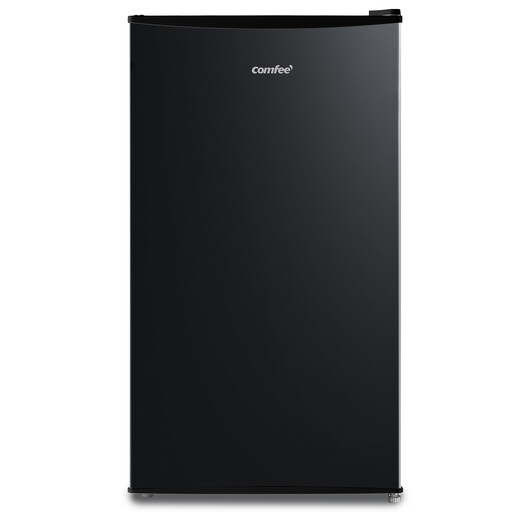
Comfee RCD115DK2, 80 l
The fridge has door compartments for yoghurt and an adjustable shelf, so you can arrange the interior to suit small portions.
Fridge compartment: 68 l; freezer compartment: 12 l. The temperature can be adjusted. Height: 84,5 cm; reversible door.
The 12 l freezer compartment may be limiting if you also want to store plenty of frozen food.
View at Joybuy
 No image available
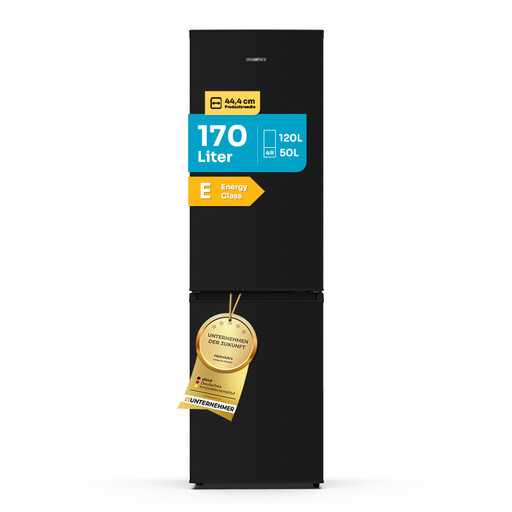
Heinrichs fridge-freezer, 170 l
With a 120 l fridge compartment, this model offers space for yoghurt and other chilled groceries. The description states that the temperature can be adjusted.
Fridge compartment: 120 l; freezer compartment: 50 l. Stated noise level: 40 dB. The product name lists energy rating E.
View at Joybuy
 No image available
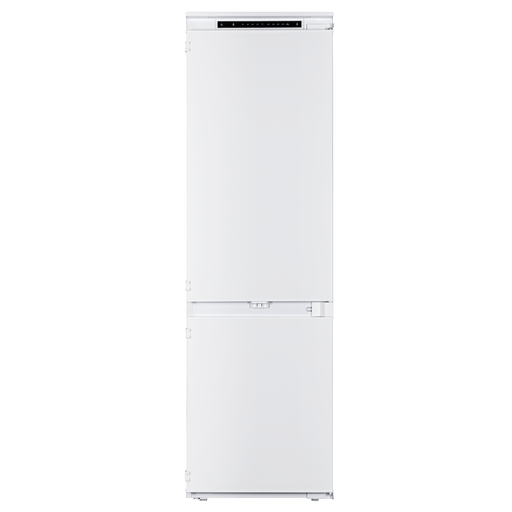
Frilec BERLIN279-E-NF-080E
This built-in model is designed for a niche of around 178 cm and has a sliding-door system. Check these requirements before comparing it with freestanding models.
The fridge compartment is 177 l and, according to the product description, the temperature can be set to around 4 °C. Total No Frost is listed for both compartments.
The product description states that installation must be carried out by a qualified technician.
View at Joybuy
 No image available
Bella BKV555-040CW, 109 l
The layout, with glass shelves and door compartments, can be handy for storing small sealed portions separately.
Fridge compartment: 95 l; freezer compartment: 14 l. Stated energy consumption: 89 kWh per year; energy rating C. Dimensions: 85 × 55 × 58 cm. Reversible door hinges.
The 14 l freezer compartment may be limiting if you also want to store plenty of frozen food.
View at Joybuy
 No image available
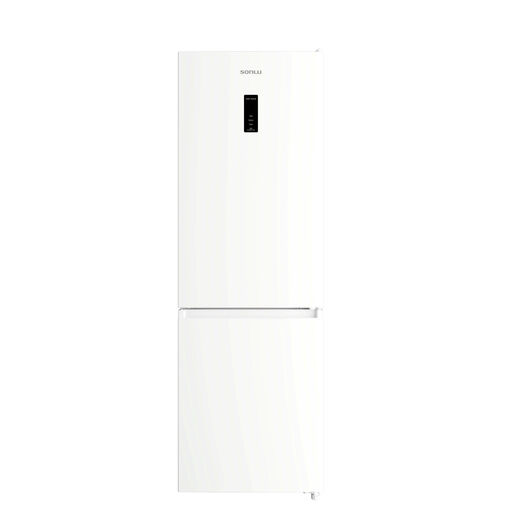
Sonlu CD-350RW, 310 l
The 211 l fridge compartment offers space for yoghurt and other chilled groceries. The electronic temperature control can be adjusted.
Fridge compartment: 211 l; freezer compartment: 99 l. Width: 60 cm. The product name lists energy rating E.
View at Joybuy
Frequently asked questions
How can you check whether your yoghurt is being kept cold enough?
The Netherlands Nutrition Centre recommends keeping your fridge at 4 °C. Place a fridge thermometer in the middle of the bottom shelf and leave it there for half a day or overnight. Adjust the fridge if the reading is too high.
Does fresh yoghurt need to go in the freezer?
No. If you want to eat the yoghurt as yoghurt, it should be kept chilled. The Netherlands Nutrition Centre says you can freeze it, but its texture may change as a result.
How can you keep small portions of yoghurt clean and organised?
Store portions in sealed containers and use a clean spoon when serving. The Netherlands Nutrition Centre recommends setting your fridge to 4 °C; for packaged yoghurt, also follow the storage instructions on the packaging.
How do you compare the energy consumption of fridges?
Compare the annual consumption in kWh on the energy labels of models that suit your needs in terms of capacity and dimensions. The cost in pounds depends on your electricity tariff; the label rating alone doesn’t give you the same information as the annual consumption.
Is an energy label required for a new fridge?
Yes. The Government of the Netherlands states that household appliances must have an energy label. Fridges use the European A to G scale; compare the label for the exact model.


