
Housemate short on fridge space
Wants a clearly defined, sealable spot for prepared snacks without an unnecessarily large extra appliance.


If the existing fridge has room for a sealed container and can be kept at 4 °C, you may not need an additional fridge-freezer. If you do need your own appliance, first check the available space and usable fridge capacity. Then compare annual energy consumption, noise and the freezer capacity you need. The Voedingscentrum advises keeping cut carrot sticks in a sealed container in the fridge: a freezer compartment is no substitute for the everyday fridge space they need.
Wants a clearly defined, sealable spot for prepared snacks without an unnecessarily large extra appliance.
Is looking for an appliance that fits and has an interior layout that works for several people.
Wants to weigh up the purchase price, annual energy consumption and noise before adding an appliance that will run constantly in a shared space.
Choose this if: there is room for a sealed container and the fridge can be kept at 4 °C.
Bear in mind: you’ll need to agree on space and use; a second appliance also uses electricity.
Choose this if: you need your own fridge space and a freezer compartment, but the kitchen has limited width.
Bear in mind: a narrow model won’t necessarily offer enough fridge space; check the separate capacities of both compartments.
Choose this if: several housemates will share one appliance and need enough fridge and freezer space between them.
Bear in mind: a larger capacity could mean unnecessary energy use if the appliance is mainly used for a few containers.
The Voedingscentrum advises setting your fridge to 4 °C. Milieu Centraal points out that two refrigeration appliances use more energy together than one suitably sized appliance.
| What to consider | What should you check before buying? | Who is this important for? |
|---|---|---|
| Fridge space for carrot sticks | Check the capacity and layout of the fridge compartment; use a fridge thermometer to check the temperature. | If I mainly need a sealed spot for carrot sticks, I want to know how much room will be left alongside the shopping. Around 33% of consumers put usable fridge space first. |
| Dimensions and layout | Check the external dimensions, door clearance and the separate fridge and freezer capacities. | I want to know in advance whether the appliance will fit and whether housemates can store their food in it conveniently. Around 27% of consumers prioritise suitable dimensions and layout. |
| Energy consumption and costs | Compare the energy label and annual consumption in kWh for appliances of a suitable size. | If the appliance will be running continuously, I want to compare its annual consumption and agree how to share the costs. Around 20% of consumers put energy consumption and running costs first. |
| Noise and maintenance | Check the stated noise level and defrosting system for the exact model. | In a shared space, I want to know how noisy the appliance is and who will maintain the freezer compartment. Around 20% of consumers focus mainly on noise and maintenance. |
A second refrigeration appliance uses extra electricity, even if you only store a small amount in it.
First check whether there is room for a sealed container and measure the temperature of the existing fridge.
The stated total capacity may include the freezer compartment, while carrot sticks for everyday use belong in the fridge compartment.
Compare the separate fridge and freezer capacities, and check that sealed containers will fit in the layout.
Liebherr describes SmartFrost on the CUele 2831 as a feature that reduces frost build-up; this doesn’t mean it will never need defrosting.
Check the defrosting system for the exact model and agree on who will maintain the freezer compartment.
Bear in mind that the freezer compartment may need to be defrosted manually.
Beko lists the RDSA240K40WN as 54 cm wide, with the freezer compartment at the top.
According to Bosch, the KGN33NWDA has 189 litres of fridge space and 90 litres of freezer space, with the freezer compartment at the bottom.
Liebherr lists the CUele 2831 as 55 cm wide, with a total capacity of 265 litres.
Samsung lists the RB34C600CSA/EF as having a total capacity of 344 litres.
This selection includes compact table-top models and larger fridge-freezers. For carrot sticks, focus on the fridge space; choose the size and freezer compartment based on the available space and how the appliance will be shared.
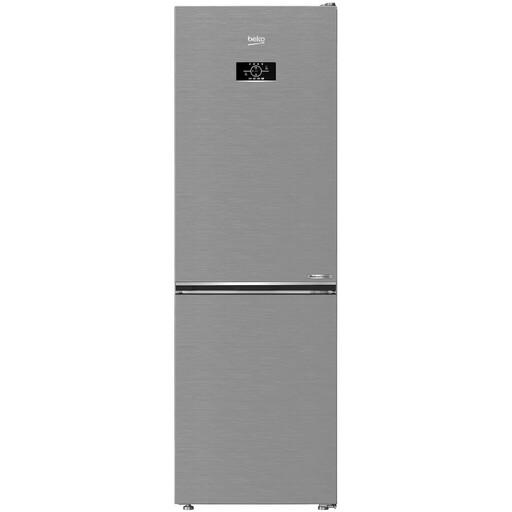 Image unavailable
An option to consider if you’re looking for a fridge-freezer with a stated total capacity of 316 L.
Product title: 316 L, No Frost, HarvestFresh, energy rating C and stainless steel.
 Image unavailable
A table-top model to consider if you’re looking for a smaller fridge with a separate freezer compartment.
Product title: 107 litres and energy rating C.
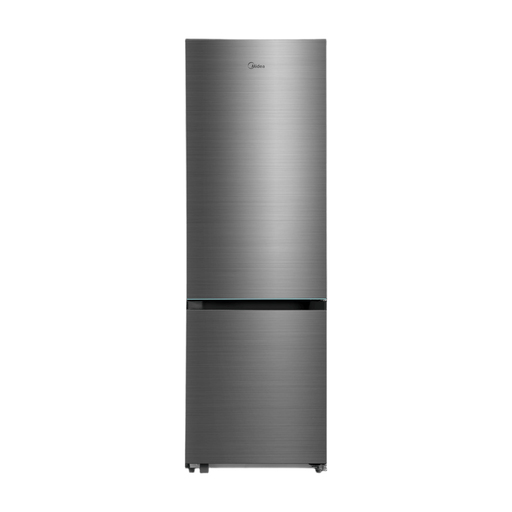 Image unavailable
A larger fridge-freezer to compare if several housemates will be sharing fridge and freezer space.
Product title: 330 L, Total Frost Free, 35 dB, inverter compressor and energy rating E.
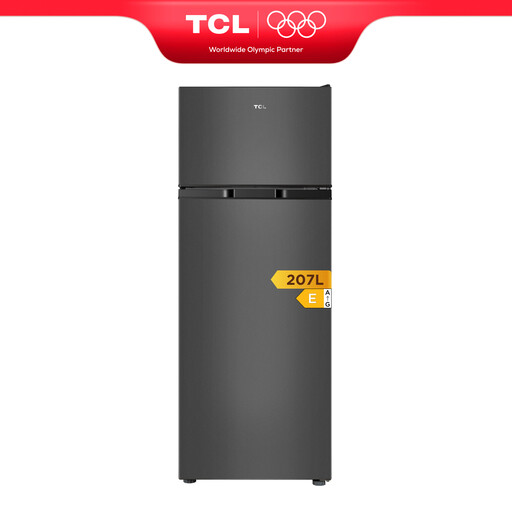 Image unavailable
A compact fridge-freezer to consider if you’re looking for a narrower model with separate fridge and freezer space.
Product title: 207 L total, 167 L fridge, 40 L freezer, 55 cm wide, adjustable shelves and energy rating E.
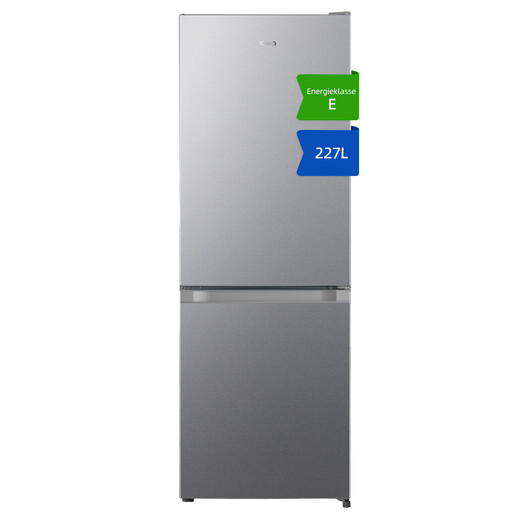 Image unavailable
An option to compare if you’re looking for a 54 cm-wide model with separate fridge and freezer space.
Product title: 227 L total, 153 L fridge, 74 L freezer, Low Frost, 4-star freezer compartment and reversible door.
The Voedingscentrum advises keeping pre-cut vegetables and firm raw vegetables without dressing in the fridge, and gives a storage time of 2 days. Keep the carrot sticks in a sealed container; this storage advice doesn’t relate to the features of any particular appliance.
The Voedingscentrum advises keeping your fridge at 4 °C. Place a fridge thermometer in the middle of the bottom shelf and leave it there for half a day or overnight before checking the temperature.
No. For everyday storage of pre-cut raw vegetables, the Voedingscentrum advises keeping them sealed in the fridge. If you also use the freezer, check its temperature separately: the Voedingscentrum advises at least −18 °C.
Compare the energy label and annual consumption in kWh; according to the Dutch government, fridges and freezers are among the appliances that must carry an energy label. If there’s a problem with an appliance you’ve bought, contact the seller about your statutory rights under Dutch law. The Dutch government states that there is no fixed statutory guarantee period.
According to Milieu Centraal, you can return an old appliance free of charge when you buy a new, similar appliance. If you’re buying one together, agree in advance who will arrange delivery, installation and disposal.