
A family with a working fridge
You want to store radishes for a family meal and first check whether your current fridge is up to the job.


If you already have a fridge that cools to around 4 °C and has enough space, you don’t need to buy a new appliance just for radishes. Keep them chilled, remove the leaves if necessary and protect them from drying out. If you do need to replace your fridge, first check the usable fridge space and the dimensions. Then compare annual energy consumption and the freezer space you need for other shopping. The Netherlands Nutrition Centre advises against freezing fresh radishes.
You want to store radishes for a family meal and first check whether your current fridge is up to the job.
You’re looking for enough usable fridge space for your shopping and want to compare the external dimensions and energy consumption too.
You’re looking for a fridge-freezer that fits your existing space and door fittings, with enough fridge capacity.
The Netherlands Nutrition Centre recommends a fridge temperature of 4 °C and advises keeping radishes protected from drying out. If you need to replace an appliance, compare the annual energy consumption in kWh of models that fit your kitchen.
| What to consider | What should you look for? | Who is this important for? |
|---|---|---|
| Storing radishes | Check the temperature of your current fridge and make sure there’s enough usable fridge space. Store radishes without their leaves and protect them from drying out. | If I only want to store radishes for a meal, I’ll first check whether my current fridge is up to the job. For around 25% of consumers, storing radishes is their main purchasing consideration. |
| Space for the family’s shopping | Compare the fridge and freezer capacities separately, check the drawer layout and measure the available height, width and depth. | I want the layout to work for the rest of my shopping too, not just one type of vegetable. Around 33% of consumers prioritise usable fridge space for the family. |
| Annual energy consumption | Check the energy label and compare the stated annual consumption in kWh for models with a suitable capacity. | If I’m replacing an appliance, I want to take its energy consumption over a full year into account. For around 25% of consumers, this is their main purchasing consideration. |
| Fitting and freezer maintenance | Measure the space and check the hinge type. Also see whether the model you’ve chosen has LowFrost or No Frost. | I need to take the existing space and door fittings into account before comparing models. For around 17% of consumers, the fitting requirements determine their choice. |
The Netherlands Nutrition Centre advises keeping radishes chilled and says freezing isn’t suitable. So an extra freezer compartment won’t solve the problem of storing fresh radishes.
First check whether your current fridge has enough space and cools to around 4 °C. Choose freezer space based on the other food you actually want to freeze.
The energy rating and the annual consumption shown on the label in kWh are two different things. And total capacity doesn’t necessarily tell you how much practical space there is for chilled shopping.
Compare models that meet your space requirements by their annual consumption, fridge and freezer capacities, and drawer layout.
An appliance may not fit your existing kitchen if its dimensions or door fittings don’t match the space.
Before ordering, check the space, the appliance’s full dimensions and the hinge type of the exact model.
Choosing the wrong size could mean extra work to adapt the space or exchange the appliance.
The range includes freestanding and built-in models. The freestanding CNd 5203 is one example, with EasyFresh and NoFrost.
Bosch offers built-in fridge-freezers, among other appliances. The KIV86SFE0 is one example for an existing fitted space.
Samsung also offers extra-wide freestanding fridge-freezers, including the RB53DG706AS9EF.
Beko offers freestanding and built-in models. The B5RCNE366HG is a freestanding example with a crisper drawer and No Frost.
The Joybuy products below are freestanding fridge-freezers for storing fresh produce and keeping the rest of the family’s shopping organised. Check the dimensions and layout to make sure they suit your kitchen and how you’ll use the appliance.
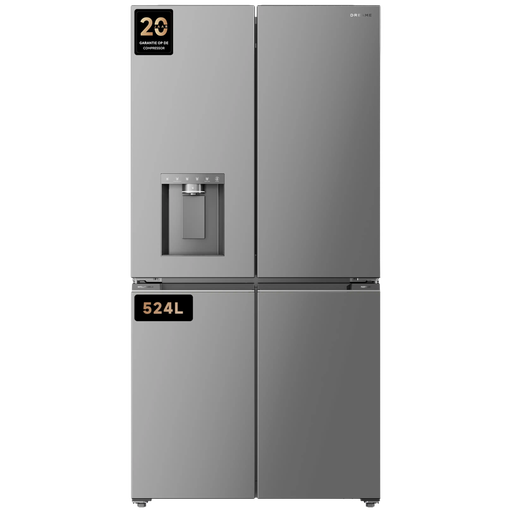 No image available
According to the product description, the FreshFlex zone can be adjusted for different foods, including fruit and vegetables.
Fridge space: 308 l; freezer space: 203 l. No Frost and energy rating E. Dimensions: 91,1 × 69,3 × 183 cm.
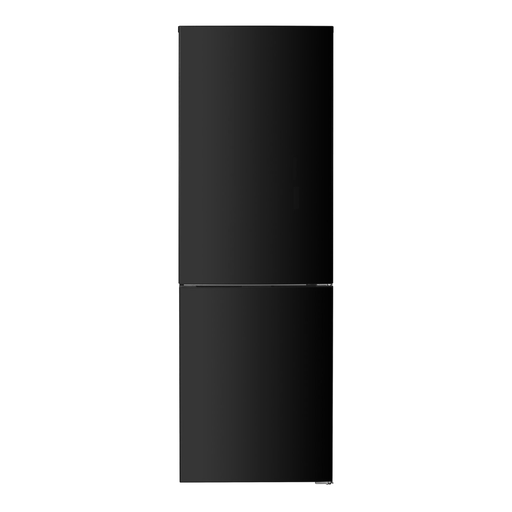 No image available
The product description mentions a crisper drawer and an adjustable temperature for the fridge compartment.
Fridge space: 210 l; freezer space: 83 l. No Frost, energy rating E and stated consumption of 233 kWh per year. Dimensions: 186 × 60 × 62 cm.
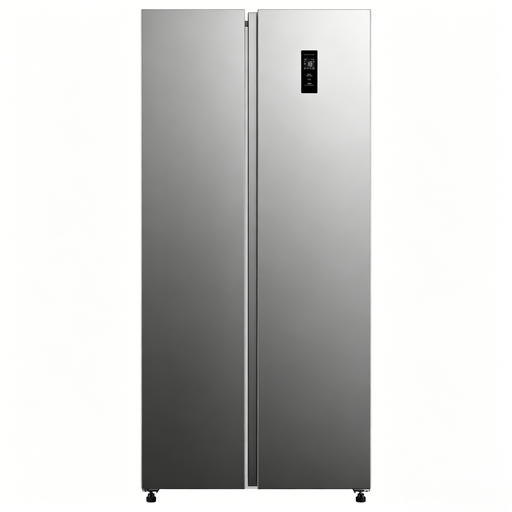 No image available
The separate fridge and freezer compartments help keep food organised; according to the description, the bottom drawer is designed for vegetables.
Fridge space: 276 l; freezer space: 168 l. No Frost and energy rating E. Width: 83 cm; dimensions: 830 × 610 × 1785 mm.
 No image available
According to the product description, the Fresh Zone is a crisper drawer; the door is reversible.
Fridge space: 187 l; freezer space: 73 l. Energy rating E and stated width of 55 cm. The fridge compartment temperature can be set between 2–8 °C. Manual defrost.
 No image available
According to the product description, the electronic temperature control is for the fridge compartment; the door is reversible.
Fridge space: 232 l; freezer space: 98 l. No Frost, energy rating E and stated consumption of 248 kWh per year.
No. The Netherlands Nutrition Centre advises keeping radishes in the fridge and protecting them from drying out; it says freezing isn’t suitable. Remove the leaves if they’re still attached.
The Netherlands Nutrition Centre recommends 4 °C. Place a fridge thermometer in the middle of the bottom shelf, leave it there for half a day or overnight, and adjust the fridge if the reading is higher.
Yes. The Dutch government lists fridges among the appliances that must have an energy label. Compare the stated consumption as well as the rating; you don’t have to choose a particular energy rating as a buyer.
Compare the dimensions of the space and the door fittings with the details for the exact model. For example, Bosch lists appliance dimensions of 1772 × 541 × 548 mm and a flat hinge for the KIV86SFE0; these aren’t standard dimensions for every built-in appliance.
A manufacturer’s or retailer’s warranty doesn’t, by itself, determine how long your statutory rights last. According to ACM ConsuWijzer, the retailer is responsible for providing an appropriate solution free of charge if a product used normally develops a fault earlier than could reasonably be expected. The assessment depends on the circumstances.