
If you freeze dough occasionally
You sometimes make extra pizza dough and need space for individual portions, without wanting to start with a large freezer compartment.


If you want to freeze small portions of fresh pizza dough, choose a fridge-freezer with a confirmed 4-star freezer compartment, suitable freezing capacity and drawers that can hold your packaged portions. A compact Low Frost model may suit you if you only freeze small batches occasionally. If you freeze food more often, No Frost could be appealing, but compare the dimensions and annual energy consumption too. The Dutch Consumers' Association points out that No Frost can take up space in some models and may use more energy or make more noise.
You sometimes make extra pizza dough and need space for individual portions, without wanting to start with a large freezer compartment.
You want to be able to freeze dough, but the appliance's external dimensions and usable layout will determine whether it fits in your kitchen.
You freeze dough and other groceries more often, so you also consider freezing capacity, drawer layout, maintenance and energy use.
First, check that the freezer compartment is suitable for freezing fresh dough. Then consider the layout, dimensions, energy use and maintenance.
| What to consider | What should you check? | Who is this most important for? |
|---|---|---|
| Freezing function and drawer layout | Check the 4-star rating, the freezing capacity in kg per 24 hours, and whether your packaged dough portions will fit in the drawers. | When I freeze fresh portions, I want to know the freezer compartment can freeze them and that I can store them conveniently. Around 33% of consumers put this first. |
| Dimensions and positioning | Measure the height, width and depth, the delivery route and the space needed to open the doors. | With limited kitchen space, I want an appliance that fits without taking up more room than necessary. Around 27% of consumers give the most weight to external dimensions. |
| Energy use | Compare the annual consumption in kWh on the EU energy label of appliances that fit your space. The current scale runs from A to G. | As a fridge-freezer is always switched on, I want to consider its energy use alongside the capacity I need. Around 20% of consumers put energy use first. |
| Maintenance | Check whether the freezer compartment has No Frost or Low Frost. For the specific models, also compare the layout, energy label and stated noise level. | I want to defrost manually less often, but I also consider the trade-offs around space, energy and noise. Around 20% of consumers put low maintenance first. |
Not every freezer compartment is designed to freeze fresh food. So choosing an appliance simply because it has a freezer compartment could lead you to the wrong model.
Check the exact model's 4-star rating and stated freezing capacity, and compare these with the amount of dough you plan to add in 24 hours.
The stated capacity doesn't tell you exactly how much usable space there is. The shape and layout of the drawers also determine whether individually packaged dough portions will fit.
Look at the drawer layout and compare it with the dimensions of your packaging.
No Frost can save you from defrosting manually, but the Dutch Consumers' Association also notes possible trade-offs around freezer space, energy use and noise. The feature name alone doesn't tell you how two specific models compare.
Choose a feature based on how much maintenance you want, and also compare the models' annual energy use, noise level and layout.
Storage advice for an opened, thin pizza base doesn't automatically apply to every recipe for homemade, unbaked dough.
Divide homemade dough into portions, wrap them separately and note the date you freeze them. King Arthur Baking recommends freezing after the first rise as part of its method; follow advice suited to your recipe.
Inventum's Dutch product pages feature compact and larger fridge-freezers with a 4-star freezer compartment.
Bosch Netherlands describes the freestanding KGN392LBF as a 203 × 60 cm model with No Frost and separately stated fridge and freezer capacities.
Beko's Dutch product page describes the RCHE300K40SN as a 54 cm-wide fridge-freezer with the freezer compartment at the bottom.
Liebherr Netherlands describes the CNdgc 5713 Pure as a freestanding No Frost fridge-freezer with a total capacity of 371 litres.
This selection includes compact, medium-sized and larger fridge-freezers for freezing fresh portions. Compare the 4-star rating and freezing capacity with your batch size, and check that the dimensions and drawer layout are right for you.
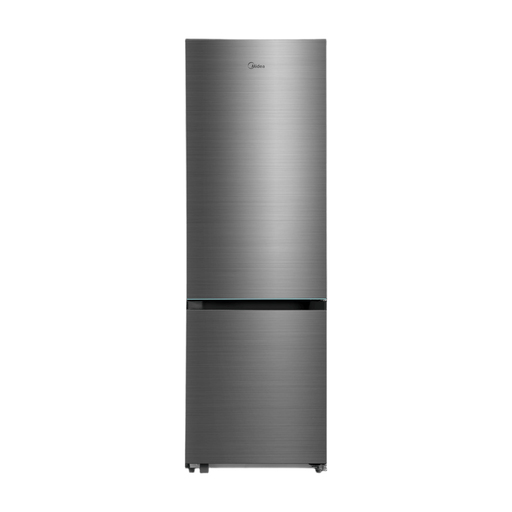 No image available
An option to compare if you want to freeze fresh dough portions and are also thinking about maintenance.
The product name lists No Frost, a total capacity of 330 L, 35 dB, an inverter compressor and energy class E.
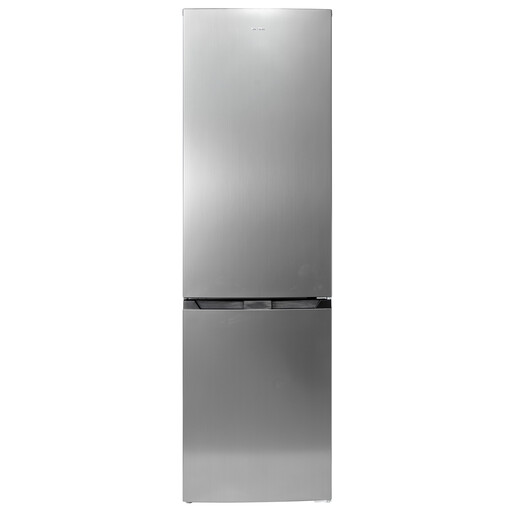 No image available
An option to compare if you want to freeze portions and a reversible door could make positioning easier.
The product name lists a 253 L net capacity, Frost Free, adjustable shelves and a reversible door.
 No image available
A compact option to compare if you freeze small batches of dough and have limited kitchen space.
The product name lists a total capacity of 205 L, with 153 L of fridge space and 52 L of freezer space, Low Frost, energy class E and a reversible door. Low Frost doesn't eliminate the need to defrost manually.
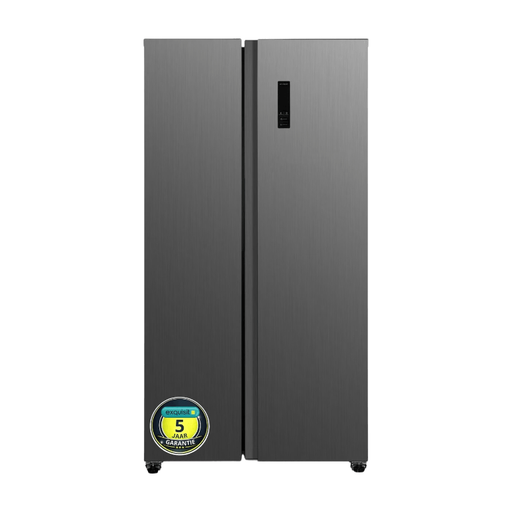 No image available
Its large size makes this mainly an option to compare if you want to store other frozen food as well as dough; it may not suit a smaller kitchen.
The product name lists Frost-Free and adjustable shelves.
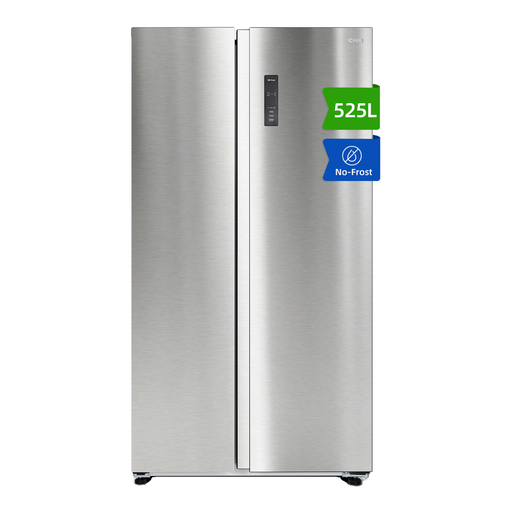 No image available
This large model is mainly worth comparing if you want to store plenty of other frozen food as well as dough; it may take up more space than you need if you only freeze small batches of dough.
The product name lists a total capacity of 525 L, with 333 L of fridge space and 192 L of freezer space, No Frost, energy class E and 37 dB.
No. Check that the freezer compartment is suitable for freezing fresh food: look for the 4-star rating and freezing capacity. Compare that capacity with what you plan to add every 24 hours; a compartment designed only for storing frozen food isn't the same thing.
For the method described, King Arthur Baking recommends dividing the dough into portions after the first rise, wrapping them separately and freezing them. Follow advice suited to your recipe when you defrost the dough later.
The Dutch Consumers' Association recommends 4 °C for the fridge compartment and −18 °C for the freezer compartment. Follow your model's instructions and, if necessary, check the temperature with a thermometer.
Compare the annual consumption in kWh on the EU energy label for models with the right capacity and dimensions. To estimate your own costs, multiply that consumption by your electricity rate per kWh; the current EU label uses a scale from A to G.