
Berry grower with a seasonal harvest
You want to freeze fresh berries during harvest and use them later in individual portions. How much you process at once determines which freezer capacity and stated freezing capacity you should compare.


If you live alone and freeze berries from your garden, compare the freezer compartment’s capacity with its stated freezing capacity in kg per 24 hours: these figures tell you different things. Then check that the appliance’s dimensions and fridge space suit your kitchen and daily shopping. For models that fit, also consider annual energy consumption and No Frost versus Low Frost; Low Frost does not rule out manual defrosting.
You want to freeze fresh berries during harvest and use them later in individual portions. How much you process at once determines which freezer capacity and stated freezing capacity you should compare.
You need enough fridge and freezer space without taking up more room than necessary. Measure the available space and check the capacities of each compartment rather than looking only at the total capacity.
Factor the maintenance required for the freezer compartment into your choice. Check whether the exact model has No Frost or Low Frost and what that means for manual defrosting.
A good fit if: you have limited kitchen space and can fit your harvested berries into the freezer compartment in portions. Inventum lists 53 l of freezer space and a freezing capacity of 2,7 kg/24 uur for the KV1501B.
The trade-off: the limited freezer capacity may be restrictive if you want to process a large quantity of berries in one day.
A good fit if: around 59 l of freezer space suits your portions better and you’re happy to defrost it periodically. Inventum lists 59 l of freezer space and a freezing capacity of 2,7 kg/24 uur for the KV1500W.
The trade-off: Low Frost is not the same as No Frost; Inventum says the KV1500W still needs defrosting. This model’s extra freezer space does not mean it has a higher stated freezing capacity.
A good fit if: you store other frozen food as well as berries and have enough space for a larger appliance. Bosch lists 89 l of freezer space and Total NoFrost for the KGN36NLEA.
The trade-off: the 216 l of fridge space in this Bosch model may be more than you need if you live alone. Check the freezing capacity of the exact model separately.
| Buying consideration | What should you check? | Who is this important for? |
|---|---|---|
| Space and freezing capacity for your harvest | Estimate the largest harvest, in kg, that you want to freeze in one day. Compare the stated freezing capacity in kg/24 uur as well as the freezer capacity and drawer layout. | If you want to freeze several portions on harvest day, you’ll want to know how much the appliance can hold at once. Around 36% of consumers prioritise harvest capacity. |
| Size for one person | Measure the available space and check the appliance’s dimensions and door clearance. Compare the separate fridge and freezer capacities. | In a small kitchen, you’ll want enough room for berries without an unnecessarily large fridge compartment. Around 29% of consumers prioritise a suitable size. |
| Energy consumption | For models with a suitable capacity, compare both the energy rating and the stated annual consumption in kWh. | If you’re choosing an appliance that will be switched on every day, you’ll want to factor in its stated annual consumption. Around 21% of consumers prioritise energy consumption. |
| Defrosting and organisation | Check whether the exact model has No Frost or Low Frost, and look at the drawer layout and maintenance instructions. | If you want to find frozen portions easily and avoid frequent manual defrosting, the layout and freezer system matter. Around 14% of consumers prioritise low maintenance. |
The balance between fridge and freezer space varies from one model to another. A large fridge compartment doesn’t automatically mean more room for berries.
Compare the capacity in litres of each compartment separately and check the layout of the freezer drawers.
You could end up with unused fridge space while the freezer compartment doesn’t have enough room for your packed berries.
Litres tell you how much space the freezer compartment offers; the stated freezing capacity in kg/24 uur is a different specification. The Inventum KV1500W and KV1501B have different freezer capacities, even though both models list 2,7 kg/24 uur.
Compare both figures if you want to process a larger harvest in one day.
Inventum describes the KV1500W as having Low Frost and the KV1501B as having No Frost. The manufacturer says the KV1500W still needs defrosting.
Choose based on how much manual maintenance you’re happy to do, then compare the size and annual energy consumption too.
With Low Frost, allow time for periodic defrosting.
Whether a model can be placed in a particular location depends on its climate class and the ambient temperatures it can handle.
For the exact model, check the permitted temperature range for both the coldest and warmest conditions at the intended location.
You’ll need to take the temperatures where the appliance will be kept into account when choosing.
The KV1500W and KV1501B are compact freestanding fridge freezers with different freezer configurations.
The KGN36NLEA is a freestanding fridge freezer with the freezer compartment at the bottom.
According to Liebherr, the CTe 2931 combines a top-mounted freezer compartment with SmartFrost.
The KCV343RVS is a 143 cm freestanding model with freezer drawers.
These fridge freezers are for anyone weighing up freezer space for berries against available kitchen space, everyday fridge capacity and the need for low maintenance.
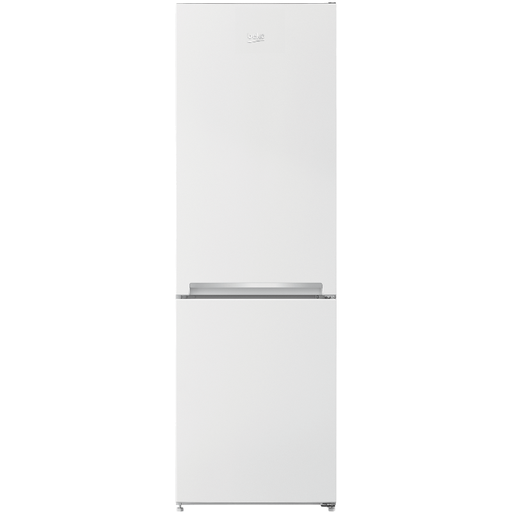 Image unavailable
An option to compare if you’re looking for freezer space for berries and fridge space for everyday use, with No Frost.
Freezer space: 76 l; fridge space: 173 l; stated freezing capacity: 3,5 kg/24 uur; width: 54 cm; reversible door.
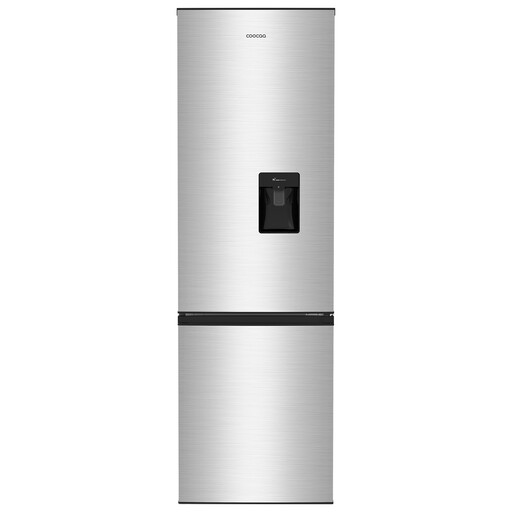 Image unavailable
An option to compare if you want fridge space for everyday use as well as freezer space.
Fridge space: 197 l; freezer space: 71 l; three freezer drawers.
 Image unavailable
An option to compare if you want to weigh the stated freezer capacity and freezing capacity against a width of 55 cm.
Fridge space: 187 l; freezer space: 73 l; stated freezing capacity: 3,3 kg/24 uur; Low Frost; manual defrosting is mentioned; reversible door.
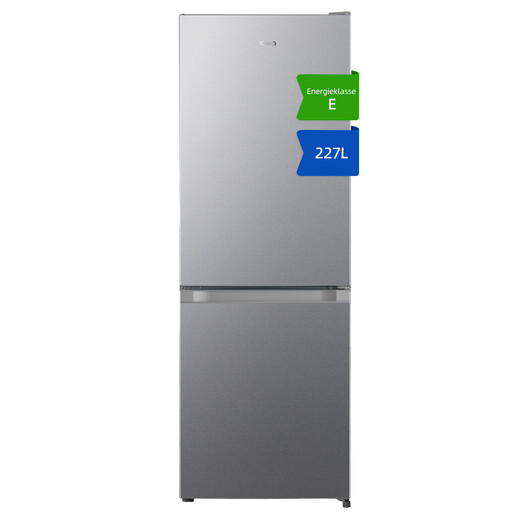 Image unavailable
An option to compare if you want to weigh freezer space and stated freezing capacity against a width of 54 cm.
Fridge space: 153 l; freezer space: 74 l; stated freezing capacity: 3,4 kg/24 uur; four-star freezer compartment; reversible door. According to the product information, Low Frost reduces the need for defrosting but doesn’t rule out manual defrosting.
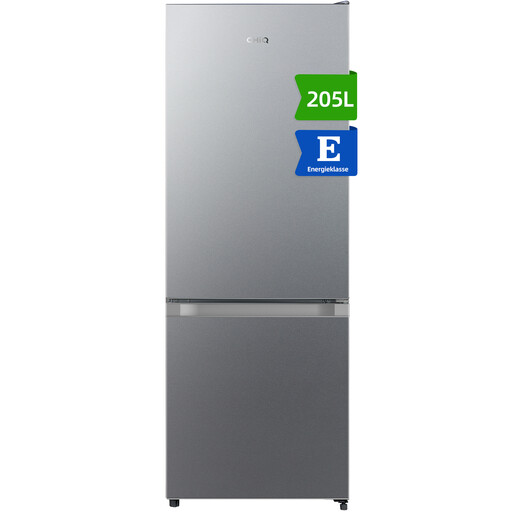 Image unavailable
An option to compare if a modest berry harvest and a narrower kitchen layout suit your needs.
Fridge space: 153 l; freezer space: 52 l; stated freezing capacity: 2,4 kg/24 uur; width: 540 mm; reversible door. Low Frost doesn’t rule out manual defrosting.
Estimate the largest amount you want to freeze in a single day and compare it with the stated freezing capacity in kg/24 uur. Also check that your packed portions will fit in the separate freezer compartment and drawers: these two specifications are not interchangeable.
The Netherlands Nutrition Centre advises washing raspberries, patting them dry and freezing them in a thin layer on a tray or in suitable packaging. It recommends 8–12 months as a guideline for maintaining quality when storing them in the freezer; check the guidance for other types of berries separately.
You can’t tell from the term ‘fridge freezer’ alone. Check the climate class and permitted ambient temperature range for the exact model. ETNA warns that its fridge freezers are not suitable for rooms that may fall below 5 °C; this model-specific information does not automatically apply to other brands.
Compare both the rating on the A–G scale and the stated annual consumption in kWh. The European Commission sets out EU energy labelling rules for fridges and freezers; the rating letter alone doesn’t tell you how many kWh the model you choose will use each year.
No. Inventum describes the KV1500W as having Low Frost and says it still needs defrosting; the KV1501B is listed as having No Frost. Check the description and maintenance instructions for the exact model before you choose.