
Storing melon after class
You want to put cut melon in the fridge, covered, when you get home, and are mainly looking for a practical fridge compartment. The Netherlands Nutrition Centre advises keeping cut melon chilled and covered.


A fridge-freezer is suitable for this storage need if the fridge compartment has room for a covered portion of melon and can be set to and checked at 4 °C. The Netherlands Nutrition Centre advises keeping cut melon covered in the fridge and setting the fridge to 4 °C. Then work out how much freezer space you really need, measure the available space and compare the annual energy use and maintenance requirements of models that fit.
You want to put cut melon in the fridge, covered, when you get home, and are mainly looking for a practical fridge compartment. The Netherlands Nutrition Centre advises keeping cut melon chilled and covered.
You have limited space and want to weigh up the external dimensions, door clearance and ventilation space against the room you need for your everyday shopping.
You sometimes want to keep portions for later, so you’re looking at the freezer space available and the maintenance needed for the freezer compartment.
Start with usable fridge space and where the appliance will go. Then decide how much freezer space you need and what level of freezer maintenance suits your use.
| What to consider | What to look for | Who is this important for? |
|---|---|---|
| Fridge space and temperature | Check the layout and make sure there’s room for a covered portion. Set the fridge to 4 °C and check the temperature with a fridge thermometer. | If I have melon left after a class, I want to be able to store it covered and know the fridge is cold enough. Around 42% of consumers prioritise suitable fridge space and a temperature they can check. |
| Dimensions and positioning | Measure the height, width and depth. Check the installation instructions and allow for the door swing and ventilation space. For a built-in model, also check the niche and door fitting. | In a small kitchen, the appliance needs to fit without its door or access getting in the way. Around 25% of consumers prioritise suitable external dimensions and positioning. |
| Freezer space and maintenance | Compare the freezer capacity separately. Check whether No Frost is specified for the freezer compartment on each model. | If I want to keep melon for later, I need enough freezer space and want to know how much defrosting is involved. Around 17% of consumers prioritise freezing food for later. |
| Annual energy use and noise | Compare the energy label, stated annual consumption in kWh and noise level of models that fit your space. | If the fridge is close to my living space, I want to consider the stated noise level alongside its annual energy use. Around 16% of consumers prioritise energy use and noise. |
The total capacity doesn’t tell you whether your covered melon and other shopping will fit comfortably in the fridge compartment.
Compare the fridge and freezer space separately, and check the shelf layout before choosing a model.
The selected setting alone doesn’t confirm that the fridge has reached the temperature you want.
Once the fridge is in place, use a fridge thermometer to check that it reaches 4 °C.
The label alone doesn’t tell you how much electricity a suitable model is stated to use each year.
Compare the stated kWh per year for models that meet your space requirements.
The stated electricity consumption continues throughout use, so compare the annual energy use shown on the energy label.
You also need to allow for the door swing and ventilation space. For built-in models, the niche and door fitting matter too.
Measure in advance and check the installation instructions for the exact model.
Beko offers a range of freestanding fridge-freezers with the freezer compartment at the bottom.
Bosch offers freestanding fridge-freezers with the freezer compartment at the bottom, including the Serie 2 KGN36NWEA.
LG offers freestanding fridge-freezers, including the GBBS322CPY, with a stated capacity of 375 l.
Liebherr offers freestanding fridge-freezers with a range of layouts and specification levels.
Samsung offers freestanding fridge-freezers, including the RB34C670DWW.
This selection includes freestanding fridge-freezers, a built-in model and a tabletop model for anyone looking for a separate fridge compartment to store covered melon.
 No image available
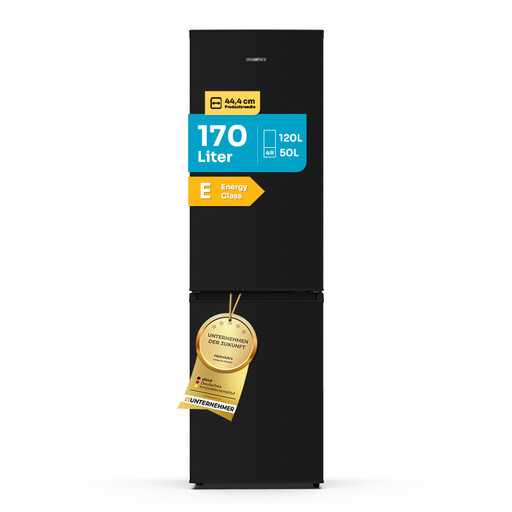
An option if you want a separate freezer compartment as well as chilled melon.
120 l fridge capacity; 50 l freezer capacity; 170 l total; 40 dB; energy rating E.
 No image available
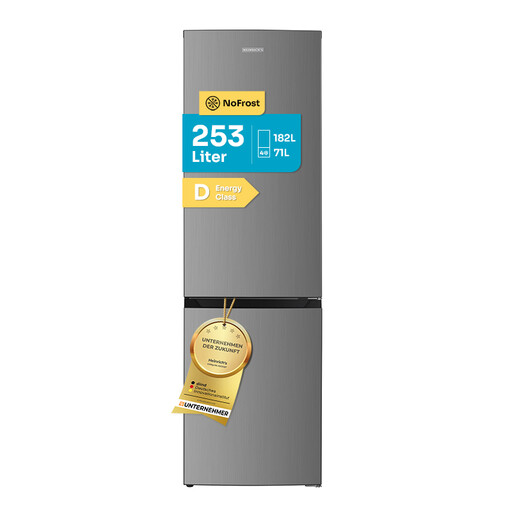
A good fit if you want separate fridge and freezer compartments and would like to consider No Frost.
182 l fridge capacity; 71 l freezer capacity; 253 l total; 39 dB; No Frost.
 No image available
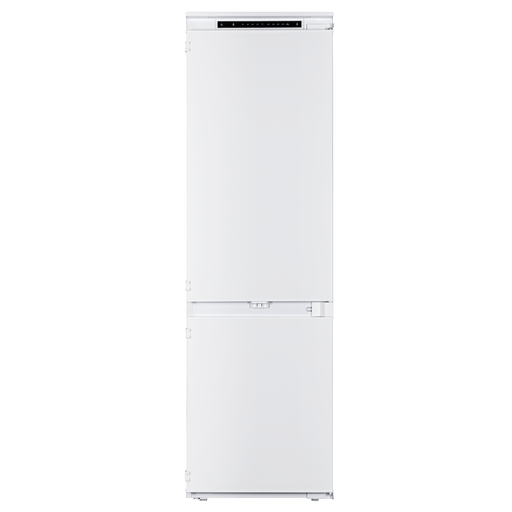
A built-in option if you have a suitable niche. Check the positioning and allow for installation by a qualified technician.
Total No-Frost; stated height 178 cm; sliding door. A suitable niche is required for installation.
 No image available
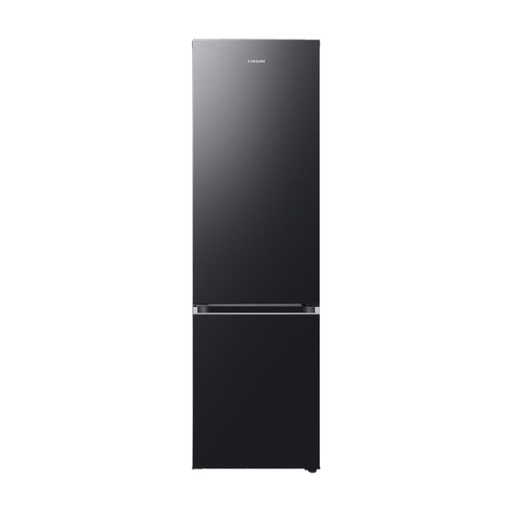
A good fit if you’re looking for a larger freestanding fridge-freezer and have enough height available.
Energy rating A; 108 kWh; stated height 2030 mm; Premium Black Steel.
 No image available
A tabletop option if you’re looking for a compact set-up and a small separate freezer compartment is enough. Check whether 14 l of freezer space will suit what you want to store.
109 l total; energy rating C; white.
Keep cut melon covered in the fridge. The Netherlands Nutrition Centre advises keeping your fridge at 4 °C and says cut melon can be stored in the fridge for two days. Discard it if it is mouldy, clearly rotten or smells unusual.
Yes, you can freeze pieces of melon. The Netherlands Nutrition Centre advises removing the skin, cutting the melon into pieces and storing them in an airtight container or freezer bag. Its storage guide recommends 8–12 months in the freezer; the quality may deteriorate after that.
The Netherlands Nutrition Centre advises placing a fridge thermometer in the middle of the bottom shelf and leaving it there for half a day or overnight. Then check that it reads 4 °C and adjust the fridge if the temperature is higher.
The Dutch government says energy labels are compulsory for fridges and freezers, and the scale runs from A to G. As well as the rating, compare the stated annual energy use in kWh of appliances that fit your space; consumers are not legally required to choose a particular rating.
If it’s faulty, contact the retailer. The Dutch government lists a free repair or replacement as possible solutions and says the retailer cannot simply refer you to the manufacturer. If you buy a new appliance of a similar type, the shop must take back your old appliance under the old-for-new scheme.