
Do you store fresh melon in small portions?
You want to be able to find covered pieces easily and set your fridge to the recommended temperature. Voedingscentrum recommends keeping cut melon covered in the fridge and setting the fridge to 4 °C.


For small portions of cut melon, the most important thing is to have enough fridge space for covered containers; Voedingscentrum recommends setting your fridge to 4 °C. Freezer space matters more if you regularly want to freeze peeled pieces in portions. Choose an appliance that suits your kitchen and the rest of your shopping, and don’t assume a freshness feature means melon can be kept for longer.
You want to be able to find covered pieces easily and set your fridge to the recommended temperature. Voedingscentrum recommends keeping cut melon covered in the fridge and setting the fridge to 4 °C.
You’re looking for a fridge freezer that fits the available space, with an interior layout that works for your containers. Milieu Centraal points out that an oversized fridge can use unnecessary electricity, so compare its capacity with what you actually store, too.
You want to freeze individual portions and assess freezer space separately from fridge space. Voedingscentrum recommends peeling melon, cutting it into pieces and packing it in an airtight container before freezing.
Voedingscentrum recommends keeping cut melon covered in the fridge and setting the fridge to 4 °C. Choose an interior layout to suit the containers you use, then decide how much freezer space you need.
Ideal for: limited floor space and a few containers at a time; compare both the external dimensions and the shelf layout of the exact model.
Bear in mind: a narrow exterior doesn’t guarantee that your containers will fit. Inventum lists the KV1808B as 54,5 cm wide; Beko lists the B3RCSO255S as 54 cm wide and with a static cooling system.
Ideal for: regularly freezing portions and comparing the freezer compartment’s ease of maintenance and capacity.
Bear in mind: Bosch lists the KGN36NLEA as having 89 l of freezer space and Total NoFrost; No Frost doesn’t change the storage advice for melon in the fridge.
Ideal for: storing plenty of other food as well, and assessing fridge and freezer space separately.
Bear in mind: according to Liebherr, the CNd 5203 has a total capacity of 330 l and separate DuoCooling circuits; that total capacity may be more than you need for a few small portions of melon.
| What to consider | What to look for | Who is this important for? |
|---|---|---|
| Keeping food covered and chilled | Check whether you can adjust the temperature and whether covered containers will fit on a shelf; use a fridge thermometer to check the temperature. | If I store melon in small portions, I want to be able to keep the containers covered and check the fridge temperature. Around 36% of consumers prioritise safe refrigeration. |
| Size and layout | Measure the space where the appliance will go and the access route, then compare the fridge and freezer capacities with the dimensions of your containers. | With limited kitchen space, I want an appliance that fits without unnecessary capacity, with shelves that can hold my containers. Around 29% of consumers give a suitable size and layout top priority. |
| Freezing portions | Compare the freezer capacity, drawer layout and whether the exact model has No Frost. | If I freeze peeled melon portions in advance, I want to be able to organise them easily and factor in freezer maintenance. Around 21% of consumers prioritise freezer space. |
| Annual energy consumption | Compare the annual consumption in kWh on the energy label for the exact models, along with the capacity of both compartments. | As a fridge runs all the time, I want to balance the capacity I need against annual energy consumption. Around 14% of consumers say energy consumption is their main buying concern. |
A special drawer or setting doesn’t replace the advice to keep cut melon covered and check the fridge temperature.
Follow Voedingscentrum’s storage advice and check the fridge temperature with a thermometer.
An appliance may fit in its allotted space while its shelf layout is awkward for your containers. Fridge and freezer capacities are separate features, too.
Measure the space and your containers, then compare the layout and capacity of both compartments in the exact model version.
The size of a fridge freezer alone doesn’t tell you how much electricity the model uses each year.
Compare the consumption in kWh on the energy label and weigh it against the capacity you need. Since 1 March 2021, the EU energy label has used the A–G scale.
The KV1808B is a slim freestanding fridge freezer worth considering if the available kitchen width is a key constraint.
The KGN36NLEA is a useful comparison if you’re looking for more freezer space and Total NoFrost.
The CNd 5203 is worth considering if you need more space for other food as well as small portions of melon.
The B3RCSO255S is a useful comparison if you’re looking for a slim fridge freezer with a bottom freezer compartment.
This selection includes compact tabletop models and larger fridge freezers. Compare the stated fridge and freezer capacities, dimensions and features with the space you have and the portions you want to store.
 Image unavailable
This tabletop model may suit a limited amount of space; check whether the 14 l freezer compartment is large enough for your portions.
The product information lists a total capacity of 109 l, including 95 l of fridge space and a separate 14 l freezer compartment. The model is 55 cm wide, has two fridge shelves and a salad drawer, and is rated energy label C.
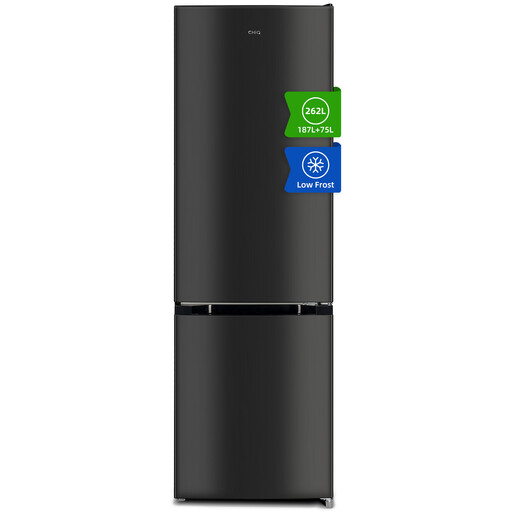 Image unavailable
This fridge freezer may suit you if you need a larger freezer compartment as well as space to chill portions of melon.
The product name lists a capacity of 262 l, Low Frost and a 4-star freezer rating. The product information mentions adjustable shelves, a salad drawer and a reversible door; check the layout and dimensions for your kitchen.
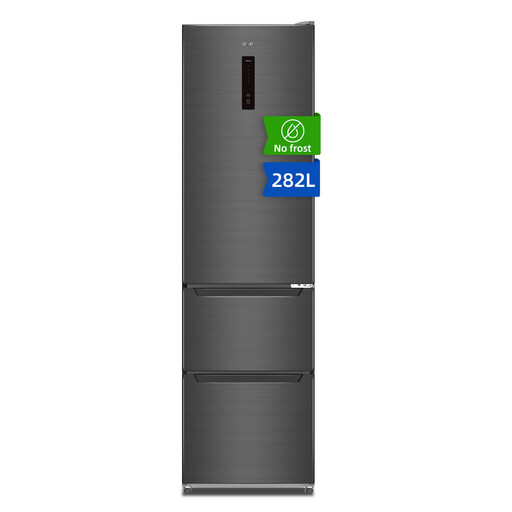 Image unavailable
Separate fridge and freezer compartments can be useful if you want to store covered portions and freeze melon in advance.
The product information lists 197 l of fridge space and 85 l of freezer space, No Frost, a width of 540 mm, three fridge shelves and two freezer drawers. The product name mentions an inverter compressor.
 Image unavailable
This model has a generous stated capacity; compare it with your kitchen space and how much food you store alongside melon.
The product name lists a capacity of 387 l, No Frost, Twin Cooling Plus and energy label A. The product information lists 273 l of fridge space, 114 l of freezer space and a width of 59,50 cm.
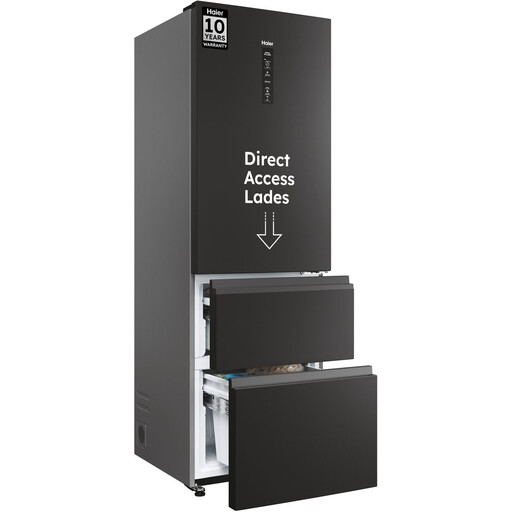 Image unavailable
The stated freezer capacity may suit you if you want to freeze several portions separately; check that the total capacity works for your other food, too.
The product information lists 235 l of fridge space, 125 l of freezer space and a width of 59,5 cm. According to the product information, the model has two separate freezer drawers; the product name mentions Total No Frost.
Voedingscentrum says that opened melon can be kept in the fridge for 2 days and recommends covering cut melon. It advises setting your fridge to 4 °C; use a thermometer to check the actual temperature.
Peel the melon, cut it into pieces and, following Voedingscentrum’s advice, freeze them in an airtight container or freezer bag. Check beforehand that the packaging will fit in the freezer drawers.
No, No Frost isn’t essential for chilling cut melon. For the fridge compartment, focus on keeping melon covered and maintaining the recommended temperature. Consider No Frost separately if you want to factor in freezer maintenance.
Compare the EU energy label for the exact model version, including its annual consumption in kWh and the capacity of its compartments. The European Commission states that, since 1 March 2021, the scale for household fridges and freezers has run from A to G; an older A+++ label uses a different scale.
Report a fault to the seller; in the Netherlands, there isn’t a fixed two-year legal guarantee period for every product. According to the Dutch Government, what you can expect from a product depends, among other things, on the type of product, its price and the information provided. A manufacturer’s guarantee is in addition to your legal rights.