
Lunch-maker who plans ahead
You want to store cooled mash in portions for a weekend lunch later on. Check the usable freezer space and follow the Netherlands Nutrition Centre’s storage advice.


Choose a fridge-freezer with enough freezer space for your portion containers and existing supplies. If you often freeze several portions at once, check the stated freezing capacity too. For mashed potato, cooling it promptly and storing it at the right temperature matter more than any special fridge feature: the Netherlands Nutrition Centre advises cooling leftovers quickly and setting the freezer to −18 °C or below.
You want to store cooled mash in portions for a weekend lunch later on. Check the usable freezer space and follow the Netherlands Nutrition Centre’s storage advice.
You freeze other meals too and want to know how much room will be left for portions. Compare the freezer capacity and freezing capacity of the specific models.
You have a set space for your appliance, so measure the available area and check how the door opens. If you have an open-plan kitchen, the stated noise level may also be a factor.
| What to consider | What to look for when buying | Who should pay particular attention? |
|---|---|---|
| Safe cooling and freezing | Check that the freezer can be set to −18 °C or below and that your portion containers fit in the drawers. The Netherlands Nutrition Centre advises not leaving leftovers out of the fridge for more than 2 hours. | I want to cool the mash and store it in small portions without unnecessary delay. Around 36% of consumers prioritise safe storage for this lunch. |
| Freezer space and freezing capacity | Compare the capacity in litres and the drawer layout. If you freeze larger quantities, check the stated capacity in kg per 24 hours too. Bear your existing supplies in mind. | If I want to store several portions alongside other frozen food, I focus on usable space and how much can be frozen at once. Around 29% of consumers prioritise freezer space. |
| Annual electricity consumption | Compare the stated consumption in kWh per year on the EU energy label for the exact models, alongside their fridge and freezer capacities. | I take energy use into account because the appliance stays on between weekend meals too. Around 21% of consumers focus mainly on annual electricity consumption. |
| Dimensions and noise | Measure the height, width and depth, and check the space needed for installation and to open the door. If you have an open-plan kitchen, also compare the stated noise level in dB. | If I have a fixed space or an open-plan kitchen, I want to know whether the appliance will fit and what noise level it has. Around 14% of consumers give the space needed or noise the highest priority. |
A large total capacity doesn’t tell you how much room there is for frozen food. Fridge and freezer capacities are shown separately on the energy label.
Compare the freezer capacity and drawer layout with the dimensions of your containers and the space taken up by your existing supplies.
A defrosting feature doesn’t replace safe food-storage practices. Cool leftovers quickly and don’t leave them out of the fridge for more than 2 hours, as advised by the Netherlands Nutrition Centre.
Divide the mash into portions and follow the recommended storage temperature, whatever defrosting technology the freezer uses.
The rating alone doesn’t tell you the chosen model’s annual energy consumption. The size also needs to suit the amount of food you want to store.
Compare models with enough freezer space by their stated kWh per year, and check the other details on the EU energy label too.
The KV1808B and KV1850W are useful model references for different freezer storage needs.
The KGN36NLEA is a model reference with separate fridge and freezer specifications.
The B3RCNO256S is a reference for a space where width is important.
The GBV3200CEP is a model reference for anyone comparing a tall fridge-freezer.
The CNsdc 5703 Pure NoFrost is a reference for a tall freestanding fridge-freezer.
Compare these fridge-freezers on Joybuy by freezer space, stated freezing specifications and installation information. Check that the exact dimensions and layout suit your kitchen and portion containers.
 No image available
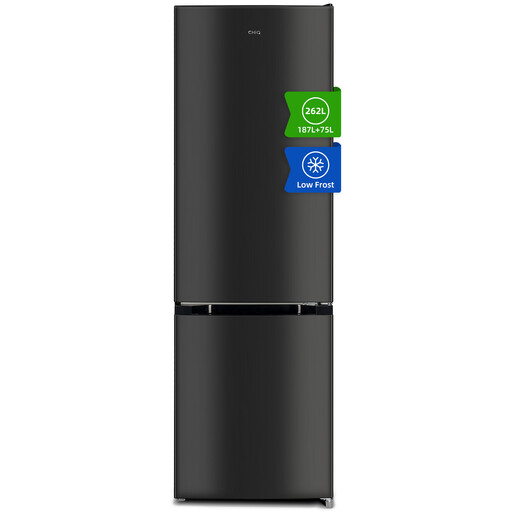
One option to compare if 73 l of freezer space and three freezer drawers suit your portions and existing supplies.
Freezer capacity: 73 l; freezing capacity: 3,3 kg per 24 hours; dimensions: 545 × 545 × 1823 mm; energy rating E; stated temperature range: −15 to −22 °C.
 No image available
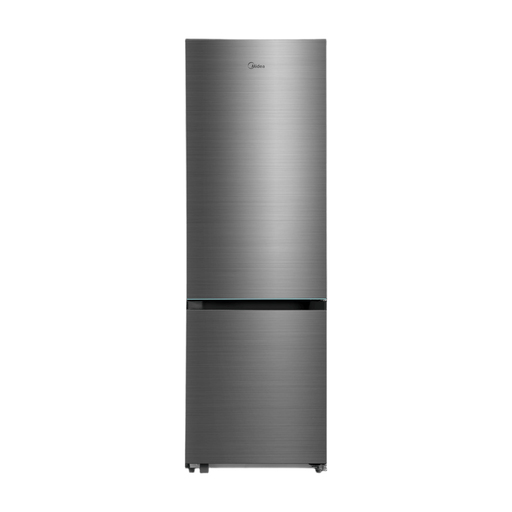
Compare this model if you’re considering a fridge-freezer with a stated four-star freezer rating.
Features listed in the product information: 4-Star Freezing, Low Frost, 39 dB, adjustable shelves and a reversible door.
 No image available
An option to compare if you want to consider stated freezing capacity and annual energy consumption as well as freezer space.
Freezer capacity: 98 l; freezing capacity: 4,5 kg per 24 hours; annual energy consumption: 248 kWh; noise level: 35 dB; two freezer drawers; cabinet depth: 57 cm; energy rating E.
 No image available
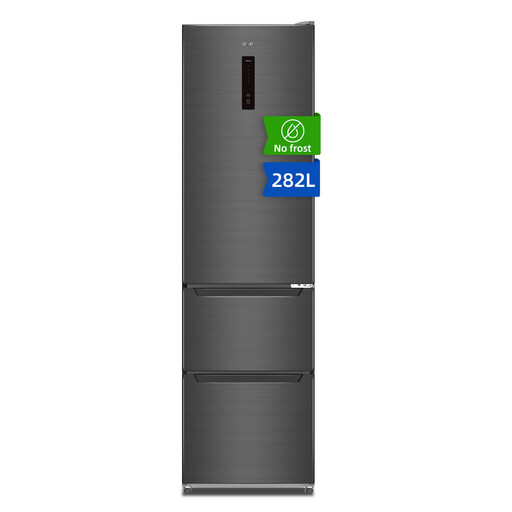
Compare the stated total capacity and external dimensions with the space you have for the appliance and your frozen food.
Total capacity: 282 l; dimensions: 540 × 576 × 1810 mm; noise level: 37 dB; energy rating E; three doors.
 No image available
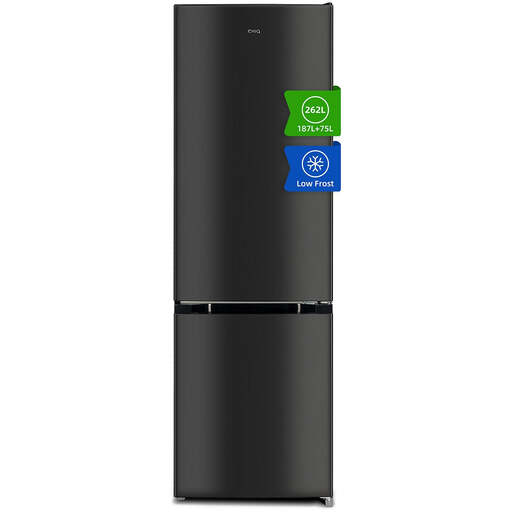
A model to compare if you want to match the fridge and freezer space separately to your storage needs.
Fridge capacity: 153 l; freezer capacity: 52 l; width: 540 mm; noise level: 39 dB; Low Frost; reversible door.
That depends on when you’re having lunch. For mashed potato made with potatoes and semi-skimmed milk, the Netherlands Nutrition Centre recommends keeping it for 2 days in the fridge or 3 months in the freezer; after that, its quality may deteriorate. Cool leftovers quickly, seal them well and don’t leave them out of the fridge for more than 2 hours. Different storage advice may apply to other recipes.
Set the freezer to −18 °C or below and the fridge to 4 °C, in line with the Netherlands Nutrition Centre’s advice. Divide leftovers into small portions and don’t leave warm mash out of the fridge for more than 2 hours.
Defrost meal leftovers in the fridge or microwave, not on the worktop. Heat the defrosted leftovers thoroughly and eat them straight away; the Netherlands Nutrition Centre advises against refreezing leftovers that have already been frozen and reheated.
Compare the stated kWh per year on the EU energy label and the separate fridge and freezer capacities for the exact models. Milieu Centraal advises choosing a suitable size; also check that the drawer layout works for your containers and existing supplies.
Under European Commission rules, the energy label must be clearly displayed for household refrigeration appliances covered by EU labelling requirements, including when they’re sold online. The label uses a scale from A to G and includes details such as annual energy consumption, capacity and noise level.