
Host with plenty of leftover soup
After a gathering, you want to store several sealed portions and decide whether to cool them quickly for the next few days or freeze them for later.


If you plan to eat the soup within two days, the most important thing is having enough usable fridge space for sealed portions alongside your usual shopping. For longer storage, you’ll need suitable freezer drawers and space for smaller portions. The Netherlands Nutrition Centre recommends setting your fridge to 4 °C and cooling leftovers quickly. Choose a capacity that suits both everyday use and family gatherings, measure the space available and compare annual energy consumption: according to Milieu Centraal, two cooling appliances use more energy together than one large appliance.
After a gathering, you want to store several sealed portions and decide whether to cool them quickly for the next few days or freeze them for later.
You use the freezer drawers for portions throughout the year, not just at festive times, so you’ll want to consider the freezer’s capacity and the shape of its drawers.
You have a fixed kitchen recess or limited floor space, so you’ll need to balance the appliance dimensions against the room needed for soup and your usual shopping.
Start by considering how long you’ll store the soup: chilled portions need a practical spot in the fridge, while portions for later need to fit in the freezer drawers.
| What to consider | What should you look for? | Who is this important for? |
|---|---|---|
| Keeping soup chilled | Check that sealed containers will fit alongside your shopping. The Netherlands Nutrition Centre recommends a fridge temperature of 4 °C. | If I want to eat the soup within two days, I need room for the cooled containers without having to squeeze out my usual shopping. Around 36% of consumers say their main concern is being able to chill food properly and promptly. |
| Freezing portions | Compare the freezer capacity and drawer shape with your containers. The Netherlands Nutrition Centre recommends a freezer temperature of at least −18 °C. | If I want to keep portions for later, there needs to be enough room in the drawers I can actually use. Around 29% of consumers prioritise practical freezer space for longer-term storage. |
| Size and installation | Measure the space and access routes; for an integrated model, also check the recess, ventilation requirements and door system. | If my kitchen has a fixed recess or little free floor space, the appliance needs to fit there before I compare its capacity. Around 21% of consumers start by checking the available installation space. |
| Energy use and maintenance | Compare the annual energy consumption in kWh of models that fit your space and capacity needs; also consider whether No Frost suits your use. | If I use the appliance every day, I want to take its energy consumption and freezer maintenance into account too, not just the space I need for a family gathering. Around 14% of consumers focus most on everyday energy use and maintenance. |
The Dutch Consumers’ Association explains that the stated capacity is measured without drawers and shelves. So the number of litres doesn’t tell you exactly how many soup containers will fit in practice.
Compare the fridge and freezer capacities separately, and check the layout against the dimensions of the containers you usually use.
Warm leftovers can raise the temperature inside the fridge, so extra capacity is no substitute for cooling food quickly and carefully.
Divide the soup into small portions, cool it quickly and put it in the fridge or freezer promptly. The Netherlands Nutrition Centre advises not leaving leftovers unrefrigerated for more than two hours.
Milieu Centraal points out that two cooling appliances use more energy together than one large appliance.
Start by assessing your everyday needs. If you’re replacing an appliance, compare models that fit your space and offer the fridge and freezer capacity you actually need.
An integrated model must also fit the recess and door system. If you’re putting it in an unheated shed or garage, the permitted ambient temperature range may also be important.
Check the installation instructions for the exact model and, if you’re placing it in a shed or garage, check its climate class.
The features listed apply to the specific models below; when comparing them, always check the capacity of each compartment and the installation dimensions.
The freestanding KV1850B is a useful benchmark if dedicated freezer space for portions is important to you.
According to LG, the freestanding GBBS322CPY has a total capacity of 375 l, making it an option if you also want room for your usual shopping.
The RB34C670DWW/EF is a freestanding model with a stated total capacity of 344 l; the BRB80F26BCS0EF is an integrated model with a sliding hinge.
According to Beko, the RCHE300K40WN is 54 cm wide and has a bottom freezer.
Bosch lists energy class A and Total NoFrost for the freestanding KGN39OCAF.
This selection includes fridge-freezers with a range of fridge and freezer capacities, including an integrated model. Compare the capacity of each compartment and check that the installation type suits your kitchen.
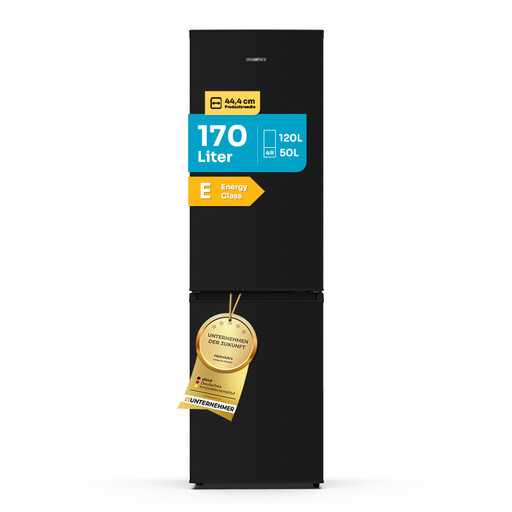 Image unavailable
Separate fridge and freezer compartments are useful if you want to keep some soup chilled and freeze the rest for later.
120 l of fridge space and 50 l of freezer space. The product information lists three freezer drawers and a 4-star freezer compartment for ≤ −18 °C.
Energy class E; stated noise level 40 dB.
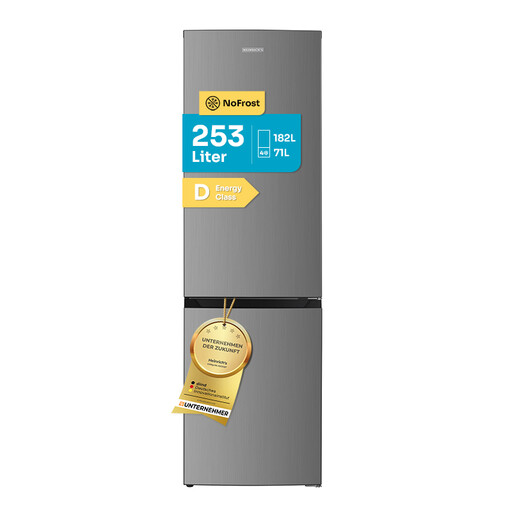 Image unavailable
The larger stated compartment capacities may be useful if you want to store soup alongside your everyday shopping.
182 l of fridge space and 71 l of freezer space. The product information lists No Frost.
Stated noise level 39 dB; according to the product name, the door is reversible.
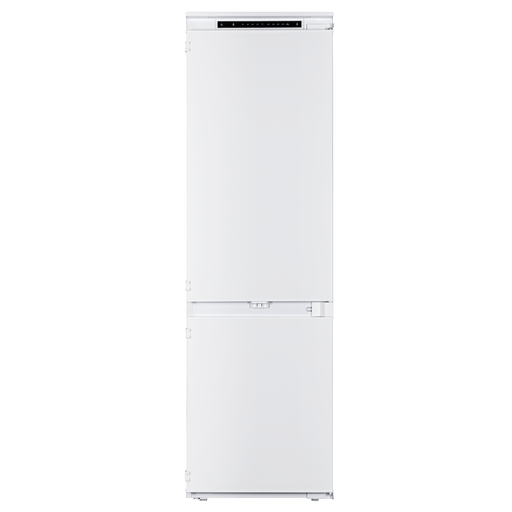 Image unavailable
This integrated model is suited to a kitchen where the fridge-freezer needs to fit inside a recess.
177 l of fridge space and 67 l of freezer space; the product information lists No Frost in both compartments.
Designed for a recess of around 178 cm with a sliding door system. The product information says it must be installed by a qualified technician.
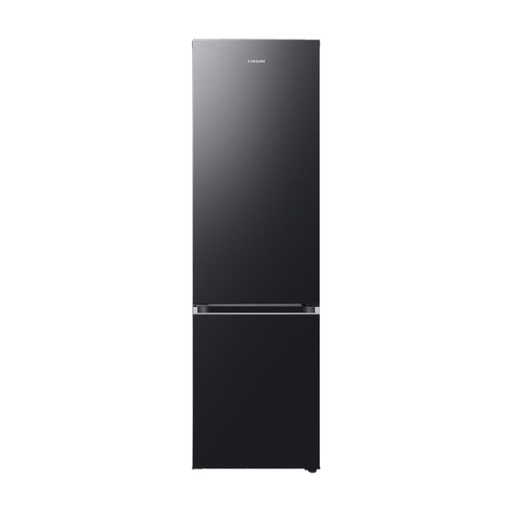 Image unavailable
Separate compartments are useful if you want to keep chilled portions and soup for later alongside your usual shopping.
273 l of fridge space and 114 l of freezer space. The product information lists No Frost and Power Cool and Power Freeze functions.
Energy class A according to the product name.
 Image unavailable
The stated width may be useful if your kitchen space is limited.
187 l of fridge space and 73 l of freezer space, with three freezer drawers. The product information lists a width of 55 cm.
Energy class E according to the product name; the product information says the door is reversible.
Cool the soup quickly, divide it between clean, airtight containers and put them in the fridge or freezer within two hours. The Netherlands Nutrition Centre recommends setting your fridge to 4 °C and keeping chilled leftovers for no more than two days. Freeze portions if you want to keep them for longer.
A larger fridge doesn’t remove the need to cool the soup quickly: warm leftovers can raise the temperature inside the fridge. Divide the soup into smaller portions, cool it quickly and chill it promptly; the Netherlands Nutrition Centre advises not leaving leftovers unrefrigerated for more than two hours.
Compare the separate fridge and freezer capacities with the dimensions of your containers, and check the shape of the drawers. The Dutch Consumers’ Association explains that stated capacity is measured without drawers and shelves, so the number of litres isn’t the same as the fully usable space.
For a recess, check the external dimensions, ventilation requirements and door system for the exact model. If you’re putting it in an unheated shed or garage, the Dutch Consumers’ Association also recommends checking the climate class, which indicates the ambient temperature range the appliance is suitable for.
It depends on how often you need the extra space and whether you’ll use it outside of gatherings too. Milieu Centraal says that two cooling appliances use more energy together than one large appliance, so first compare your everyday needs with the energy consumption of suitable models.